Western Australia puts battery storage, solar at heart of economic recovery stimulus package

LinkedIn
Twitter
Reddit
Facebook
Email
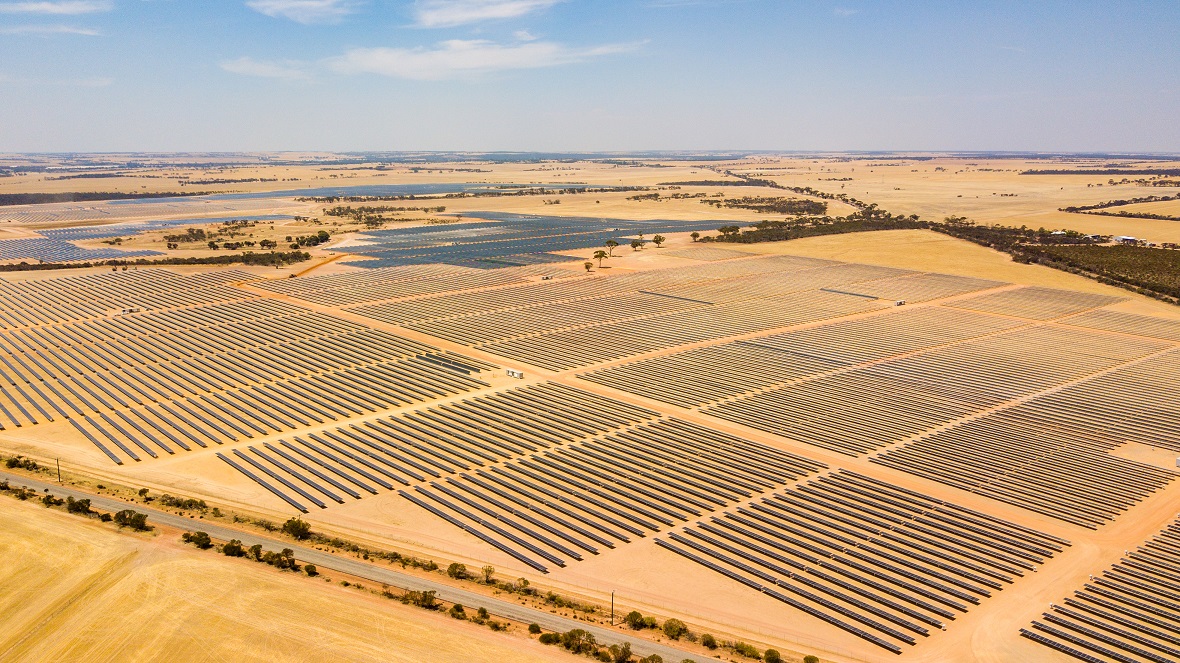
Merredin solar farm, a 100MW+ project just completed in Western Australia – one of the first big solar farms in the state. Image: Risen Energy.

Western Australia will invest AU$56.3 million (US$40.11 million) in solar power as part of a new renewable energy plan designed to kickstart the state’s economy following the impacts of the COVID-19 pandemic.

The stimulus package, which consists of a total AU$66.3 million (US$47.23 million) spend on green energy technologies, will see the development of 50 standalone power systems and the installation of nine battery energy storage systems.

To read the full version of this story, visit PV Tech.

This article requires Premium SubscriptionBasic (FREE) Subscription

Try Premium for just $1

  • Full premium access for the first month at only $1
  • Converts to an annual rate after 30 days unless cancelled
  • Cancel anytime during the trial period

Premium Benefits

  • Expert industry analysis and interviews
  • Digital access to PV Tech Power journal
  • Exclusive event discounts

Or get the full Premium subscription right away

Or continue reading this article for free

15 September 2026
San Diego, USA
You can expect to meet and network with all the key industry players again in 2025 from major US asset owners, operators, RTOs and ISOs, optimizers, software and analytics providers, technical consultancies, O&M technology providers and more.

Read Next

May 15, 2026
Australia’s New South Wales has seen 532MW of firming projects contracted through its seventh infrastructure tender, securing two projects designed to strengthen electricity supply during periods of peak demand and system stress in the Sydney-Newcastle-Wollongong region.
May 14, 2026
Developer Akaysha Energy has received federal environmental clearance for its 400MW/1,600MWh Glenrowan battery energy storage system (BESS) in Victoria, with the project deemed “not a controlled action” under Australia’s Environment Protection and Biodiversity Conservation (EPBC) Act.
May 14, 2026
Australia has clawed back AU$1.3 billion (US$940 million) in uncommitted clean energy manufacturing funding, with the Solar Sunshot Program and Battery Breakthrough Initiative among the programmes hit by budget cuts announced this week.
May 13, 2026
Solar PV and wind are now the cheapest sources of power, with co-located hybrids increasingly delivering round-the-clock electricity at fossil fuel-competitive costs in high-resource regions, according to a new report by IRENA.  
May 13, 2026
Utility-scale battery storage systems in Western Australia supplied 37.2% of peak demand on 9 May, marking one of the highest battery storage penetration levels recorded in an isolated grid globally.