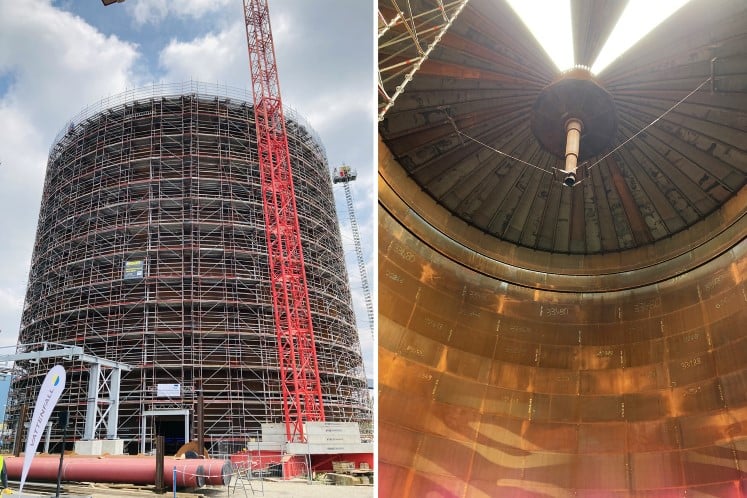
Swedish public utility Vattenfall is about to start filling a 45m-high, 200MW-rated thermal energy storage facility with water in Berlin, Germany.
The heat storage tank can hold 56 million litres of water which will be heated at 98 degrees celsius and will be combined with the existing power-to-heat system of Vattenfall’s adjoining Reuter West power plant.
The water will be fed directly into the district heating network to supply customers’ heating needs in their homes, a company spokesperson told Energy-Storage.news. The filling is expected to take two months, followed by a period of testing before commercial operation begins in April 2023.
Jornt Spijksma, project manager at Vattenfall, said that the combination of Reuter West and the storage tank forms an “optimal, fossil-free and future-proof component to supply our Berlin customers with heat.”
Try Premium for just $1
- Full premium access for the first month at only $1
- Converts to an annual rate after 30 days unless cancelled
- Cancel anytime during the trial period
Premium Benefits
- Expert industry analysis and interviews
- Digital access to PV Tech Power journal
- Exclusive event discounts
Or get the full Premium subscription right away
Or continue reading this article for free
He explained that when there is a surplus of wind energy, the power-to-heat system can convert that surplus into heat to be stored in the tank, reducing any need to curtail wind production. The storage tank can also integrate heat from other industrial processes such as the city’s cleaning department or waste heat from waste water.
The spokesperson added that it could potentially also connect with other renewable heat sources such as a large-scale heat pump.
The tank has a maximum thermal output of 200MW which it can discharge for 13 hours, making it a 2,600MWh system.
Vattenfall worked with three separate companies to deliver the project although has not revealed their names. Construction began in January 2022.
The company said that the storage tank is essential for securing heat supply for its customers, with the ability to ensure supply even during cold weather (Berlin typically has very cold winters).