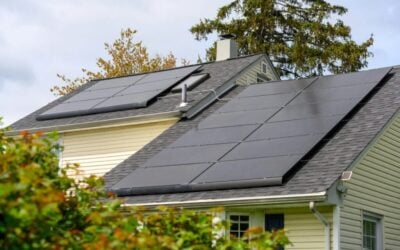
Xcel Energy has launched a new scheme for customers in Colorado, rewarding them for allowing the utility to use their battery storage systems to provide grid services.
The US utility provider’s Renewable Battery Connect scheme is open to its residential and business customers in the state, and will provide US$500 per kW of storage for up to 50% of the equipment cost of a solar-charged battery storage system.
There is also a higher US$800 per kW rate for eligible low-income customers and a US$100 annual incentive for participating for five years for all.
Through the virtual power plant (VPP) programme – which is shorthand for the aggregation of distributed energy resources (DER) such as home batteries, solar and smart thermostats to provide services akin to a centralised power plant – Xcel will be able to manage peak demand for electricity in its Colorado service area.
Try Premium for just $1
- Full premium access for the first month at only $1
- Converts to an annual rate after 30 days unless cancelled
- Cancel anytime during the trial period
Premium Benefits
- Expert industry analysis and interviews
- Digital access to PV Tech Power journal
- Exclusive event discounts
Or get the full Premium subscription right away
Or continue reading this article for free
Basically, during high demand periods, typically the hotter days of the year when air-conditioning loads put particular strain on utility grids Xcel will schedule a demand response event using the batteries’ stored energy to inject flexible capacity into the grid.
Solar and storage technology and services provider SolarEdge said in a press release this week that its DC-coupled SolarEdge Home Battery product has been made eligible for the scheme. The enrolled systems will be onboarded to SolarEdge’s portfolio of Grid Services, through which the company can offer a suite of services suited to different applications from demand response and frequency regulation to energy trading and optimisation.
At present, the only other provider with eligible equipment is Tesla with its Powerwall and Powerwall II residential battery storage systems.
According to an info sheet from the utility, Xcel said it would guarantee participating customers always have 40% so they would have it in case they need backup as well as to perform any other functions as they ordinarily would. Through logging into either Tesla or SolarEdge’s monitoring apps, the customer would also be able to see how the battery is being operated during the utility’s demand response ‘control events’.
After several years of the potential of VPPs being widely talked about in the renewable energy industry, and a few more subsequent years of limited pilot and trial deployments, it appears major utilities such as Xcel – which is present in eight states – are looking to roll them out on a wider scale.
A report published earlier this year from energy consultancy Brattle Group and commissioned by tech giant Google, found that US utilities could make up to US$35 billion in savings on their costs of supplying electricity over the next decade by leveraging virtual power plant (VPP) technology.
Read further coverage of activity in the virtual power plant space on Energy-Storage.news here.