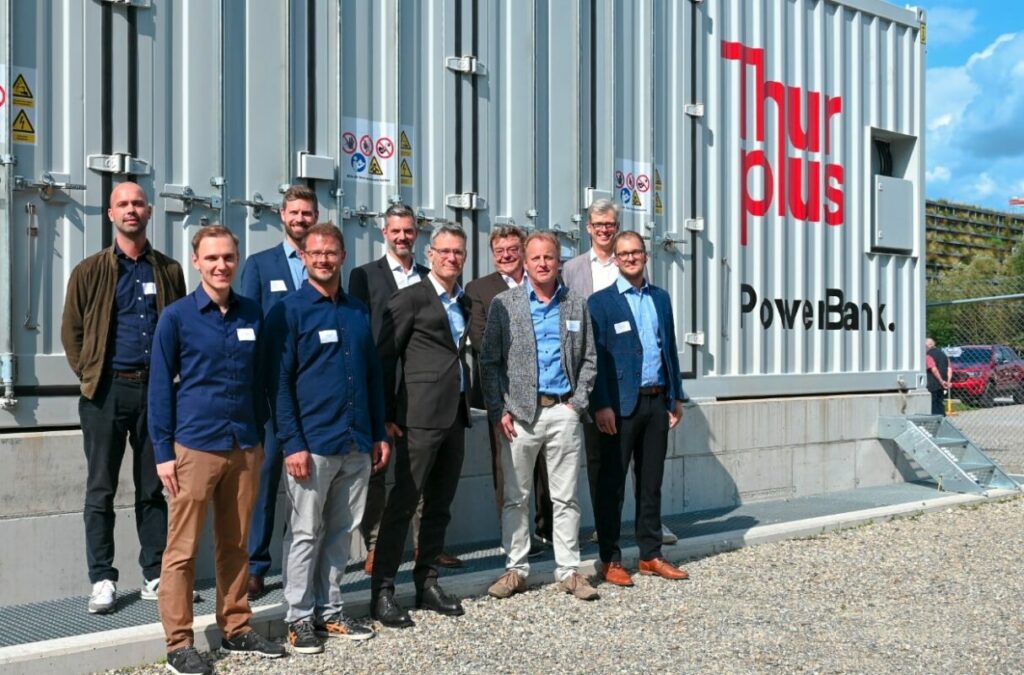
Municipal utility Thurplus has commissioned a 3MW/3MWh battery energy storage system (BESS) in its Canton of Thurgau, Switzerland.
Thurplus will use the BESS – called the Thurplus Powerbank – to balance out peaks and troughs in demand on its distribution network, it said last week. Renewable energy generation increased 152% in the northeast Canton from 2015-2021.
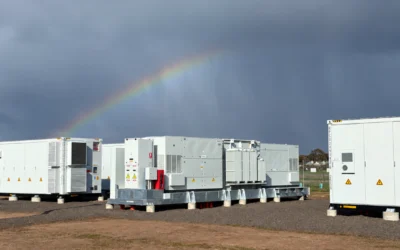
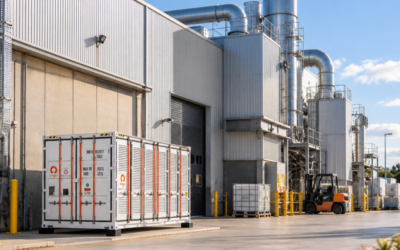
The project is located at the Geisschopf transformer station in Langfeldstrasse and consists of 240 lithium iron phosphate (LFP) lithium-ion batteries installed in a 12 metre-long container, pictured above.
The BESS technology was provided by Axpo, a large renewable energy firm based in Switzerland, with which Thurplus has signed a 10-year maintenance agreement. It was delivered and deployed by local engineering, procurement and construction (EPC) firm Pfister AG.
Try Premium for just $1
- Full premium access for the first month at only $1
- Converts to an annual rate after 30 days unless cancelled
- Cancel anytime during the trial period
Premium Benefits
- Expert industry analysis and interviews
- Digital access to PV Tech Power journal
- Exclusive event discounts
Or get the full Premium subscription right away
Or continue reading this article for free
Another utility, Primeo Energie, will manage the facility’s participation in the electricity markets, managed by Swissgrid, the transmission system operator (TSO) in Switzerland.
Thurplus managing director, Peter Wieland, said: “Due to the growing number of decentralised power generation systems, but also due to new loads, such as e-mobility and heat pumps, forecasting and network control are becoming increasingly more demanding.”
“Battery storage will support us in these tasks in the future. It can absorb, store and release energy. With the new technology, we can compensate for fluctuations in demand and power peaks in the distribution network and provide balancing energy as a system service.”
A total of CHF1.95 million (US$2.2 million) was invested into the project, Thurplus said.
Axpo itself has been busy buying BESS projects abroad, recently acquiring two in Sweden in the space of two months in March and then May.
Switzerland has seen relatively few large-scale BESS projects announced, the most recent Energy-Storage.news has reported on being back in January when another Cantonal utility AEW Energie announced a 5.5MW/10MWh system.
However, last year saw a pumped hydro energy storage (PHES) project with a capacity of 20GWh begin operations in Valais. PHES technology accounts for the vast majority of installed energy storage capacity globally today, but physical, engineering and land constraints mean new projects are relatively few and far between.