
Energy-Storage.news Premium speaks with Isshu Kikuma, energy storage analyst at BloombergNEF (BNEF), ahead of the upcoming Energy Storage Summit USA.
Kikuma notes that in 2026, the US battery energy storage system (BESS) industry still has to contend with shifting policies and tariffs.
Throughout 2025, US tariffs on China went through various changes. Beginning in 2026, foreign entity of concern (FEOC) restrictions from H.R. 1, and the Biden administration’s Section 301 tariffs took effect.
On 20 February, the US Supreme Court confirmed the US Court of Appeals for the Federal Circuit’s decision that the International Emergency Economic Powers Act (IEEPA) does not allow the president to impose tariffs.
Try Premium for just $1
- Full premium access for the first month at only $1
- Converts to an annual rate after 30 days unless cancelled
- Cancel anytime during the trial period
Premium Benefits
- Expert industry analysis and interviews
- Digital access to PV Tech Power journal
- Exclusive event discounts
Or get the full Premium subscription right away
Or continue reading this article for free
Moments after this ruling, Donald Trump announced his intention to use other legal powers to implement 10% tariffs on all countries, starting 24 February.
US Treasury Secretary Scott Besent said on 4 March that the global tariff will be raised to 15%. Thus far, the president has shown a propensity for using tariffs to negotiate, so it is likely that the tariff rate will change again with little warning.
Kikuma says, “We thought by the end of last year that import tariffs were kind of fixed, but now, there are a lot of changes in import tariffs. So if this policy uncertainty continues, I think some companies may prefer to avoid all the policy risk and stick to domestic equipment.”
Cost comparisons
Kikuma says further of tariffs, “I think changes in import tariffs definitely increase the policy risk around imports in general, and then obviously the imports from China, I think that’s particularly been hit hard in that sense. On the other hand, I think the domestic content requirements can highlight the benefits and advantages of having domestic supply chains and also US-made batteries.”
He continues, “US-made batteries are definitely more expensive than battery imports from China. That’s because of limited manufacturing capacity in the US as of today, as well as, in general, labour and energy resources. Those input costs are definitely higher in the US.”
The analyst also highlights that investment tax credits (ITCs) go a long way in keeping costs relatively low for energy storage developers.
For energy storage projects that utilise domestically produced batteries and are likely to meet the FEOC restriction, they should qualify for a 30% ITC. Additionally, they can receive an extra 10% for the domestic content adder. This means an approximately 40% ITC could be available for energy storage projects using domestically produced batteries.
“On the other hand, if you have a BESS project using Chinese cells, those projects won’t be able to claim ITCs. So basically 0% compared to a 30% or 40% ITC. I think this is quite a big difference, and because of that, we are expecting ESS using domestically produced batteries can be cost-competitive if you apply ITCs, as opposed to ESS using Chinese imports without ITCs.”
The guidance mainly details the ‘Material Assistance” safe harbour provisions. The Treasury has indicated that project developers or manufacturers can rely on existing domestic content safe harbour tables to determine FEOC Material Assistance costs, as the new rules will be largely similar to those for domestic content introduced under the Inflation Reduction Act (IRA).
Material assistance safe harbour refers to the share of FEOC-exposed components and products allowed in US clean energy projects that aim to qualify for tax credits. These provisions are calculated based on the product and component costs, with thresholds increasing over time.
A post by law firm Bracewell on the legal blog JD Supra explains that IRS guidance details how to calculate a “material assistance cost ratio” (MACR) and introduces interim safe harbours. If a qualified facility, energy storage technology (EST), or eligible component receives Material Assistance from a prohibited foreign entity (PFE), it becomes ineligible for tax credits under Sections 45Y, 48E, or 45X.
While there is some clarity surrounding what constitutes “effective control,” it still remains unclear how companies should identify PFEs.
Kikuma adds, “One challenge here is that ITCs are set to start phasing down after 2033. In 2034, 75% of the full credits will be available, and then in 2035, 50% of the original credits. And then, basically, ITC will be gone. After that, unless domestic producers or the US supply chain can keep costs really low, cost-competitive with Chinese firms, I think it will be difficult for domestic supply chains to compete with the Chinese supply chain on cost.”
Avoiding risk
A consideration shared by several developers, including developer-operator Arevon Energy’s COO of renewable energy, Justin Johnson, is that while Chinese-manufactured BESS remain the cheapest option in the industry, customers are “typically willing to pay a little bit more if they have certainty that you’re not going to need to come back and renegotiate with them on the delivery date or the price if you end up being impacted by tariffs or some other thing associated with a really long, extended supply chain.”
Likewise, Tom Cornell, CEO and President of BESS technology provider Prevalon Energy, noted that “Most customers are evaluating a range of options—balancing domestic manufacturing, allied-country supply, cost, schedule, and performance.”
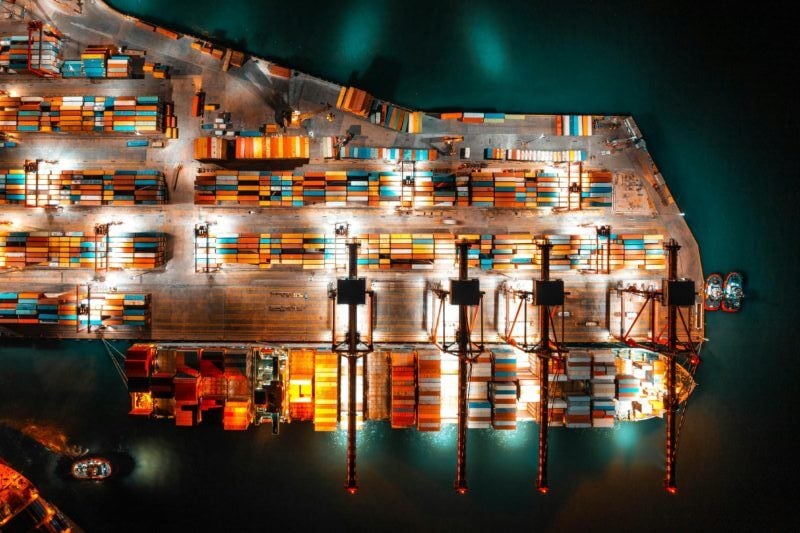
Unknown changes to tariff policy, ITCs and anti-dumping and countervailing duties (AD/CVD) create uncertainty in the market for nearly any BESS or BESS component made outside of the US.
“But, I believe that other market participants are still considering the use of more cost-effective options, possibly not limited to Chinese equipment, but including some cheaper alternatives. It’s largely a trade-off, or potentially a decision influenced by policy risk and cost competitiveness.” Kikuma says.
He adds, “I know many energy storage developers have safe harboured their energy storage projects by starting construction by the end of last year. Some projects actually started the construction physically, or other projects have basically placed an order for equipment, such as transformers.”
In January, H.I.G. Capital-backed energy platform, Greenflash Infrastructure, announced it had safe harboured over 10GWh of lithium-ion energy storage capacity. At the time, the company said that the safe harboured equipment and the readily available inventory lower the risk of prolonged manufacturing delays and supply chain disruptions.
More domestic options for BESS procurement are emerging, particularly through a string of announcements from South Korean battery manufacturers either repurposing electric vehicle (EV) factories or opening ESS-specific facilities.
LG Energy Solution, Samsung SDI, and SK On have all expanded their local manufacturing capabilities and announced domestic supply agreements with BESS integrators. Likewise, US-based system integrators like Fluence and non-lithium battery firms such as Eos are also growing their local supply chains.
Kikuma states, “I think in a few years’ time, the US supply chain will be different. And then I think if many developers or many companies are willing to take on expensive equipment to avoid policy risk, we’re going to see US domestic equipment, or maybe other imports from South Korea or Southeast Asia, as long as those countries don’t have any ties to China.”
Isshu Kikuma will be a moderator for the ‘Revenue Model Renaissance: Navigating Utility Offtake vs. Tolling in Energy Storage’ fireside chat, with speakers Arnaud Jouvin of Brookfield and Nick Dazzo of Spearmint Energy, taking place at the Energy Storage Summit USA.
Energy Storage Summit USA will be held from 24-25 March 2026, in Dallas, TX. It features keynote speeches and panel discussions on topics like FEOC challenges, power demand forecasting, and managing the BESS supply chain. ESN Premium subscribers can get an exclusive discount on ticket prices. For complete information, visit the Energy Storage Summit USA website.