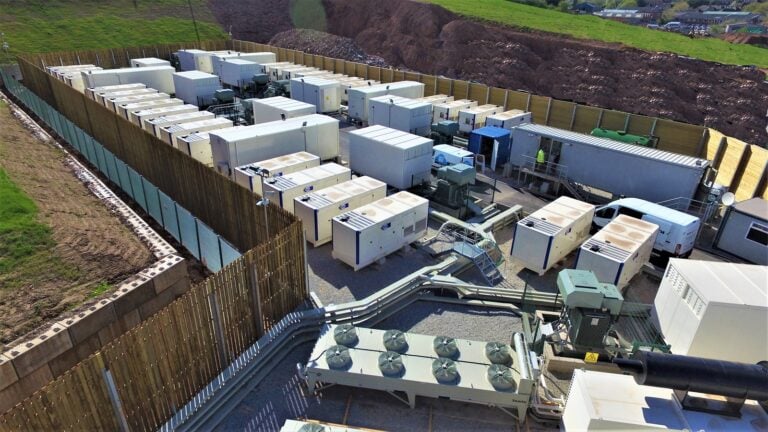
Gresham House Energy Storage Fund (GRID) has seen its net asset value (NAV) increase by 53.5% to £785 million (US$879 million), the London Stock Exchange-listed firm disclosed in its half year results ending 30 June 2022.
This NAV increase builds from previous results of £511 million from 31 December 2021. As well as this, the NAV total return also increased by 27.2%.
According to Gresham House, the NAV increase has been assisted by upward revaluations of projects that went from being valued at cost to a value using a net present value basis. In doing so, this reflected underlying internal rates of return (IRRs) of the projects at the time they were acquired.
This increase in projects means the Fund’s total operating capacity is now expected to reach 1GW/1.2GWh by the end of the first quarter of 2023. This is ahead of the prospective portfolio of 1.6GW by mid-2024 with a duration of 2.1GWh.
Try Premium for just $1
- Full premium access for the first month at only $1
- Converts to an annual rate after 30 days unless cancelled
- Cancel anytime during the trial period
Premium Benefits
- Expert industry analysis and interviews
- Digital access to PV Tech Power journal
- Exclusive event discounts
Or get the full Premium subscription right away
Or continue reading this article for free
“We are pleased with GRID’s performance in the first half of the year as we continue to deploy essential battery energy storage infrastructure and deliver above-target total returns to shareholders,” said John Leggate CBE, chair of Gresham House Energy Storage Fund.
“We have started to draw down on our debt facilities as expected. Combined with the £150 million equity we raised from shareholders, we expect these funds to deliver most of the existing pipeline, taking GRID to over 1GW of capacity, currently expected by the end of Q1 2023.
“We are ambitious to scale up GRID, both in the UK and beyond, enabling a cost-effective transition to net zero, supporting near-term energy security as gas supplies continue to be unreliable while helping maximise the output from low-cost renewable energy sources.”
Building on its portfolio, as of 30 June 2022, GRID had 425MW across 17 operational projects. This has increased to 500MW across 19 operational projects as of 31 August 2022.
602MW across 11 projects had been under construction as of 30 June 2022 with this having increased to 527MW as of 30 August 2022. The firm now has confirmed a further 90MW is due to commission in the coming days.
“Our next batch of projects is in advanced stages of construction; as of today, a further 527MW across 9 projects are anticipated to commission in the next six months, going into 2023. Beyond that, our project pipeline into 2024 is also strong, with over 500MW planned for the 12-18 months that follow,” said Ben Guest, fund manager of Gresham House Energy Storage Fund and managing director of Gresham House New Energy.
“Great Britain (GB) needs at least 20GW of BESS by 2030, demonstrating its critical importance to the energy transition. We are working on additional pipeline both in GB and overseas, and we look forward to providing updates as this work progresses.”
In late May, Gresham House Energy Storage Fund confirmed it raised £150 million following an announcement of a new share placing. This resulted in the increase in projects as witnessed in the half year results.
The funding was used to finance the majority of a 747MW existing battery storage pipeline the company was to acquire, with it consisting of projects in the UK and Ireland. At the time, due diligence was under way for 674MW of this.
This story first appeared on Solar Power Portal.