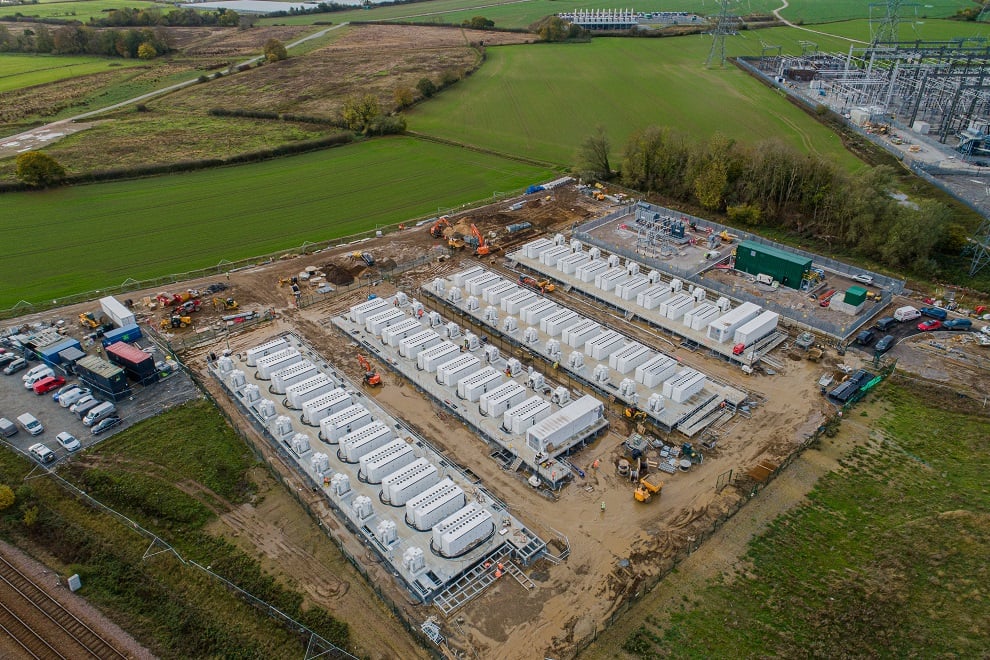
Battery storage projects totalling 627MW were awarded contracts in the UK’s 2023-24 Capacity Market auction which concluded yesterday (14 February), nearly a two-thirds jump on last year’s.
The T-1 2023-24 auction cleared at its second highest price ever, with 5,782.777MW procured at a clearing price of £60/kW/y, split between 269 Capacity Market Units (CMUs) from 103 companies. Of the 6,124.249MW of capacity that entered the auction, 94.42% was awarded an agreement.
Battery storage was awarded 10.9% of the total with 627MW of projects winning out of a total 1GW of projects that qualify. A total of 74 battery storage CMUs won contracts.
That is an increase on the 385MW of contracts won by battery storage in the T1 2022-23 auction last year, as reported by Energy-Storage.news‘ sister site Current. That is a year-on-year increase of 63%.
Try Premium for just $1
- Full premium access for the first month at only $1
- Converts to an annual rate after 30 days unless cancelled
- Cancel anytime during the trial period
Premium Benefits
- Expert industry analysis and interviews
- Digital access to PV Tech Power journal
- Exclusive event discounts
Or get the full Premium subscription right away
Or continue reading this article for free
It is worth pointing out that the bulk of the UK’s Capacity Market awarded capacity comes in the T-4 auctions which procure resources for four years in advance. Last year’s, for 2025-26, saw 1GW of contracts awarded to battery storage. The 2026-27 T-4 auction will be run next week (21 February).
For the most recent T-1, gas remained the biggest winner for 2023-24 with 45.3% of the capacity – though its dominance is waning – followed by nuclear which won 24.4%.
Developers with winning battery projects include Zenobe, Alkane Energy, Conrad Energy, Gore Street, Gresham House, GRIDSERVE, Harmony Energy, Infragreen, Pivot Power, Pulse Clean Energy, SMS Energy Services and SUSI Storage.
The biggest winners amongst these were Harmony Energy with around 150MW awarded while investor Gresham House’s projects won nearly 100MW.
Half (50%) of the battery storage projects which won awards were one-hour duration systems while 42% were two-hour systems.
See sister site Current‘s broader coverage of the auction results here.
Additional reporting by Molly Lempriere, editor, Current.
Energy-Storage.news’ publisher Solar Media will host the eighth annual Energy Storage Summit EU in London, 22-23 February 2023. This year it is moving to a larger venue, bringing together Europe’s leading investors, policymakers, developers, utilities, energy buyers and service providers all in one place. Visit the official site for more info.