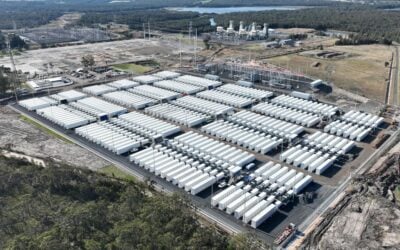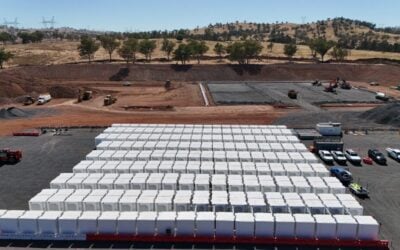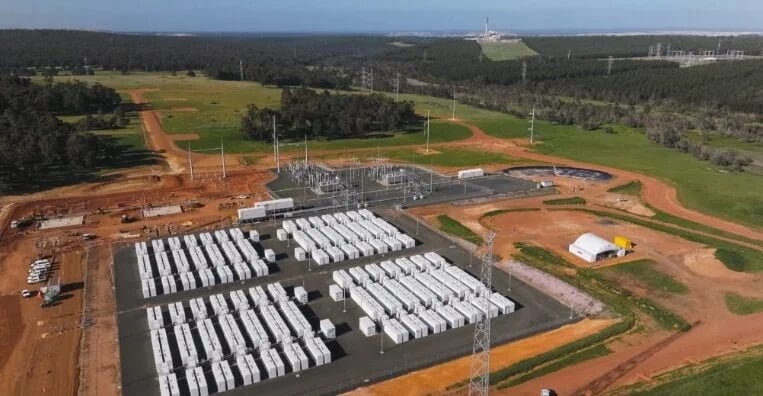
Australian renewable energy developer Tonic Group has received federal environmental approval for a 440MWh solar-plus-storage facility in Western Australia in less than a month.
The project includes plans for a 75MW solar PV power plant paired with a 55MW/440MWh 8-hour duration battery energy storage system (BESS). It was submitted to the Environment Protection and Biodiversity Conservation (EPBC) Act in early January 2026.
The Department of Climate Change, Energy, the Environment and Water (DCCEEW) determined on 29 January that the Binningup Solar Facility would not constitute a controlled action under the EPBC Act, allowing the project to proceed without requiring a comprehensive environmental assessment.
The decision enables Tonic Group to commence clearing activities across a 12.46-hectare disturbance footprint within the 88.38-hectare project site.
Try Premium for just $1
- Full premium access for the first month at only $1
- Converts to an annual rate after 30 days unless cancelled
- Cancel anytime during the trial period
Premium Benefits
- Expert industry analysis and interviews
- Digital access to PV Tech Power journal
- Exclusive event discounts
Or get the full Premium subscription right away
Or continue reading this article for free
Located approximately 130km south of Perth within the Shire of Harvey, the project sits within the Kemerton Strategic Industrial Area Structure Plan, a state priority development zone established for strategic and heavy industries in south-west Western Australia.
Tonic Group’s environmental assessment identified impacts to 1.14 hectares of low to moderate quality foraging habitat for three endangered black cockatoo species and 0.56 hectares of critically endangered western ringtail possum habitat.
As previously reported, the company has committed to retaining 5.40 hectares as an avoidance area, preserving 2.63 hectares of suitable black cockatoo foraging habitat and 2.56 hectares of western ringtail possum habitat.
The facility design includes infrastructure beyond energy generation and storage, incorporating ten EV charging bays and office facilities spanning two 12-by-6-metre buildings.
Environmental surveys conducted in 2025 confirmed the project area contained predominantly cleared and degraded land, with 70.52 hectares classified as cleared paddock and only 7.08 hectares of native vegetation remaining.
The degraded condition of existing vegetation contributed to the federal government’s determination that the project would not significantly impact matters of national environmental significance.
The Binningup project joins a growing pipeline of utility-scale battery storage developments seeking federal approval across Australia.
Recent submissions include BW ESS’s proposed 1.6GWh facility in the Hunter Valley, a third utility-scale BESS project proposed for Western Australia’s Collie region, and Horizon Power’s 239MWh solar-plus-storage development.
Tonic Group plans progressive clearing activities as development proceeds, utilising pile driving techniques to minimise excavation requirements and soil disturbance.
The federal approval enables Tonic Group to advance detailed design and construction planning for the hybrid solar-battery facility, contributing 440MWh of energy storage capacity to Australia’s expanding pipeline of grid-scale battery storage deployments.
It should also be noted that the EPBC Act is currently undergoing an overhaul, which promises streamlined approvals, as industry voices expressed mixed support for proposed changes to environmental assessment processes.
The Energy Storage Summit Australia 2026 will be returning to Sydney on 18-19 March. It features keynote speeches and panel discussions on topics such as the Capacity Investment Scheme, long-duration energy storage, and BESS revenue streams. ESN Premium subscribers receive an exclusive discount on ticket prices.
To secure your tickets and learn more about the event, please visit the official website.