
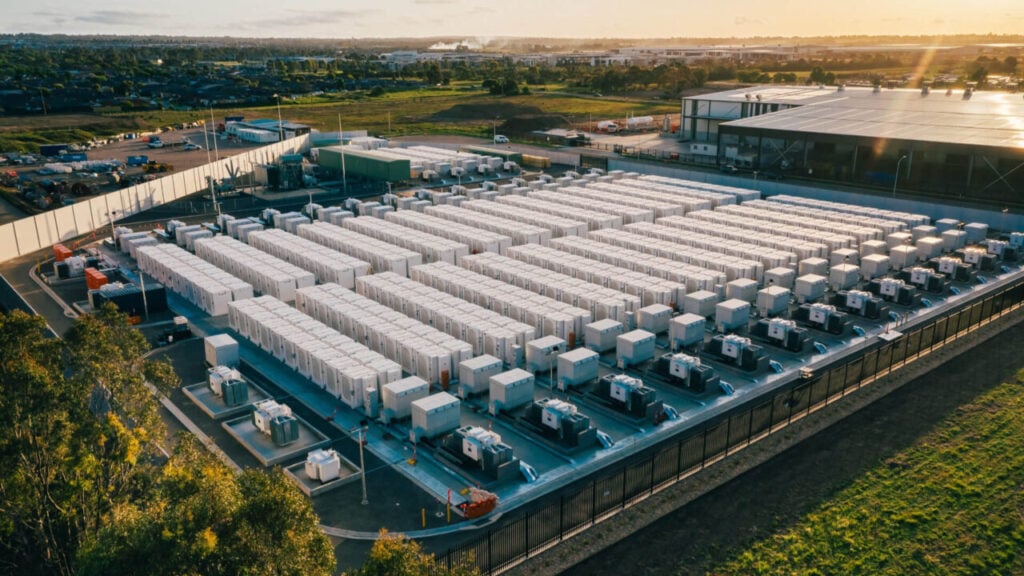
“The way the National Electricity Market (NEM) has been structured allows for new technologies to come in and trade energy very effectively,” says Tom Best, chief operating officer at Eku Energy.
Australia’s energy storage market is undergoing a transformative period, driven by ambitious decarbonisation goals, the rapid integration of renewable energy sources, and the need to replace retiring coal-fired power plants.
At the heart of this evolution is the Capacity Investment Scheme (CIS), a government initiative designed to accelerate the deployment of dispatchable renewable energy, with energy storage integral to its delivery.
In an exclusive interview with ESN Premium, Eku Energy COO Tom Best and director of policy Rachel Rundle provide a comprehensive view of the opportunities, challenges and future of energy storage in Australia.
Try Premium for just $1
- Full premium access for the first month at only $1
- Converts to an annual rate after 30 days unless cancelled
- Cancel anytime during the trial period
Premium Benefits
- Expert industry analysis and interviews
- Digital access to PV Tech Power journal
- Exclusive event discounts
Or get the full Premium subscription right away
Or continue reading this article for free
The NEM: A foundation for growth
Australia’s NEM is the primary market for Australia’s eastern and southern states and territories and accounts for 80% of the country’s electricity consumption. Tom Best describes the NEM as a fertile ground for energy storage innovation.
“The way the market has been structured allows for new technologies to come in and trade energy very effectively,” he explains.
The NEM’s volatility, driven by the increasing penetration of renewables, creates opportunities for energy storage systems to charge during periods of low prices and discharge during periods of high prices.
This volatility is further amplified by the retirement of coal-fired power plants, which has created gaps in dispatchable capacity.
“The demand for storage increases as we see price volatility and negative pricing events, particularly with the growth of solar,” Best notes. He emphasises that the market’s evolution is creating new opportunities for merchant battery projects, which, while riskier, can accelerate the deployment of storage assets.
“Merchant finance is challenging, but it’s a way to accelerate project delivery,” he adds.
The CIS has been a cornerstone of Australia’s energy storage policy since its inception. Rachel Rundle explains that the scheme has evolved significantly since the first pilot tender in 2023.
“We’re now into the third dispatchable tender, and the industry has become very familiar with the scheme,” she says.
The tenders have been highly competitive, often oversubscribed three to four times over, which has driven clear pricing outcomes and demonstrated the scheme’s effectiveness.
Rundle emphasises that the CIS is not just about capacity.
“The government is also prioritising other policy objectives, such as supply chain development, social license, and industry partnerships,” she explains. This holistic approach ensures that the scheme contributes to broader economic and social goals while accelerating the deployment of energy storage.
“It’s not just about getting megawatts or megawatt-hours into the system; it’s about ensuring that these projects deliver broader benefits, like local manufacturing and community engagement,” she adds.
The CIS’s focus on dispatchable capacity has naturally favoured lithium-ion batteries, which dominate the market due to their cost competitiveness and supply chain maturity.
Supporting this, Rundle points out that other technologies, such as pumped hydro and compressed air storage, have also found opportunities through state-level initiatives, such as New South Wales’ long-duration energy storage (LDES) tender scheme.
“The LDES programme has a broader remit and has recognised the value of diverse technologies, which is crucial for meeting the state’s reliability targets as coal plants retire,” she says.
Overcoming development challenges
Despite the progress enabled by the CIS, developing energy storage projects in Australia is not without its challenges. Best identifies grid connection as a hurdle.
“Finding the right locations to connect energy storage, particularly at scale, is becoming increasingly challenging,” he says. The complexity of Australia’s grid, combined with the rapid pace of renewable energy deployment, has created bottlenecks in the connection process.
“We’re seeing delays in grid approvals, which can push project timelines out by months or even years,” he adds.
Planning frameworks also present obstacles. Rundle explains that planning requirements vary across states, adding complexity to the development process.
“In Australia, planning is very much a state-level responsibility, and each state has its own set of requirements, timeframes, and expectations,” she says.
While these frameworks are generally clear, they can be lengthy and require extensive community engagement.
“We need to allocate significant time and resources to working with local stakeholders, councils, and state departments to ensure that our projects meet all requirements,” she notes.
Community engagement is another critical factor. Best highlights the importance of maintaining strong relationships with local communities.
“Standalone batteries have generally enjoyed strong community support, but as the number of projects increases, we need to be proactive in engaging with communities to ensure that support continues,” he says.
Eku Energy has launched initiatives such as the ‘Powering Big Dreams’ programme, which funds local projects and not-for-profits to strengthen its social license.
“We’ve awarded nine grants totalling AU$500,000 (US$354,910) to support initiatives like deploying solar for underprivileged communities, cancer research, and local environmental projects,” Best shares.
The regulatory environment in Australia is also undergoing significant changes. Rundle notes that the market design must evolve to value better the system services that storage provides, such as frequency control, voltage support, and system restart capabilities.
“The frequency control ancillary services (FCAS) market has been less lucrative in recent years, but we’ve seen an increase in arbitrage opportunities as the market evolves,” she explains.
One of the biggest developments in the market currently is the Electricity Services Entry Mechanism (ECEM), a proposed framework to support the entry of new capacity.
Unlike ‘energy-only’ markets, where generators are paid only for the electricity they produce, a capacity mechanism remunerates power plants for their available capacity. This ensures they are ready to generate electricity when needed, particularly during periods of high demand or low supply.
“The ECEM is an interesting development because it could provide a pathway for new projects once the CIS ends in 2027,” Rundle says.
Rundle emphasises the importance of designing the ECEM in collaboration with industry to ensure that it complements the private offtake market and does not interfere with wholesale market settings.
“Any new mechanism must be designed to work alongside the market, not against it,” she adds.
The role of long-duration energy storage in Australia’s energy transition
As Australia transitions to a renewable energy-dominated grid, the role of LDES becomes increasingly critical.
While short-duration lithium-ion batteries have dominated the market due to their cost-effectiveness and scalability, demand for storage solutions capable of providing 8+ hours of dispatchable energy is growing.
Rundle highlights the importance of mechanisms like New South Wales’ LDES programme in de-risking these investments.
“The market doesn’t currently value those last 4-hours of storage, so mechanisms like the LDES are essential for making these projects commercially viable,” she explains.
Eku Energy’s 800MWh Griffith project, supported by an ASL LDES tender last year, exemplifies how long-duration storage can provide system benefits.
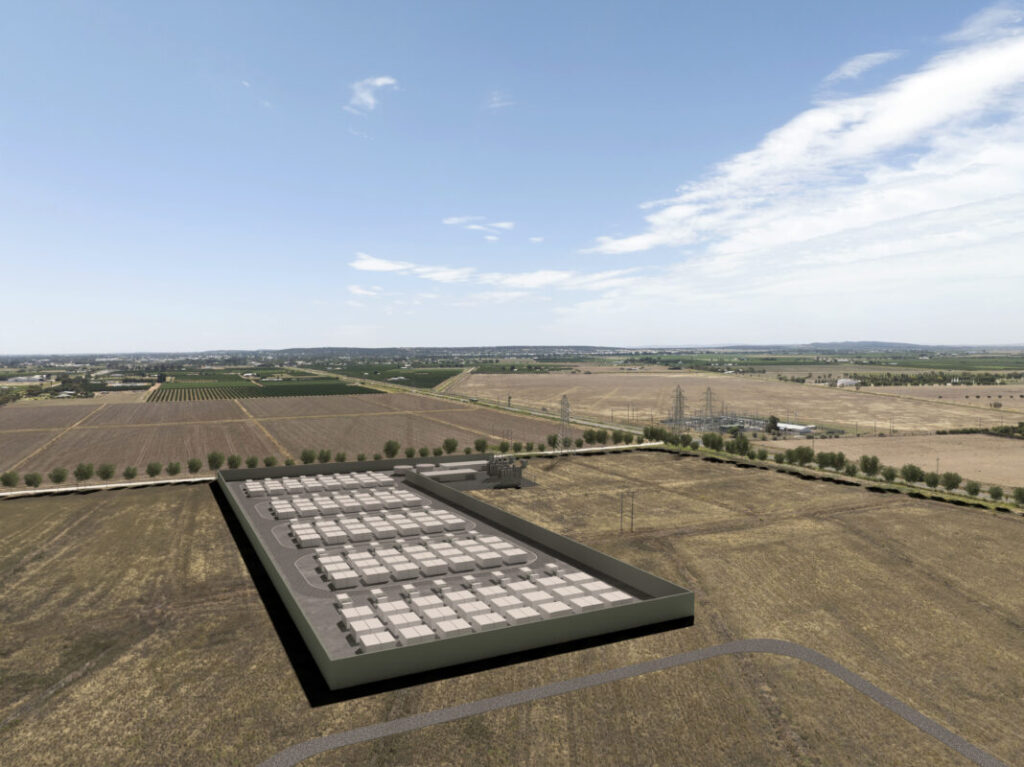
“Griffith is located in a part of the network with a high concentration of solar resources. Long-duration storage helps smooth out network needs and supports the deployment of additional renewables,” Rundle says.
The project also reflects the government’s focus on multi-criteria assessments, which consider not just capacity but also system services and social contributions.
“It’s about more than just megawatts; it’s about delivering broader benefits to the system and the community,” she adds.
The LDES Long-Term Energy Service Agreement (LTESA) tender has also encouraged innovation in tender design, allowing bidders to propose flexible contract terms.
“The way the New South Wales government has structured the tenders is really innovative,” Rundle notes. “Bidders can opt for shorter contract tenors or even exclude certain years of support, which drives competitiveness and ensures that the scheme delivers value for money.”
This flexibility has resulted in a downward trend in clearing prices, making long-duration storage more accessible to developers and investors.
Addressing system services and market gaps
One of the persistent challenges in Australia’s energy market is the lack of a comprehensive framework for valuing and procuring system services.
These services, which include frequency control, inertia, and voltage support, are essential for maintaining grid stability as the penetration of variable renewable energy increases.
Rundle emphasises the need for a coordinated approach to planning and procuring these services.
“At the moment, the process is fragmented, with different entities responsible for different aspects of system planning and procurement,” she says.
To address this issue, the Australian Energy Market Operator (AEMO), the Clean Energy Council, and the Australian Energy Council have proposed a joint rule change to streamline the process.
“The goal is to create a more efficient framework for planning and procuring system services, ensuring that the right resources are in place when and where they’re needed,” Rundle explains. This initiative is expected to be a key focus of regulatory discussions in the coming year.
Tom Best adds that the evolving shape of the energy market curve is another factor that developers must consider.
“As more thermal assets retire and more renewables come online, the shape of the curve is constantly changing,” he says. This dynamic underscores the importance of robust forecasting and scenario planning.
“We need to have a keen eye on what those forecasts look like and understand a range of future scenarios to ensure that our projects are resilient,” Best adds.
The future of energy storage in Australia
Looking ahead, the Australian energy storage market is poised for major growth. AEMO projects that 646GWh of dispatchable storage will be needed by 2050 to support the nation’s renewable energy targets.
Achieving this level of deployment will require a combination of government support, private investment, and technological innovation.
Tom Best and Rachel Rundle agree that government involvement will continue to play a crucial role in driving the market forward. “There’s a healthy role for governments in encouraging capacity to be committed and brought online ahead of need,” Rundle says.
However, she also emphasises the importance of designing policies that complement market dynamics rather than distorting them.
“Any new mechanisms must be carefully designed to work alongside the private offtake market and avoid interfering with wholesale market settings,” she adds.
The transition from contracted projects to merchant battery development is another trend likely to shape the market’s future. While merchant projects offer the potential for higher returns, they also come with greater risks.
“Merchant finance is challenging, but it’s a way to accelerate project delivery,” Best notes.
Best adds that the increasing sophistication of energy trading platforms and analytics tools is helping developers manage these risks more effectively.
Australia’s energy storage market is at a pivotal moment, shaped by policy frameworks, technological advancements, and the urgent need for decarbonisation. With the right mix of government support, market design, and community engagement, Australia can be well-positioned to lead the global transition to a renewable energy future.
The CIS, alongside ASL’s long-duration energy storage tenders and evolving market designs, are all critical components of this transition.
However, the path forward is not without challenges.
Delayed coal retirements, planning bottlenecks, and the need for comprehensive service frameworks are issues the industry must navigate. Yet, the opportunities are equally significant, offering the potential to reshape Australia’s energy landscape and set a global benchmark for renewable energy integration.
In the words of Eku Energy’s Tom Best: “It’s an exciting time to be in this industry. The challenges are significant, but so are the opportunities. We’re looking forward to being part of the solution.”
Tom Best and Rachel Rundle will both be speaking at the upcoming Energy Storage Summit Australia, taking place in Sydney on 18-19 March. ESN Premium subscribers receive an exclusive discount on ticket prices. You can find out more about the event, including how to book tickets, on the official website.
Specifically, Best will feature on the ‘What are the Implications of 100% Renewable Energy Sources to ESS?’ on the morning of day one, whilst Rundle will cap off the day on the ‘CIS and the Future of Energy Storage Investment’ panel discussion.