
“Some of the cost declines that lithium-ion batteries have seen have enabled some very attractive pricing,” Thimo Mueller, general manager, commercial at ASL, tells ESN Premium.
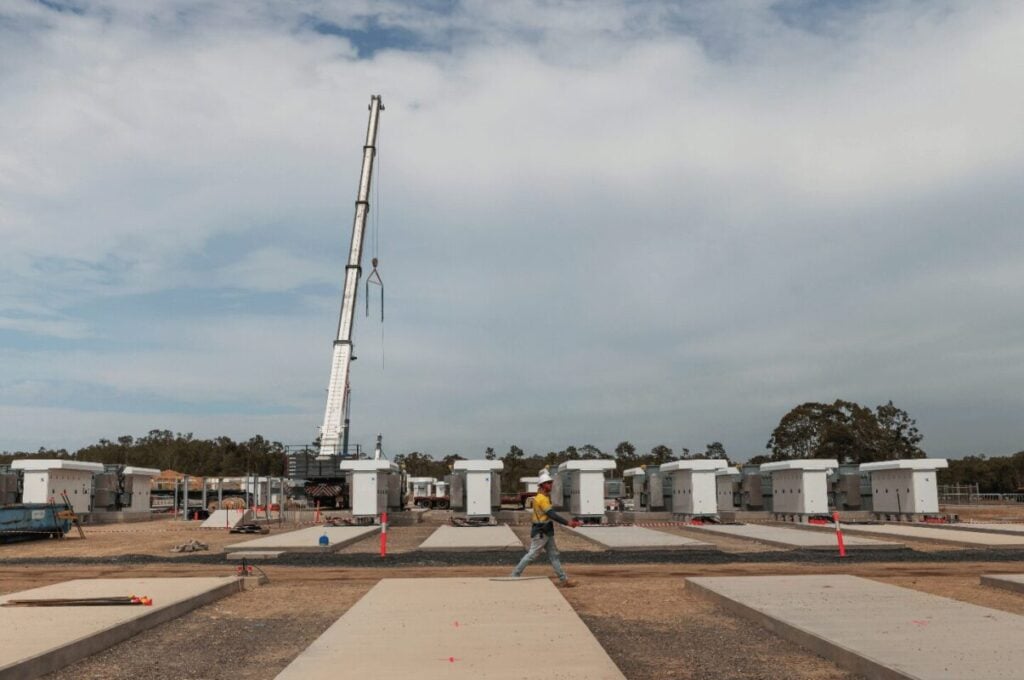
These thoughts stem from the success of lithium-ion battery energy storage systems (BESS) in New South Wales’ (NSW) latest tender round. The tender awarded 12GWh of storage capacity exclusively to lithium-ion BESS, a testament to the technology’s competitiveness in the state’s energy transition.
Although pumped hydro energy storage (PHES) had been successful in previous tenders, Mueller explains why lithium-ion batteries dominated the tender.
“We take a technology-agnostic approach, and we try to structure the assessment so that it is a level playing field between technologies. When you assess a pumped hydro project, you have a 50-year asset, whereas with a battery, you have maybe 20 years,” he says. To ensure fairness, ASL adjusts for these differences.
Try Premium for just $1
- Full premium access for the first month at only $1
- Converts to an annual rate after 30 days unless cancelled
- Cancel anytime during the trial period
Premium Benefits
- Expert industry analysis and interviews
- Digital access to PV Tech Power journal
- Exclusive event discounts
Or get the full Premium subscription right away
Or continue reading this article for free
“From a cost basis, you basically need to look at the 50 years of pay during that period. You need to procure, like, two and a half batteries to go over that, to have that level on the costing,” he adds.
The advantages of lithium-ion technology extend beyond cost.
“When you develop pumped hydro projects, there’s much more risk involved, particularly in the early phases. So, in this round, batteries were very successful,” Mueller notes.
Mueller also highlights the flexibility of ASL’s methodology, saying, “It’s maybe a demonstration that the methodology works and projects can demonstrate value to consumers depending on how they bid and what risk profile they have.”
Creating investor confidence in NSW
With 30GWh of contracted storage capacity already secured, NSW is well on its way to meeting its 42GWh target by 2034.
Mueller emphasises the importance of providing clarity and predictability to investors and developers.
“We hear very positive feedback from investors and developers that we actually give them a procurement plan, a tender plan,” he says. He elaborated on the timeline for future tenders, stating, “In 2026 – let’s say the Q2 2026 and Q2 2027, we will procure around 12GWh for each of the tenders. So that would get us kind of above the overall target, if you have a full subscription.”
ASL’s flexibility in awarding tenders has also been a critical factor in its success. “We can always award more as well,” Mueller notes. “We’ve seen that on any occasion of LDES tenders, it works quite well because projects take some time to make progress between tenders. So, I think the signal is quite clear to change the tenders, so investors and developers have certainty around the next two years.”
While ASL is committed to achieving the 42GWh target, Mueller acknowledges that market conditions could influence the timing and scale of future tenders.
“There are no guarantees for LDES tenders beyond 2027,” he says. “We do a report every two years, and then, we develop the tender plan. What we really try to procure for is what gets to the lowest cost to the electricity consumers at the end of the day.”
Mueller outlines several scenarios that could trigger additional tenders.
“You can foresee a scenario where costs go further down, and suddenly you want to procure more because it’s more beneficial to consumers,” he tells ESN Premium.
“Some projects in our contracting portfolio may have some delays, so then we won’t be able to make up for that. Something happens in the market, like demand forecasts or coal units retiring earlier than expected – several factors where we then flexibly could ramp it up and do more.”
LTESAs have been instrumental in addressing the “missing money” problem, where market revenues alone are insufficient to justify investment in long-duration energy storage projects.
Mueller explains: “They basically know there’s a minimum cash flow that they can get for the assets. Even in the worst year, they have a guaranteed revenue stream, which helps finance these assets. That’s a pretty crucial part.”
Another key factor is the long contract duration. “You can get 14 years on a battery, you can get 14 years on a pumped hydro project,” he says.
“You don’t get that in the commercial offtake market at the moment. You may get a 5-year battery warranty, but you rarely get a 14-year one. So, it gives them that long tenure, and that creates certainty for the financiers and the investors.”
Mueller also highlights the flexibility of the LTESA framework. “It really integrates well with other sources of revenue,” he notes.
“We’ve seen projects that are comfortable with the virtual position, and then they enter shorter off-take contracts on the back of the LTESA. But they can still keep their LTESA. They don’t have to make a decision; they can integrate the LTESA into whatever off-take contracting strategy works best for them.”
The Energy Storage Summit Australia 2026: A platform for collaboration
Looking ahead to the Energy Storage Summit Australia in Sydney on 18-19 March, Mueller expresses his enthusiasm for the event’s potential to bring together key players in the energy storage sector.
“For me, it’s about connecting,” he says. “The Energy Storage Summit series is very established. My background is in Europe, and the Energy Storage Summit EU 2026 is a major event. It’s fantastic to see that now in Australia, it really attracts a high calibre of people.”
Energy-Storage.news publisher Solar Media is hosting the Energy Storage Summit EU 2026 in London, UK, on 24-25 February 2026 at the InterContinental London – The O2. You can find out more about the Summit on the official website.
Mueller adds that the Summit’s importance lies in its platform for collaboration and innovation.
“Some of those are at the forefront of what’s happening commercially, how they structure things,” he says. “It allows investors to deploy development expenditures because they know this is important to the government and to ASL.”
Mueller also hints at some of the key topics he hopes to discuss at the summit.
“Some of the elements that we would like to talk about are New South Wales’ investment priorities,” he says. “I think another thing that gives investors confidence is knowing what we want to do in New South Wales. It allows them to deploy development expenditures because they know this is important to the government and to ASL.”
He also touches on the growing interest in hybrid generation projects. “The hybrid project is very interesting,” he says.
“It’s not just a storage component, right? Like what you see in the system now, these boundaries are getting blurred. A hybrid generation asset combines a generation asset with a storage asset, but it ultimately delivers a firm generation asset. So, I think that is something we would like to talk about.”
The Energy Storage Summit Australia 2026 will be returning to Sydney on 18-19 March. It features keynote speeches and panel discussions on topics such as the Capacity Investment Scheme, long-duration energy storage, and BESS revenue streams. ESN Premium subscribers receive an exclusive discount on ticket prices.
To secure your tickets and learn more about the event, please visit the official website.