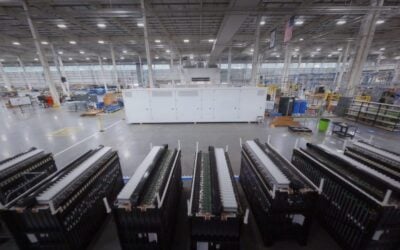
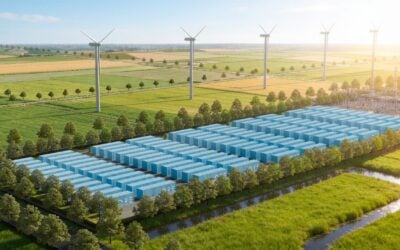
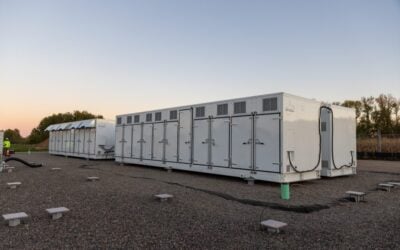
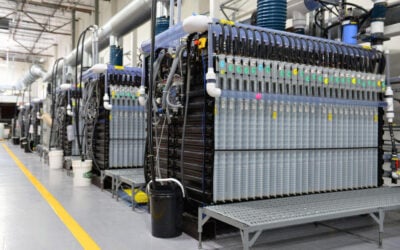
Form Energy, Noon Energy and Ore Energy are all commercialising proprietary 100-hour battery technologies for LDES applications, but how do they compare on metrics like cost, energy density and round-trip efficiency? We look at what they have revealed, as well as what they haven’t.
A first project outside the US has been announced by Form Energy, the developer of a novel battery technology promising ‘multi-day’ duration energy storage.
Recently, utility Xcel Energy announced it would install 30GWh of US startup Form Energy’s iron-air batteries at a data centre in Pine Island, Minnesota, owned by tech giant Google.
Utility Xcel Energy will install 30GWh of US startup Form Energy’s iron-air batteries at a data centre in Pine Island, Minnesota, belonging to tech giant Google.
Steady price falls the past few years have made lithium-ion BESS a real contender for long-duration energy storage (LDES), and that is now reflected in global project pipelines.
Berkshire Hathaway Energy-owned utility PacifiCorp has filed its 2025 integrated resource plan (IRP) with the six state utility commissions in its service area.
Form Energy, the US startup behind a battery technology that aims to cost-effectively provide 100-hour duration energy storage, has closed a Series F funding round.