The government of Alberta, Canada, has selected advanced and clean energy projects to receive CA$33.7 million (US$24.83 million) in grant funding, including a hydroelectric-plus-supercapacitor technology pilot.
The US government has announced US$4 billion in tax credits for over 100 projects under the Qualifying Advanced Energy Project Tax Credit (48C) scheme.
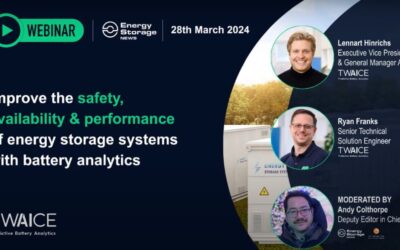
Energy-Storage.news is proud to present our sponsored webinar with TWAICE, looking at how battery analytics can improve safety, performance and availability of energy storage systems.
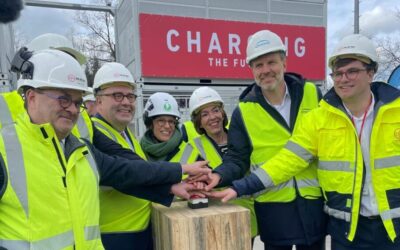
Belgium’s energy minister visited the site of a large-scale lithium-ion (Li-ion) battery storage project, a few days after attending the inauguration of a vanadium flow battery system.
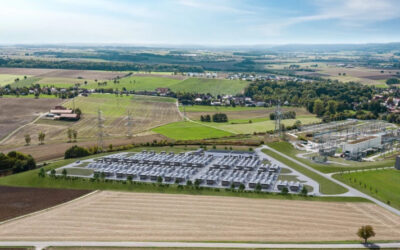
A regional council in Germany has given the go-ahead for transmission system operator (TSO) TransnetBW’s 250MW Grid Booster BESS project, which will be provided by system integrator Fluence.
Big investments are being made into the battery recycling sector in Europe as the continent looks to increase the domestic supply of critical materials for its lithium-ion gigafactory projects.