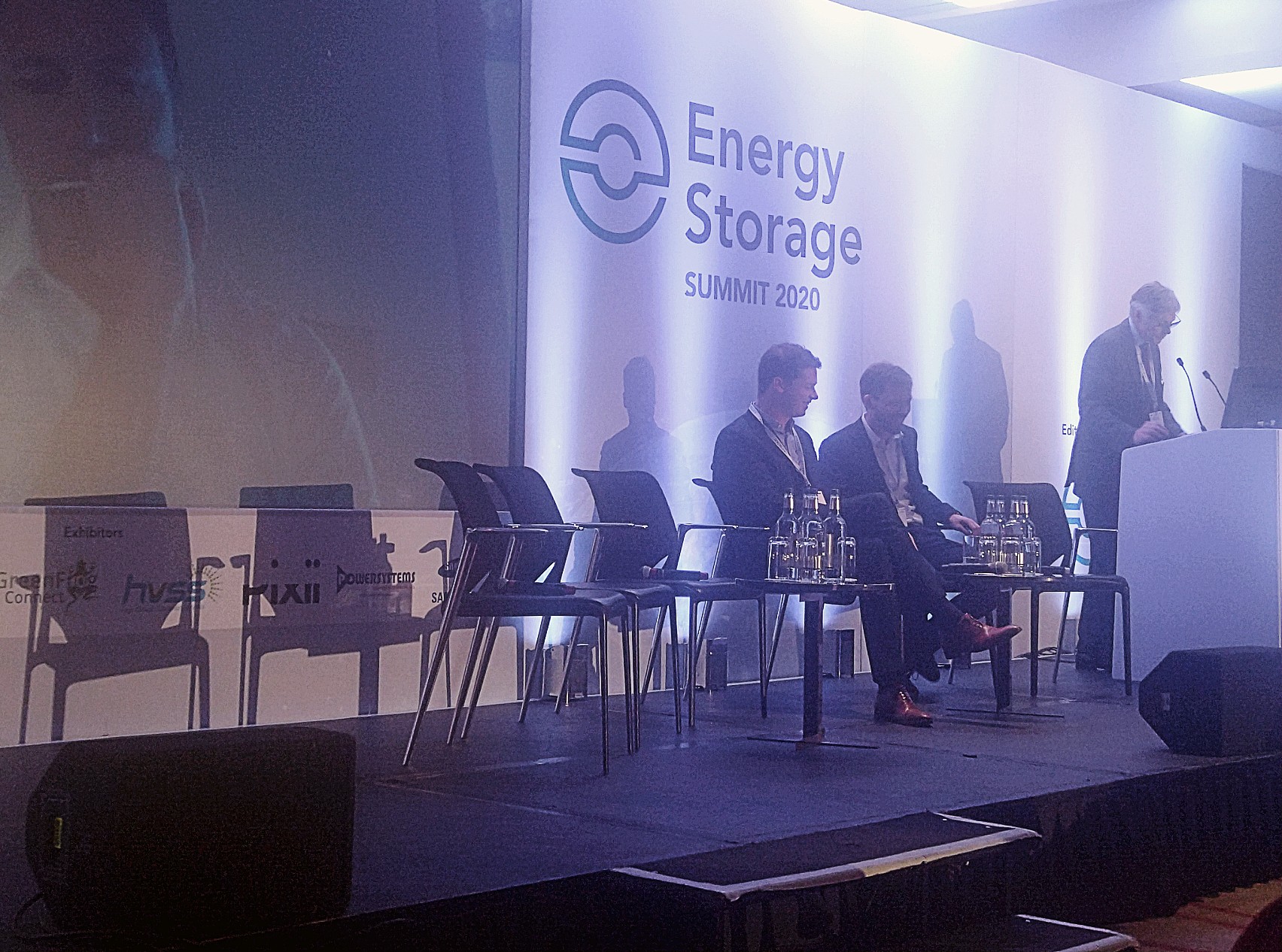
Battery storage in continental Europe “is not working anymore”, following the integration of the European market, according to Next Kraftwerke CEO Jochen Schwill.
Speaking on a panel at Solar Media’s Energy Storage Summit in London, Schwill said the primary reserve market in Germany and central Europe has fallen from around €2,000 per week to €1,000 per week, claiming that in continental Europe batteries “are dead”.
This has come out of the integration of the European market, with Schwill pointing to French SCR capacity bidding into German markets and vice versa as an example, saying that efficiency “is now coming into place”.
Whilst for investors this might be “not so good news”, he said, for the market it is good news.
Try Premium for just $1
- Full premium access for the first month at only $1
- Converts to an annual rate after 30 days unless cancelled
- Cancel anytime during the trial period
Premium Benefits
- Expert industry analysis and interviews
- Digital access to PV Tech Power journal
- Exclusive event discounts
Or get the full Premium subscription right away
Or continue reading this article for free
“We have a lot of flexibility right now,” Schwill said, noting that it allowed for the integration of higher levels of renewables. This is short term flexibility though, leaving the “big question” of what happens when “we have two, three weeks without wind or sun”.
Next Kraftwerke is not currently involved in long duration storage because “nobody is paying us” for the technology, and there is not currently a market for it, Schwill finished.
Additionally, this issue of seasonality means “there is a lot of opportunity coming into this space in various forms” according to Erik Nygard, CEO of Limejump, speaking on the panel alongside Schwill.
While gas can manage seasonality today, Nygard said, new technology could drive a wider change in the sector.
When asked what would help kick off storage, Nygard said it would be “large institutions ploughing money in”. However, like Schwill, he said Limejump had also seen trends of declining value in some ancillary service products.
“It’s very clear, I think it’s happening everywhere,” Nygard said. “But at the same time you’ve seen battery costs come down and lots of innovation come into the space trying to work against this declining revenue stream. So things are coming together.”
Pointing to a long term offtake contract announced this week by Limejump’s parent company Shell for 100MW of storage, Nygard said that because it is an offtake agreement, the investor “no longer needs to worry about that risk”.
“The liquidity risk, declining market price, increasing market price, all of that is taken away and the risk sits somewhere else,” he said, before highlighting the role of the feed-in tariff and Renewable Obligation Certificates (ROCs) combined with the big players. These are “making the returns work” for wind and solar in the UK in creating scale.
“For flexibility in general, being able to offer different risk management profiles for customers’ needs is necessary. Not everyone wants merchant, some do, some don’t and you need to create to facilitate that for customers,” Nygard finished.