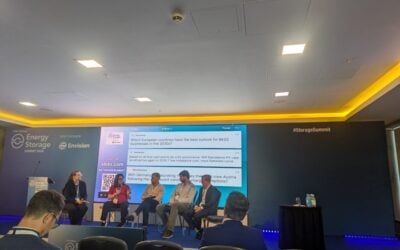
“Standalone solar is not dead, but it is challenging,” said Pierre Bartholin, head of power hedging at investor Nuveen Infrastructure, opening the debate at Solar Media’s Solar Finance Investment Europe (SFIE) conference in London on the future of co-located battery storage.
Panellists on the ‘How to Unlock the Full Revenue Potential of Co-located Storage Assets?’ session yesterday (3 February) highlighted a rapidly evolving market where traditional power purchase agreements (PPAs) no longer guarantee full revenue protection.
Falling solar capture rates, coupled with curtailment and negative pricing hours, have exposed gaps in older agreements.
“When you have curtailment or negative hours, you have to shut down and don’t get a payment. The only hedge you can do is add storage, and that’s what we have been doing,” said Claus Wattendrup, CEO of Vattenfall UK, part of the large Sweden-headquartered power firm.
Try Premium for just $1
- Full premium access for the first month at only $1
- Converts to an annual rate after 30 days unless cancelled
- Cancel anytime during the trial period
Premium Benefits
- Expert industry analysis and interviews
- Digital access to PV Tech Power journal
- Exclusive event discounts
Or get the full Premium subscription right away
Or continue reading this article for free
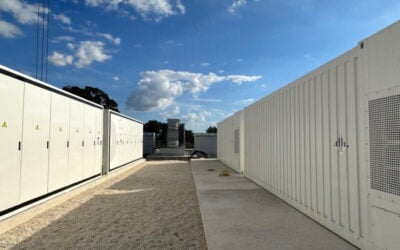
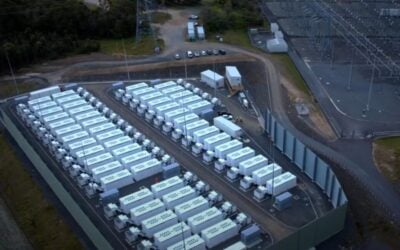
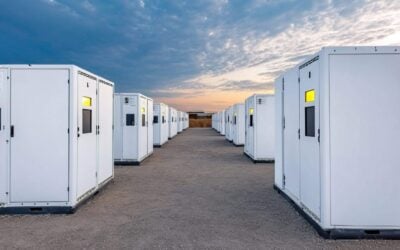
Co-located battery systems are increasingly essential for maximising revenue and managing volatility. Wattendrup added that grid constraints vary by country and operator. “Having full import capacity for a battery next to a solar farm has happened, but it’s more the exception than the rule,” he said.
Panellists stressed the need for a holistic approach across procurement, commercial structures, and financing. Bartholin explained that even well-capitalised projects face low offtaker appetite for fixed PPAs, making hybrid solutions more attractive. Simon Monk, head of flexibility and structured transactions at power firm EnBW, added that banks and developers are adjusting to shorter-term products.
“Products by definition will be shorter term. The risks being transferred back to the developer are greater, but margins are probably higher than just investing in standalone PV,” he said.
Financing co-located projects adds further complexity. Nikolaj Holtet Hoff, founder and CEO of developer Nordic Solar, said lenders do not always provide extra debt for retrofitting batteries.
“Two really important things are to look at existing financing and what the PPA allows – you have to solve this together,” he said.
Wattendrup added that large utilities often rely on corporate balance sheets rather than project-level debt, but still need carefully structured tolling agreements and PPAs.
Retrofitting and hybridising solar assets with batteries is gaining traction. Bartholin said, “The intention is really to not affect existing financing, and just to leave the offtaker whole, optimising on a standard basis.”
Hoff noted that permitting is generally straightforward for moderate-size installations, but PPAs require careful consideration to avoid conflicts with existing agreements.
Technical and market considerations are central to battery sizing and dispatch. Hoff emphasised that AC-coupled batteries remain the norm due to grid constraints, while Monk stressed the importance of sizing flexibility to maximise trading value.
Looking ahead, panellists agreed co-location will become increasingly standard, though adoption will depend on local market and regulatory conditions.
Wattendrup said, “Assuming capex keeps going down and batteries make sense, 5-10 years from now, co-location would be a must.”
Hoff added, “It will be the norm, but highly dependent on the regime in each country. Standalone BESS will still exist where co-location isn’t feasible.”