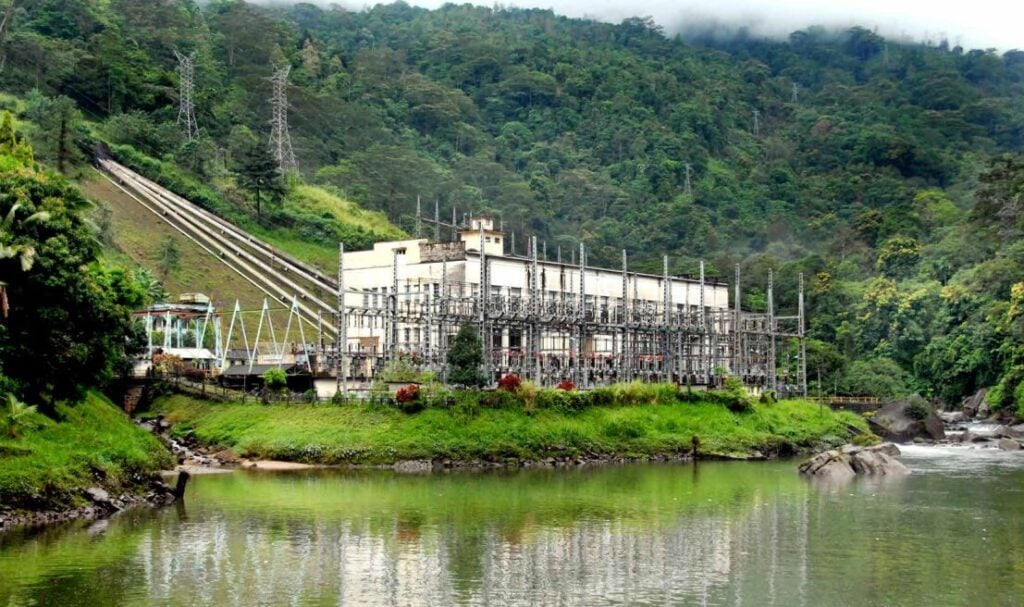
Ceylon Electricity Board (CEB), the main electricity company in Sri Lanka, has issued an RFP for large-scale BESS.
The state-owned firm issued the request for proposals (RFP) on 30 July, seeking companies to build, own and operate large scale battery energy storage system (BESS) projects in Sri Lanka under 15-year deals.
CEB generates, transmits and distributes electricity in Sri Lanka, covering about 75% of the country. The company said that it has increasingly been procuring energy from what it described as ‘non-conventional’ renewable energy (NCRE) resources, which covers intermittent resources like solar and wind (it essentially means anything that isn’t hydropower or biomass).
‘In order to achieve reliable and stable operations of the grid, battery energy storage systems are required to be implemented to supplement the additions of NCRE sources,’ CEB said.
Try Premium for just $1
- Full premium access for the first month at only $1
- Converts to an annual rate after 30 days unless cancelled
- Cancel anytime during the trial period
Premium Benefits
- Expert industry analysis and interviews
- Digital access to PV Tech Power journal
- Exclusive event discounts
Or get the full Premium subscription right away
Or continue reading this article for free
The BESS projects will be developed under a competitive bidding approach. Bidders will submit proposals outlining plans to design, supply, delivery, build, test, commission, operate and maintain of the standalone BESS projects on a build-own-operate (BOO) model.
The scheme is made up of 16 4-hour projects totalling 10MW/40MWh each, on 0.8 acre plots of land connecting to the grid at the 33kV level.
The projects will include the site, batteries, inverters, energy management system (EMS), power plant controller (PPC), stand-by/auxiliary/emergency power requirements, water requirements, environmental impact mitigatory measures, transformers, switch gear and protection schemes, transmission lines (overhead or under-ground up to the Termination Point), SCADA facilities up to the termination point and all other equipment to operate a BESS.
The document does not mention any specific technology, but did say this: ‘The technology
proposed for the project shall have a proven track record with demonstrated success in countries
with a similar level of technological development and infrastructure support, as in Sri Lanka.
Equipment offered shall be new and unused.’
Read the full RFP document here. The closing date for proposals is 10 September, 2025, and the CEB is aiming for the projects to be completed by 29 May, 2026.
This article and its headline have been amended from the original versions which mistakenly placed Ceylon Electricity Board and the RFP in Bangladesh, not Sri Lanka.