PT Sembcorp Renewables Indonesia, a wholly owned subsidiary of Singapore-headquartered engineering firm Sembcorp, and state-owned PT PLN Nusantara Renewables have launched a utility-scale solar-plus-storage project in Indonesia.
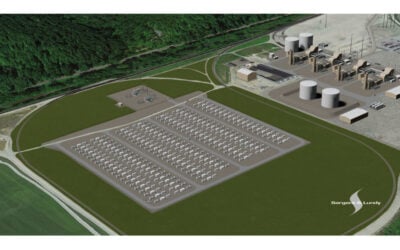
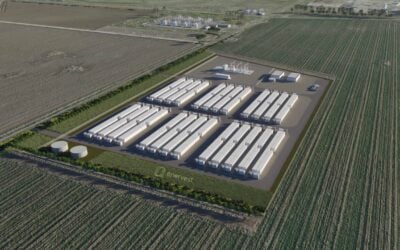
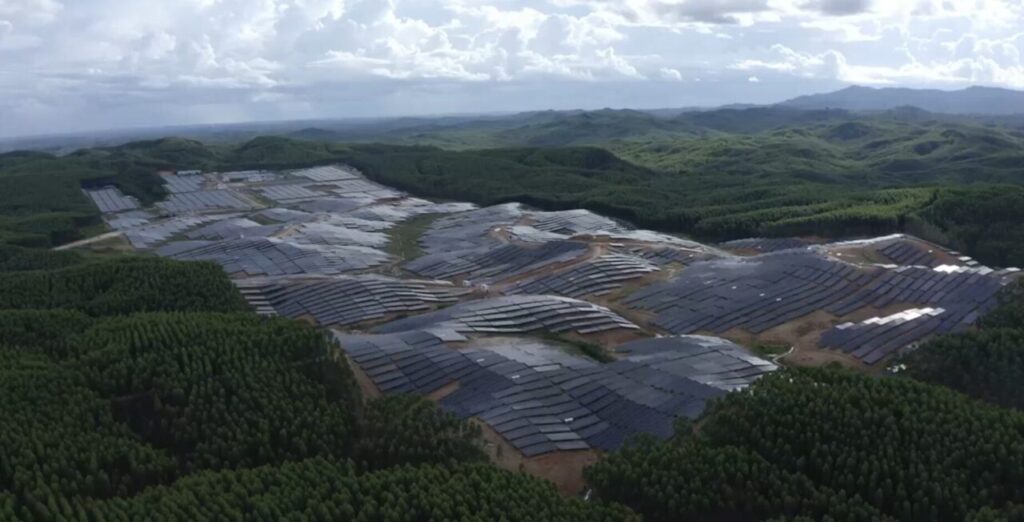
The Nusantara Sembcorp Solar Energi (NSSE) power plant comprises 50MW of solar PV and a 14.2MWh battery energy storage system (BESS). It is located on 87 hectares of land in Nusantara, on the island of Borneo. This plant also represents Sembcorp’s inaugural venture into large-scale solar development in Indonesia.
NSSE features 114,420 625MWp bifacial solar PV modules and 126 lithium iron phosphate battery packs. The project also features 200kW and 300kW inverters and PV smart transformer stations.
The site is expected to generate around 93GWh of renewable energy per year and will provide all electricity needs for Nusantara, the future capital of Indonesia. The city was first established in February 2022 due to the rapid sinking witnessed in the country’s current capital, Jakarta. The construction of the new capital city is expected to cost in the region of US$35 billion.
Try Premium for just $1
- Full premium access for the first month at only $1
- Converts to an annual rate after 30 days unless cancelled
- Cancel anytime during the trial period
Premium Benefits
- Expert industry analysis and interviews
- Digital access to PV Tech Power journal
- Exclusive event discounts
Or get the full Premium subscription right away
Or continue reading this article for free
The construction of a new capital city could well reduce Jakarta’s sinking rate, which is widely believed to be caused by the excessive extraction of groundwater to support its sizable population.
Jen Tan, head of renewables for Singapore and Indonesia at Sembcorp Industries, said: “Sembcorp is pleased to partner with PLN in this project. Leveraging our experience, we will deploy advanced energy storage to pair with the latest solar technology in this landmark utility-scale project.”
Borneo, a less densely populated island in Southeast Asia shared by Malaysia, Indonesia, and Brunei, lacks a traditional power grid. Instead, the sole Trans Borneo power grid is located in the mid-western portion of the island.
This grid spans the Malaysian state of Sarawak and Indonesia’s West Kalimantan region. Despite this, there are plans to develop what is known as the Borneo Grid, connecting more areas across the island.
Sembcorp’s previous Indonesian solar-plus-storage project
Readers of Energy-Storage.news may well be aware that Sembcorp had previously planned to build a solar-plus-storage site in Indonesia before it was cancelled in 2023.
The company originally proposed Southeast Asia’s biggest BESS at the time, which would have been co-located with a large-scale integrated solar PV power plant. This plant’s generation capacity was proposed to be 1GW, while the BESS capacity was not disclosed.
Sembcorp’s proposed site would have been located in Indonesia’s Batam, Bintan, and Karimum regions, and was among several initiatives being explored to generate renewable energy outside Singapore to be transmitted back. Singapore lacks the land and grid infrastructure to meet its demand with domestically generated renewable energy and thus is seeking international collaborators for its energy transition.
No explanation was given for the Indonesia project termination, and Sembcorp representatives did not elaborate further when invited to comment by Energy-Storage.news at the time.
Energy storage to complement Indonesia’s energy transition
Indonesia, which, according to global accounting giant PwC, will become the world’s fourth-largest economy by 2050, recently ramped up its renewable energy targets, eyeing a potential 75GW of capacity by 2040. This was confirmed at the G20 Summit in Brazil in November 2024.
Solar PV is expected to play a crucial role in achieving this target, with energy storage also needed to stabilise the grid and complement the ramp-up of variable energy generation.
Despite the potential in scaling solar PV and wind generation, the rollout of energy storage capacity has lagged behind. From a deployment perspective, battery storage has not yet taken off in Indonesia beyond a handful of projects, including a 5MW pilot announced by the government in March 2022.
However, this has not stopped battery manufacturers from investing in the country, such as China-based Rept Battero, which recently announced plans to develop an 8GWh gigafactory specialising in lithium-ion cells for BESS.