21 October 2021: Rooftop solar, battery storage helping put electric buses on Australian roads
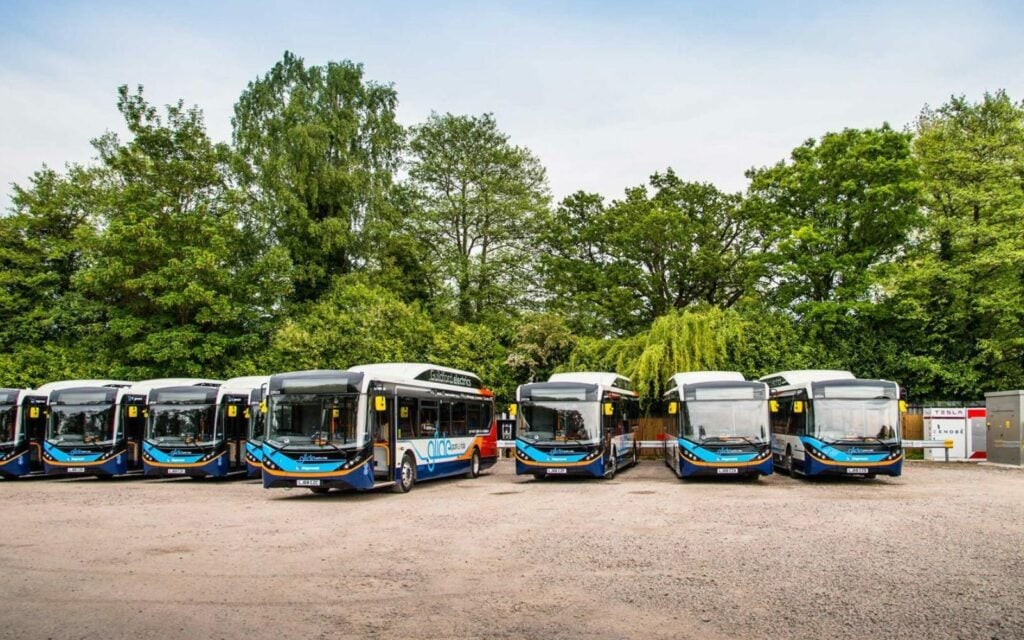
A fleet of 40 electric buses is being put on roads in Sydney, New South Wales, Australia, and along with chargers, a stationary battery storage system will be installed at their depot.
It will be the country’s first project to transition diesel buses to electric. The central government is investing AU$29.5 million (US$22.05 million) into it, including AU$24.5 million from its Clean Energy Finance Corporation (CEFC) and AU$5 million from the Australian Renewable Energy Agency (ARENA).
A joint venture (JV) between transmission network operator TransGrid and UK-headquartered energy storage and mobility solutions company Zenobe will carry out the project, supported by local transport authorities.
Try Premium for just $1
- Full premium access for the first month at only $1
- Converts to an annual rate after 30 days unless cancelled
- Cancel anytime during the trial period
Premium Benefits
- Expert industry analysis and interviews
- Digital access to PV Tech Power journal
- Exclusive event discounts
Or get the full Premium subscription right away
Or continue reading this article for free
A retrofit fit to the Leichhardt bus depot will include 324kWh and 422kWh batteries, five 120kW bus chargers, 31 separate 80kWh chargers, 388kW of solar PV on the rooftop and 2.5MW / 4.9MWh of stationary battery energy storage system (BESS) technology. The fleet is being introduced over the next six months with the first 12 buses entering service during October.
State minister for transport Rob Stokes said New South Wales (NSW) is aiming to transition its entire fleet of 8,000 buses to electric by 2030. The “innovative financing model” for the new project meant that the 40 new buses will be delivered “at no extra cost to the NSW taxpayer”.
21 October 2021: Campus battery upgrade to save Canadian University money while reducing emissions
A clean energy tech retrofit including a 2.5MW / 5MWh BESS will save a Canadian university over CA$1 million (US$0.8 million) each year in costs paid for peak electricity use.
Trent University in Ontario is partnered with clean energy and energy efficiency solutions specialist Ameresco and the pair have renewed an Energy Performance Contract that has already seen the university’s campus equipped with LED lighting, smart ventilation systems and solar power generation.
In a planned upgrade proposed by Ameresco, the BESS, carport canopy solar PV and an EV charging station would be installed and a switchgear component replacement carried out. Under Ontario’s Global Adjustment Charge (GAC) electricity pricing policy, large users of electricity pay a large premium for their use of electricity during coincident peaks in demand.
The BESS will store cheaper and off-peak power from the grid at night times and then use it to power the campus’ facilities during those peaks. This will not only reduce the carbon intensity of the electricity Trent University uses but also help it to reduce its significant GAC costs.
22 October 2021: SolarEdge launches residential battery system
SolarEdge has launched both its Energy Bank residential battery and its Energy Hub inverter models in North America.
The DC-coupled battery system provides 9.7kWh of backup power and can connect with up to eight additional batteries, delivering up to 87kWh of backup capacity.
The battery also connects wirelessly with the Energy Hub inverter models, ranging from 7.6kW up to 11.4kW PV power and 10.3kW backup power. SolarEdge said the inverters simplify installations by reducing the need for main panel upgrades.
SolarEdge story by Jules Scully, originally appeared on PV Tech.