RheEnergise: Investing in energy storage

February 8, 2024
LinkedIn
Twitter
Reddit
Facebook
Email

Stephen Crosher, CEO of RheEnergise, discusses the future of energy and the growing importance of energy storage as part of the energy mix.

Twenty-first-century trends in energy are now crystal clear: within a generation, renewable power will dominate, and fossil-fuel assets will be, at best, chronically underutilised and probably stranded.

Transitioning to ultra-low carbon generation brings both challenges but also unparalleled opportunities. Power generation, which will increasingly serve mobility, heat, and industry, will be monopolised by wind, solar, nuclear and potentially tidal power.

There are many opportunities, worth billions, if not trillions, in financing new clean generation assets with abundant banks and infrastructure funds willing to make those investments. However, the energy system will increasingly become one where generation and supply do not match demand, and demand does not fit the generation supply profile. Everything is out of balance over short, medium, and long periods. In addition, due to climate change demands, filling the gaps with gas generation will not be a realistic long-term option.

This article requires Premium SubscriptionBasic (FREE) Subscription

Try Premium for just $1

  • Full premium access for the first month at only $1
  • Converts to an annual rate after 30 days unless cancelled
  • Cancel anytime during the trial period

Premium Benefits

  • Expert industry analysis and interviews
  • Digital access to PV Tech Power journal
  • Exclusive event discounts

Or get the full Premium subscription right away

Or continue reading this article for free

Different forms of flexibility or energy storage systems will solve the significant mismatch between generation and demand or the intermittency problem. The solutions must provide services over different time periods, from seconds (frequently) to weeks (very occasionally). These providers of technical solutions for flexibility will become huge companies (the green unicorns) over the next 20 years, with revenues measured in billions.

A clear example of the growth we should now expect for the flexibility solution providers can be taken from a company like the wind turbine company Vestas, the world’s largest manufacturer of wind turbines. Vestas made their first sale in 1979; by 2000, turnovers were €868 million, and by 2022, revenues were €14.5 billion. The growth is not expected to slow, as there is considerable pressure to grow renewable energy generation deployment by 300% over the next seven to 10 years.

We can expect that a handful of companies will dominate the short-duration energy storage market, a further handful will dominate the inter-seasonal energy storage market, and lastly, there will be several companies that dominate the medium-duration energy storage space, such as RheEnergise.

The medium-duration energy storage space, providing grid flexibility, is the part of the market where the most significant trading volume will occur. It is the part of the market that will do the heavy lifting, at low cost, to balance the daily cycles of solar (and tidal) and the twice-weekly cycles of wind.

There will be significant investment wins in deploying capital into infrastructure, but even bigger investment win-wins into the solution providers, those providing the new physical infrastructure plant and equipment.

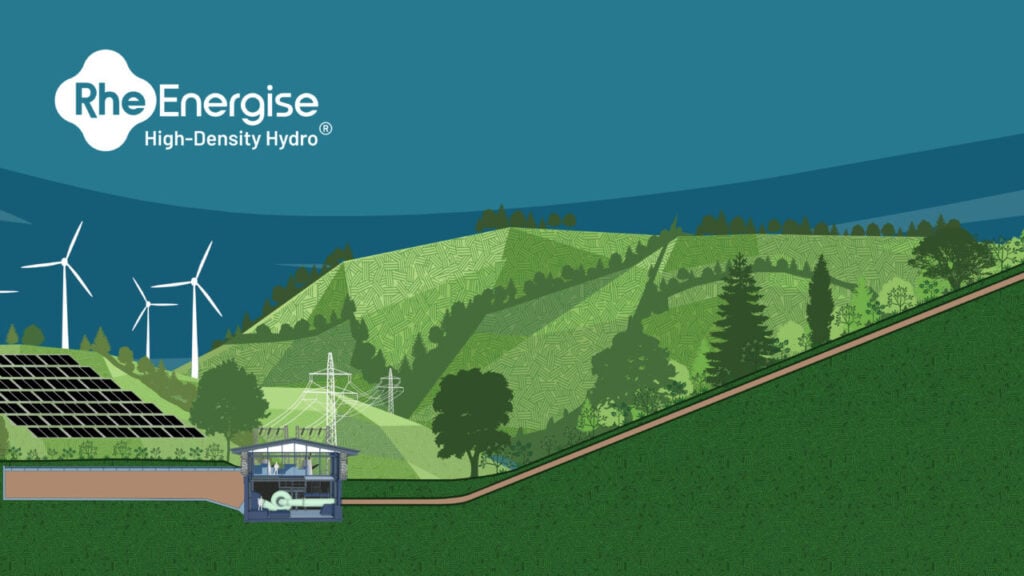
RheEnergise is a UK-based company bringing innovation to pumped energy storage with a grid-scale solution called High-Density Hydro®, providing four to 16 hours of energy storage in the 10MW to 100MW power range. The company is currently fundraising directly with family offices and institutional investors and also on Crowdcube for retail investors. The funds raised are to accelerate our commercialisation and strengthen our IP portfolio. Click here to access the page.

Investment risk warning: Don’t invest unless you’re prepared to lose all the money you invest. This is a high-risk investment, and you are unlikely to be protected if something goes wrong. You can find out more here.
3 February 2026
London, UK
Returning in 2026 for its 13th edition, Solar Finance & Investment Europe Summit will bring together the brightest minds representing funds, banks, developers, utilities, government and industry across Europe and the UK on a programme that is solutions-focused from top to tail. The event is designed to enable leaders at the forefront of solar investment and deployment in Europe to scale, learn and land themselves industry defining partnerships.
11 February 2026
2pm EST / 7pm GMT
This session will spotlight key findings from the 2026 BESS Pros Survey and translate them into practical takeaways for owners, operators, and teams responsible for performance, availability, safety, and revenue. You’ll leave with a grounded, peer-benchmarked view of how BESS teams are operating today, where inefficiencies and risks cluster, and which operational levers are most likely to improve availability, reduce time-to-resolution, and protect revenues in 2026.
24 February 2026
InterContinental London - The O2, London, UK
This isn’t just another summit – it’s our biggest and most exhilarating Summit yet! Picture this: immersive workshop spaces where ideas come to life, dedicated industry working groups igniting innovation, live podcasts sparking lively discussions, hard-hitting keynotes that will leave you inspired, and an abundance of networking opportunities that will take your connections to new heights!
25 February 2026
Gujarat, India
With three parallel energy exhibitions, The smarter E India is India’s innovation hub for the new energy world. It presents cross-sector energy solutions and technologies and reflects the interaction of the solar, energy storage and electric mobility industry. The smarter E India addresses all the key areas along the value chain and brings together local experts and international stakeholders in the energy future. The smarter E India brings together the renowned Intersolar India, ees India and Power2Drive India. The exhibition trio will take place in Gujarat February 25–27, 2026.
17 March 2026
Sydney, Australia
As we move into 2026, Australia is seeing real movement in emerging as a global ‘green’ superpower, with energy storage at the heart of this. This Summit will explore in-depth the ‘exponential growth of a unique market’, providing a meeting place for investors and developers’ appetite to do business. The second edition will shine a greater spotlight on behind-the-meter developments, with the distribution network being responsible for a large capacity of total energy storage in Australia. Understanding connection issues, the urgency of transitioning to net zero, optimal financial structures, and the industry developments in 2026 and beyond.
24 March 2026
Dallas, Texas
The Energy Storage Summit USA is the only place where you are guaranteed to meet all the most important investors, developers, IPPs, RTOs and ISOs, policymakers, utilities, energy buyers, service providers, consultancies and technology providers in one room, to ensure that your deals get done as efficiently as possible. Book your ticket today to join us in 2026!

Read Next

Premium
January 22, 2026
Foreign entity of concern (FEOC) restrictions and the scheduled Section 301 tariff increase to 25% on Chinese-origin battery energy storage systems (BESS) went into effect on 1 January 2026.
January 22, 2026
After teasing the capabilities of a new 100-hour+ energy storage technology at trade shows, US startup Noon Energy has unveiled its first operational demonstration project.
Premium
January 22, 2026
Saudi Arabia and the UAE have emerged as two of the world’s most prominent energy storage markets, with mega-scale projects announced and moved forward at a staggering pace over the last two years. But what does the next phase look like?
January 22, 2026
Gore Street Capital has completed a first close for its GS EU Fund SCSp, which will target battery storage investments mainly in the European Union.
January 22, 2026
The costs of certain long-duration energy storage (LDES) technologies are expected to decline by around 37% on average by 2030, according to a new study.