Wooderson Solar Development Co has secured federal environmental approval for a 450MW solar PV power plant with 3,600MWh of co-located battery energy storage in Queensland, Australia.
The Environment Protection and Biodiversity Conservation (EPBC) Act decision, issued by the Department of Climate Change, Energy, the Environment and Water (DCCEEW), classified the Wooderson Solar PV power plant as “not a controlled action,” clearing a key regulatory hurdle for the project’s development.
Located approximately 40km southwest of Gladstone and 20km west of Calliope within the Gladstone Regional Council area, the project emerges from a joint venture between established renewable energy developers RES Australia and Energy Estate through their Central Queensland Power Development Co partnership.
The development spans a project area of 5,618 hectares distributed across 14 individual land parcels and local road corridors, with the actual infrastructure footprint concentrated within a disturbance area of approximately 1,849 hectares.
Try Premium for just $1
- Full premium access for the first month at only $1
- Converts to an annual rate after 30 days unless cancelled
- Cancel anytime during the trial period
Premium Benefits
- Expert industry analysis and interviews
- Digital access to PV Tech Power journal
- Exclusive event discounts
Or get the full Premium subscription right away
Or continue reading this article for free
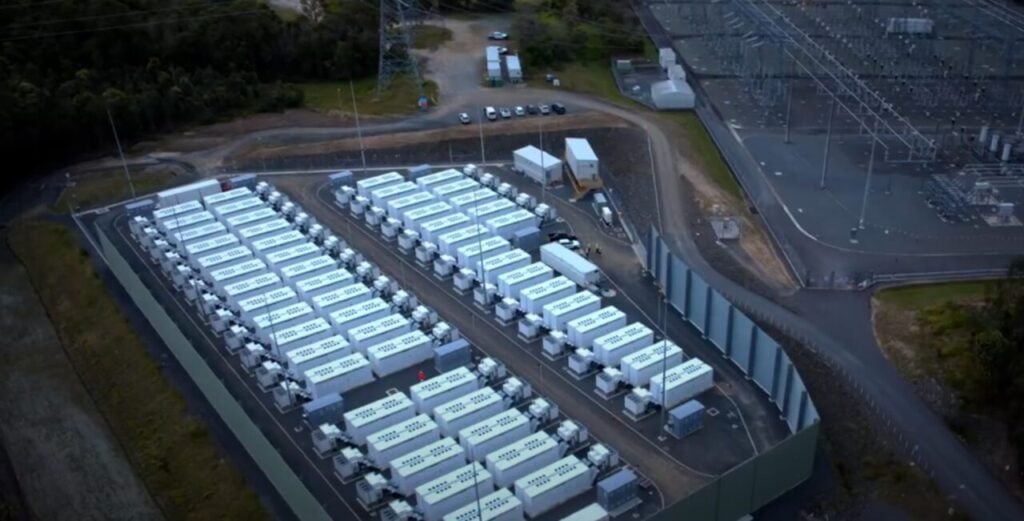
The battery energy storage component will provide up to 3,600MWh of storage in a DC-coupled configuration.
As Neha Sinha, product manager for energy storage systems at Wärtsilä Energy Storage, told ESN Premium last year, DC-coupled solar-plus-storage projects are becoming increasingly common in Australia due to several advantages over traditional AC-coupled systems, including improved efficiency, reduced equipment costs and enhanced flexibility in energy dispatch.
Solar PV modules will be deployed on both fixed racks and single-axis tracking systems, enabling optimised energy capture across daily and seasonal variations in solar irradiance.
Power conversion systems integrate inverters and transformers within collector boxes distributed across the solar array, while the battery energy storage system incorporates containerised units with DC-DC converters and auxiliary transformers designed for utility-scale grid integration.
Construction activities are scheduled to commence in the first quarter of 2028 following a pre-construction phase encompassing geotechnical investigations, cultural heritage surveys and ecological pre-clearance assessments.
Construction will take approximately 37 months, with operations expected to begin in the first quarter of 2031, following commissioning and reliability testing. Once complete, the project will have an operational lifespan of 35 years.
The Wooderson approval joins an expanding pipeline of large-scale solar and storage projects undergoing federal environmental assessment across Australia. FRV recently submitted its 200MW solar-plus-storage development to the EPBC Act, while Tonic Group secured rapid EPBC Act approval for a 440MWh solar-plus-storage site in Western Australia.
Meanwhile, BW ESS recently proposed a 1.6GWh battery energy storage facility for the Hunter Valley, while Western Australia’s Collie region has attracted its third utility-scale battery storage project proposal.
It should also be noted that the EPBC Act is currently undergoing an overhaul, which promises streamlined approvals, as industry voices expressed mixed support for proposed changes to environmental assessment processes.
The Energy Storage Summit Australia 2026 will be returning to Sydney on 18-19 March. It features keynote speeches and panel discussions on topics such as the Capacity Investment Scheme, long-duration energy storage, and BESS revenue streams. ESN Premium subscribers receive an exclusive discount on ticket prices.
To secure your tickets and learn more about the event, please visit the official website.