The government of Estonia has signed a Memorandum of Understanding (MoU) for what would be the Eastern European country’s first pumped hydro energy storage (PHES) facility.
According to an announcement issued last week (3 April) on behalf of PHES technology company and project developer Zero Terrain, the national Ministry of Climate signed the MoU for collaboration on the 500MW/6,000MWh (12-hour duration) project.
Construction is expected to begin on the project in 2025 at the Baltic Sea town of Paldiski on Estonia’s northwest coast. It will be Estonia’s first large-scale long-duration energy storage (LDES) facility.
It could also be notable for its use of underground PHES plant design and engineering that Zero Terrain has developed.
Try Premium for just $1
- Full premium access for the first month at only $1
- Converts to an annual rate after 30 days unless cancelled
- Cancel anytime during the trial period
Premium Benefits
- Expert industry analysis and interviews
- Digital access to PV Tech Power journal
- Exclusive event discounts
Or get the full Premium subscription right away
Or continue reading this article for free
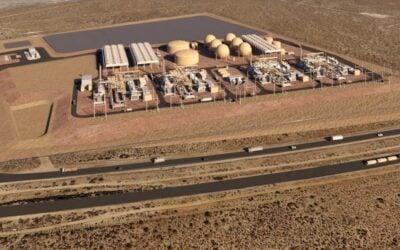
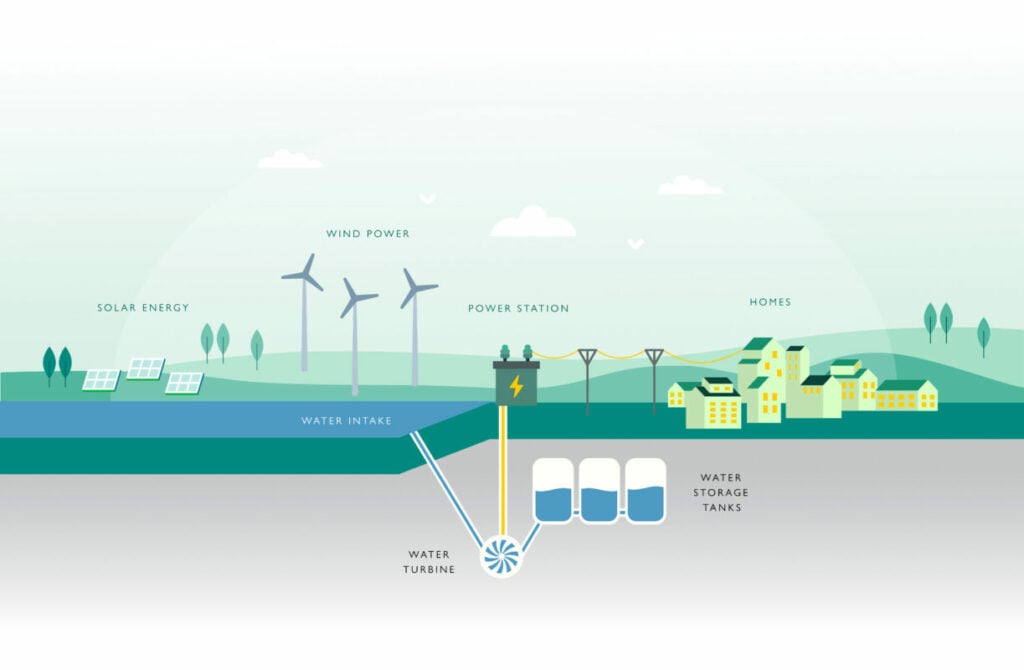
As reported by Energy-Storage.news in January 2023 as regulators gave their approval, the project, which Zero Terrain has dubbed Energiasalv, will utilise newly built underground reservoirs, pumping water back up into the adjoining Paldiski Bay to charge the system and then back through turbines into the subterranean reservoirs to discharge.
The company claimed it has come up with a “significant advancement” from traditional pumped hydro plant design that means PHES could be sited even on flat terrain, rather than necessitating overground slopes to drop water from an upper reservoir on a hill to a lower reservoir below.
Zero Terrain had said last year that it expected to get construction underway by this summer, which appears to have been put back a few months.
The Estonian state’s role includes helping secure capital and addressing potential market barriers to pumped hydro. The government has also pledged €1.98 million (US$2.14 million) from a state-run applied research programme to support it, while the project has also been deemed a project of European Common Interest (ECI) for the European Union (EU).
There is also another pumped hydro project in development in Estonia however, through government-owned integrated energy company Eesti Energia, which is a power generator and retailer, making it one of the world’s biggest shale oil to energy companies, in a country largely dependent on the fuel.
Eesti Energia said it was planning its own 225MW PHES plant back in 2022. It Is thought to be going through design, feasibility and impact studies now, and the company said it expected to start work in 2025-2026, if it goes ahead.
As a member of the EU, Estonia is seeking to align with the bloc’s renewable energy and emissions targets, while as a close neighbour to Russia, Estonia and other Baltic states are in the process of disconnecting from the Russian grid and harmonising with the European one.
NREL cost modelling tool for closed-loop pumped hydro
In other pumped hydro news, the US National Renewable Energy Laboratory (NREL), has launched an open-source cost estimation tool for modelling potential PHES sites.
While the majority of new energy storage capacity being added to the grid today is electrochemical and almost without exception lithium-ion (Li-ion) battery-based within that, PHES still made up more than 95% of the US’ storage capacity as of 2022.
NREL pointed out that the last of the US PHES fleet was built in the 1970s, making it difficult to calculate what building the technology out would mean today economically.
“This tool allows potential project developers to get a ballpark figure for what a particular facility might cost,” NREL researcher Daniel Inman said.
“And a more realistic cost estimation would allow us to develop capacity expansion modeling results that are more realistic.”
NREL claimed that its new tool is also more detailed than a similar one developed by the Australian National University in 2017, including a wider range of system characteristics that can be fed in, and site-specific conditions such as local geologies and workforce availability could be inputted, among other things.
“Pumped storage hydropower is maybe the most promising energy storage solution we have to achieve the huge ramp-up needed to achieve a clean electricity sector,” Inman said, with the water-based mechanical storage tech potentially playing a complementary role in providing longer duration storage, versus batteries performing shorter duration applications.
The NREL cost model tool can be accessed from the laboratory’s website.