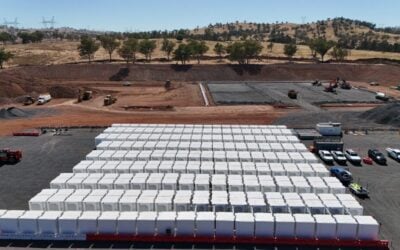
Large-scale renewable energy power plant developers in the Philippines have been instructed to integrate energy storage into their proposed facilities.
The Southeast Asian country’s Department of Energy (DOE) issued a Department Circular (DC) earlier this week, mandating all variable renewable energy (VRE) facilities with an installed capacity of 10MW and above to integrate energy storage systems (ESS).
Department Circular (DC) No. DC2026-02-0008 is a ‘supplemental and amendatory framework’ to ESS Policy (DC No. DC2023-04-0008), the government department said this morning (26 February).
However, according to the DOE press announcement, the amendatory Circular requires all prospective VRE plants to integrate energy storage with at least 20% of the renewable energy plant’s capacity. The ESS capacity should be incorporated into project development and grid integration and be consistent with system studies and technical requirements.
Try Premium for just $1
- Full premium access for the first month at only $1
- Converts to an annual rate after 30 days unless cancelled
- Cancel anytime during the trial period
Premium Benefits
- Expert industry analysis and interviews
- Digital access to PV Tech Power journal
- Exclusive event discounts
Or get the full Premium subscription right away
Or continue reading this article for free
The Department said the new framework “advances the government’s commitment to a just energy transition by supporting ESS deployment and ensuring its systematic integration in both grid-connected and off-grid areas, enabling higher renewable energy penetration while preserving power quality and system reliability.”
ESS installations are encouraged to also add further capabilities to directly support the grid and mitigate the variability of solar PV and wind, such as grid-forming (GFM) inverters. The new framework recognises that GFM technologies, which can deliver system stability services like inertia—typically provided to the grid by the spinning mass of thermal generation or hydroelectric turbines—can improve the power quality of transmission and distribution (T&D) networks.
“Energy storage is not only about storing surplus energy, it is about strengthening the grid’s capability to absorb more renewables while maintaining reliability,” Philippines Energy Secretary Sharon S. Garin said.
Transmission and distribution companies have also been directed to include consideration of energy storage facilities in their grid reinforcement strategies, including the preparation of Transmission Development Plans (TDPs) by the country’s transmission network providers (TNPs). Taking the Philippine Grid Code and relevant international standards into account, studies and simulations will be conducted to support the development of uniform technical requirements for grid-support capabilities, the DOE said.
The government of the Philippines has been promoting the deployment of energy storage to support its renewable energy, decarbonisation, energy supply and system resilience goals, which include increasing renewable energy as a share of electricity to 50% by 2040.
At the beginning of this month, the House of Representatives passed a national framework for the “development, utilisation and commercialisation of energy storage systems.” The framework now needs to pass the Senate before it can be signed into law by President Ferdinand Marcos Jr.
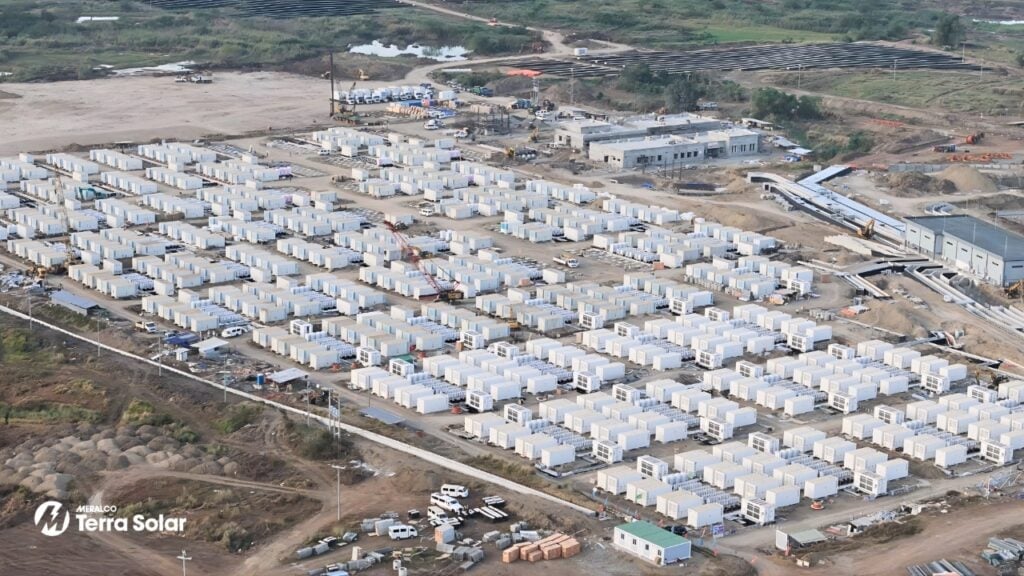
The country has already seen a significant uptick in energy storage investment, firstly by its large power companies that added battery energy storage systems (BESS) at their fleets of thermal or hydro generation plants, and more recently at a number of large-scale solar PV plants—including Meralco Terra Solar, which is planned to feature 4.5GWh of BESS capacity alongside 3.5GWp of solar PV. The first phase of the project was recently completed.
The government also ran Green Energy Auction 4 (GEA4), which was the first to specifically make Integrated Renewable Energy and Energy Storage Systems (IRESS) eligible, awarding contracts to 1.19GW of IRESS project bids last November.
However, a coordinated framework for treating energy storage as a grid and energy supply asset would likely accelerate development.
Francis Saturnino Juan, chair of the Energy Regulatory Commission (ERC), said at the Energy Storage Summit Asia 2025, held in the Philippine capital, Manila, in October, that the framework would be a watershed moment that “defines the playing field for decades to come.”