A double-header of tax equity news from the California BESS market, with Ormat Technologies and esVolta both completing deals for grid-scale projects in the state.
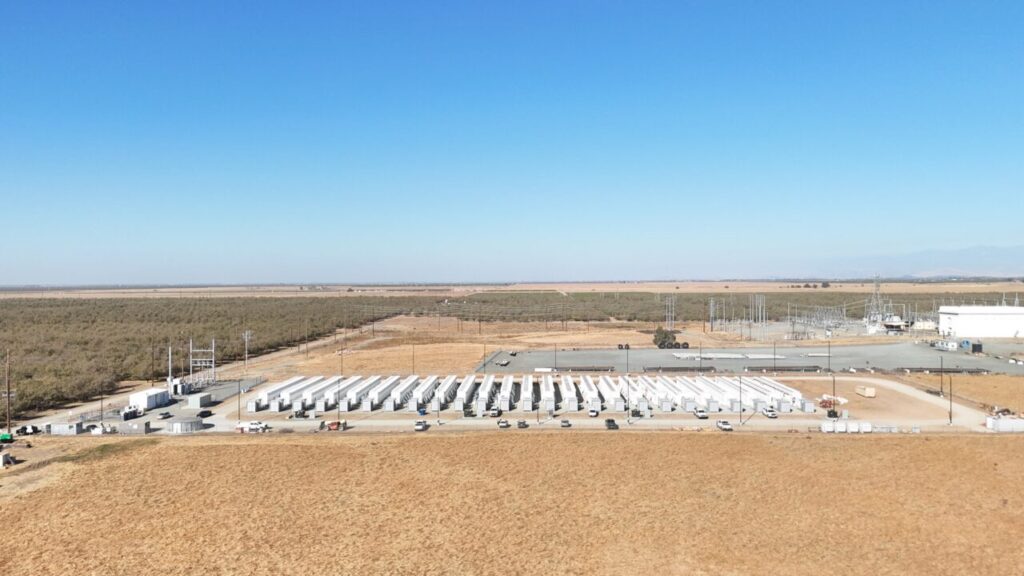
Independent power producer (IPP) esVolta has completed a US$110 million tax equity transaction with clean energy tax equity specialist investor Greenprint Capital Management to finance the construction of its 75MW/300MWh Hummingbird battery energy storage system (BESS) project in San Jose, California.
The BESS will be completed in 2025 and provide energy to utility PG&E under a long-term agreement, as well as provide fast-responding energy and ancillary services to the state’s grid operator CAISO. Most grid-scale BESS in California are 4-hour systems, the required duration under CAISO’s Resource Adequacy framework (likely the long-term agreement with PG&E).
Greenprint is one of the most active investors in tax equity transactions for standalone energy storage, something which has only been possible since the outgoing Biden-Harris administration’s Inflation Reduction Act (IRA). In the past 12 months, Energy-Storage.news has covered Greenprint deals for BESS projects from developer-operators Spearmint Energy, SMT Energy and SUSI, Nexus Renewables and Plus Power.
Try Premium for just $1
- Full premium access for the first month at only $1
- Converts to an annual rate after 30 days unless cancelled
- Cancel anytime during the trial period
Premium Benefits
- Expert industry analysis and interviews
- Digital access to PV Tech Power journal
- Exclusive event discounts
Or get the full Premium subscription right away
Or continue reading this article for free
However, esVolta’s press release didn’t make clear whether the deal with Greenprint is a conventional tax equity investment deal or a tax credit transfer transaction under the IRA’s new transferability mechanism—it used both “investment” and “transaction” to describe the deal.
An executive at another tax equity investment specialist Foss & Company discussed why a project might opt for one or the other in a recent interview with Energy-Storage.news (Premium access).
Meanwhile, fellow IPP Ormat Technologies has stated clearly that it has monetised the tax credit for its 80MW/320MWh Bottleneck BESS in California via a tax credit transfer deal. The project came online last month and the firm said it would swiftly move to sell the tax credit.
It sold the investment tax credit (ITC) for which the project was eligible, covering 40% of the project’s capital expenditure, to an unnamed third party. At a cash price of US$0.93 per US$1 of tax credit value, after deducting broker and legal fees, Ormat received $46.7 million. That implies the total capex of the Bottleneck project was around US$120 million.
The future of clean energy tax equity and tax credit transferability was discussed in a piece covering the industry reaction to the election win of Donald Trump last week, with some sources saying a repeal is unlikely given its bipartisan support.