
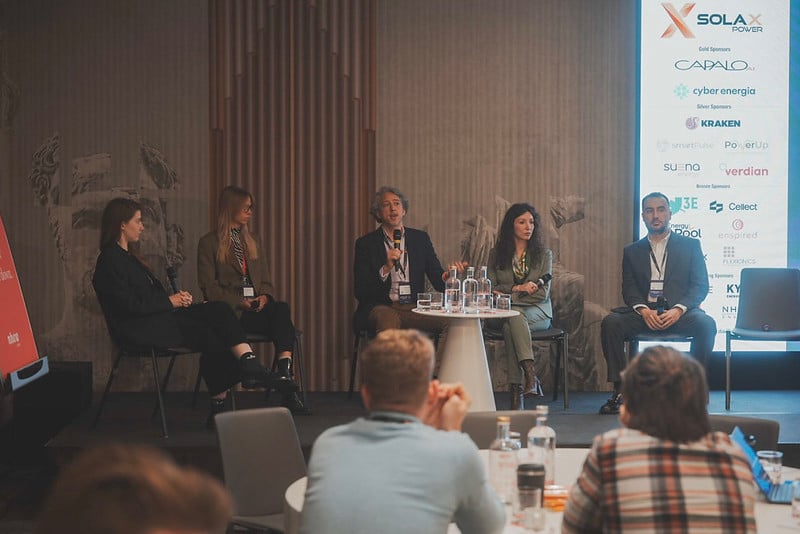
The Battery Asset Management Summit Europe earlier this month brought together operators, optimisers, software and hardware suppliers and more to discuss the big topics in BESS risk management, operation, commercialisation and optimisation. Read on for a summary of the key talking points.
The Battery Asset Management (BAM) Summit Europe took place in Rome, Italy on 2-3 December. The BAM event series has a more selective focus than Solar Media’s Energy Storage Summit (ESS) series, in which the next one is the flagship ESS EU in London on 25-26 February 2026. ESS events cover all aspects of the industry, including development, business, national and EU-level policy, global supply chains and different technology possibilities beyond batteries.
BAM events meanwhile look primarily at the challenges and opportunities in battery energy storage system (BESS) asset management, i.e. optimising and managing projects once they are online, and the steps needed in the planning and procurement phase to ensure success.
Key themes on Day One of BAM Europe included operational challenges and risks, supply chain risks, technical due diligence, data analytics and software tools, revenue optimisation, strategies around tolls and PPAs, market-specific dynamics, co-location strategies and technology readiness.
Try Premium for just $1
- Full premium access for the first month at only $1
- Converts to an annual rate after 30 days unless cancelled
- Cancel anytime during the trial period
Premium Benefits
- Expert industry analysis and interviews
- Digital access to PV Tech Power journal
- Exclusive event discounts
Or get the full Premium subscription right away
Or continue reading this article for free
Managing risks when choosing a supplier: dating before marriage
One of the recurring themes was the challenges faced during the procurement and then commissioning stages of BESS projects’ lifecycles. Supply chain platform Infyos’ CEO Sarah Montgomery emphasised the importance of addressing supply chain risks during the pre-contracting and due diligence phases, speaking on the ‘From Specs to Returns: Managing Technical Risk in Real-World Projects’ panel.
She noted that once a supplier is chosen and construction begins, it becomes nearly impossible to change suppliers, even if significant risks emerge later. For example, she highlighted cases in the US where tier-one manufacturers were banned overnight due to cybersecurity or human rights risks, creating major disruptions for projects. The solution, she argued, lies in thorough pre-contracting due diligence to mitigate risks before they escalate.
Montgomery’s fellow panellist Jonas Metzger, partner at operator MW Storage, humorously compared the negotiation phase of contracts to dating, where parties showcase their best sides while hiding flaws.
He then likened commissioning to a wedding night, where the contractual relationship becomes binding, after which any operational issues will begin to surface. He stressed the importance of ensuring that suppliers are held accountable for equipment capacity and performance failures, as divorcing a supplier mid-project is costly and impractical.
Bankability and long-term performance metrics
On the same panel, Dr. Stephan Rohr, founder and co-CEO of battery analytics firm Twaice discussed the concept of ‘bankability’ in BESS projects, emphasising that while bankability is often assessed before assets go live, it is truly proven over time as projects generate revenue and demonstrate reliability.
Moderator Patrik Hes, founder and CEO of asset operator Delta Capacity, raised the issue of underperformance after commissioning, where assets fail to meet projected capacity or performance levels.
On that point, Rohr shared real-life examples of customers experiencing capacity shortfalls of up to 20%, which required significant effort to address. He highlighted the importance of working with reliable teams and integrators, as the same technology can perform differently depending on the team managing it. This underscores the need for thorough evaluation of integrators and their local teams during the initial project phases.
Data analytics and AI in BESS asset management
The role of data analytics and AI in optimising BESS operations was a major focus of the event too. Leon Gosh, founder and managing director of asset management platform Cellect Energy, presented on the importance of rigorous data capture and validation during commissioning and early operations.
He explained that battery OEMs often link performance guarantees to detailed data logging requirements, including high-frequency operational measurements and system status logs. Failure to establish compliant data systems can lead to delays in commercial operations and expose operators to warranty risks.
He provided examples of the financial impact of poor data management, such as a three-week delay in commercial operations for a 100MW site resulting in €870,000 (US$1.02 million) in lost revenue. He also noted that inadequate data granularity prevents operators from leveraging advanced analytics and predictive maintenance, leaving significant value unrealised.
Gosh emphasised the need for operators to invest in high-frequency data systems, which require substantial upfront costs but enable accurate pattern recognition and fault prediction. He argued that data granularity and accessibility should be considered during project planning to avoid costly retrofits later.
Trends in managing operational and technical risks
MW Storage’s Metzger praised the growing expertise in analysing operational data to identify and address issues proactively. He noted that the industry has evolved significantly, with companies now tracking hundreds of parameters in BESS compared to just a few that were tracked in solar farms.
During a later roundtable session, Chris Larsen, regional director Europe and Middle East for Fractal EMS, said that operators are still concerned about voiding their BESS providers’ warranties.
Elaborating on warranty risks, he noted that battery OEMs have shifted from writing warranties with “gotchas” to oversizing systems to maintain warranties. They will typically supply an extra 10-12MWh of energy for a 100MWh project to ensure warranty compliance.
Lithium-ion battery cells are much more fragile than solar, and the importance of adapting technology to real operating conditions to maintain performance was emphasised by Mihaela Popescu, head of ESS Asset management for IPP Monsson Group. Efficiency, cooling downtime, and dynamic cycles were identified as silent drivers of the business case. Cyber vulnerabilities and control systems also pose risks, highlighting the need for robust operational data and adaptable designs.
MACSE a key focus
Italy’s recent long-awaited MACSE auction, which awarded 10 GWh of BESS assets was a big talking point too, being referenced throughout the event.
The opening panel discussion, ‘Overcoming Operational Challenges in European Battery Storage’, was kicked off by Enel Green Power’s senior project manager Tancredi Peraino discussing how the capacity market (CM) and the MACSE auctions in Italy ultimately have very different implications for how you manage a project. Enel won the largest share of contracts, just over half of the c.10GWh awards.
CM-winning projects would have their revenues covered by about 30%, while for MACSE 90% of the revenues are contractualised, he explained, speaking alongside executives from fellow operators Delta Capacity, BW ESS and Nofar Energy.
So for the CM, you need to think about other revenue opportunities in things like arbitrage while for MACSE you need to think about things like having redundancy built into your energy management system (EMS), because of the large penalties for failing to deliver, Peraino said.
Private sector tolls in light of MACSE
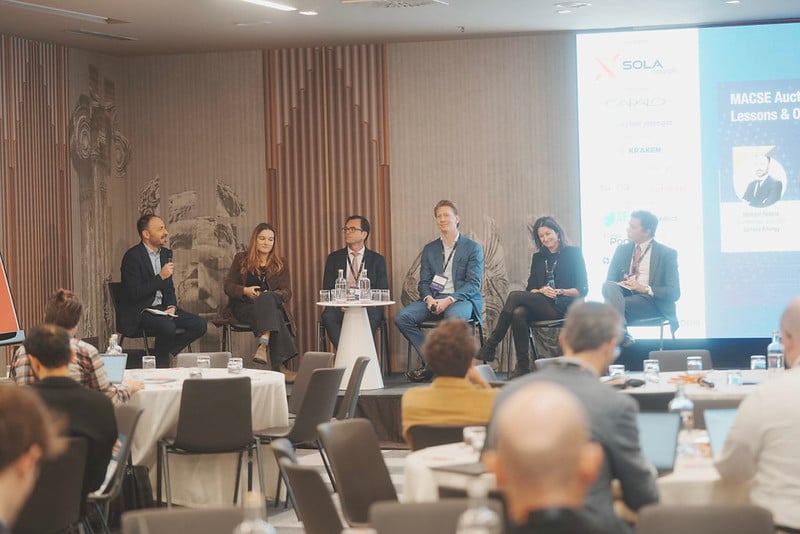
Event panellists also explored the evolving market dynamics and revenue models for BESS projects in light of the auction, on the ‘MACSE Auction Deep Dive: Lessons & Opportunities’.
Coen Hutters, energy transition specialist for RaboBank, said schemes like MACSE, the CM and other similar auctions were needed to transition to a wind and solar-dominated energy system.
However, since only a handful of companies actually won MACSE contracts, the focus has turned for many to the other available long-term tolls and PPA options for BESS in the private sector.
Eliana Russo, Italy CEO of IPP Zelestra, discussed the unpredictability of market timelines and the challenges of negotiating such agreements in a volatile environment. He emphasised the need for clarity and predictability in regulatory frameworks.
Moderator Mahael Fedele, co-founder and CEO of developer Sphera Energy and panellist Simona Burchill, flexibility lead Italy for utility and power firm Octopus Energy, discussed the attractiveness of different offtake products, such as tolling agreements, swaps, and revenue-sharing models.
Burchill noted that these agreements are not yet standardised and require customisation based on the asset owner’s goals. She stressed the importance of including provisions for availability, degradation, and cycle limits in tolling agreements to ensure optimal performance.
Russo shared insights into Zelestra’s toll deal with with BKW in Italy, which combines contracted revenues with market volatility to maximise value, the firm says. He highlighted the importance of collaboration and leveraging complementary strengths to develop innovative revenue models.
Scaling from megawatts to gigawatts
Leon Gosh from asset management platform Cellect also addressed the challenges of scaling BESS operations from having one or two projects to full large-scale portfolios.
He explained that as portfolios grow, inefficiencies in data management, stakeholder coordination, and manual processes become more pronounced. He estimated that operators lose up to 20% of annual revenue due to avoidable inefficiencies, such as imbalance costs, poorly timed maintenance, and fragmented data.
He emphasised the need for a unified data environment to standardise and centralise information across portfolios. This approach enables automation, improves visibility, and reduces operational risks. He also highlighted the importance of aligning technical and commercial teams around shared data to optimise dispatch accuracy and profitability.
Revenue stacking and market-specific optimisation
Another topic that came up during the event was tailoring battery optimisation strategies to specific markets.
Ozan Korkmaz, co-founder of power trading platform SmartPulse, highlighted the diversity across European markets, emphasising that each country has unique characteristics that demand customised approaches. For example:
- Turkey: A liquid intraday market exists, but ancillary services like aFRR are unavailable, and MFR is not feasible. FCR is possible but limited due to price caps (zero euros as the floor and 70 euros as the cap), restricting arbitrage opportunities
- Eastern Europe: Financial gains from intraday markets are significant, but ancillary services markets are still underdeveloped
- Baltics: The intraday market lacks liquidity, making balancing activations challenging despite structured ancillary services markets
- Germany: A mature market with liquid intraday trading and well-structured ancillary services markets
Ramona Wendtner, senior business development for optimiser Enspired, echoed this sentiment while discussing renewable-plus-BESS projects specifically, noting that optimisation strategies vary significantly depending on whether the focus is on ancillary services, intraday arbitrage, or capacity markets. For example, Spain allows ancillary services for renewable assets, while Germany does not yet offer this option. This variability impacts algorithmic and optimisation approaches.
Hassen Bali, co-founder of developer Ion Ventures provided a global perspective, citing India as an example of a self-contained market with high energy demand and growth. India’s hybridised systems, combining solar, wind, and batteries, are increasingly attractive due to their ability to deliver secure, base-load equivalent energy. This approach enables higher off-take prices, demonstrating the financial viability of co-located systems.
Co-location and hybridisation strategies
Korkmaz, Wendtner, Bali and Popescu were speaking on the ‘Value of Co-location, Hybridisation, and Integrated Systems’ panel discussion, and delved into the business case and different trends when it comes to co-located and hybrid systems.
Bali said that retrofitting existing renewable generators with batteries is more feasible than the reverse due to physical space constraints and the ability to alleviate curtailment periods.
However, retrofitting can be complex due to lending agreements and land documents, which often deter large generation owners from pursuing this option.
Wendter emphasised the advantages of greenfield projects, where co-optimisation of renewable and battery assets can unlock higher total value. Greenfield projects allow for agreements that combine both assets’ value streams, enabling more sophisticated optimisation strategies. However, the market is not yet fully developed for such co-optimisation, though legal frameworks are emerging.
Mihaela Popescu added that grid constraints play a significant role in determining whether co-location makes sense. In constrained grids, co-located projects are more viable, while standalone systems remain relevant in mature markets with flexible opportunities.
Financing structures and long-term uncertainty
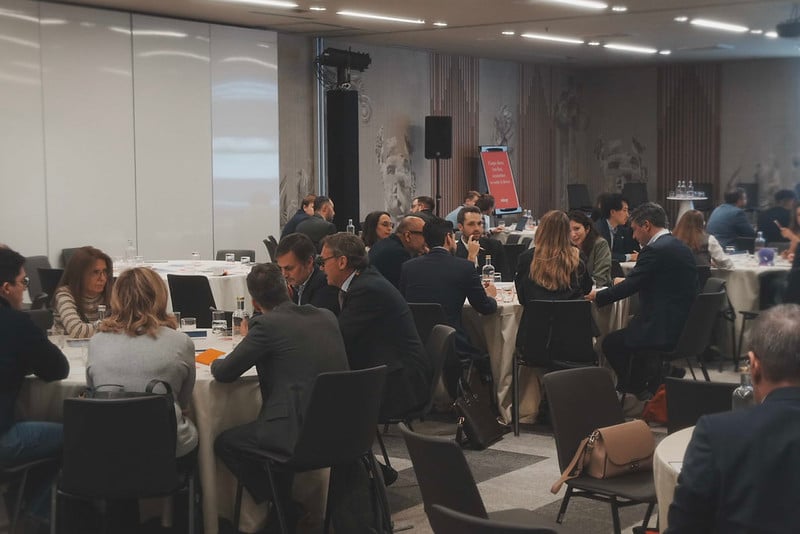
Chema Zabala, managing director for advisory Alantra Energy Transition, discussed revenue stacking models and financing structures for batteries, particularly in ancillary services markets, during a roundtable session towards the end of Day One.
In less mature markets, ancillary services services offer significant opportunities but financing these projects remains challenging. Banks are increasingly reluctant to finance assets on a pure merchant basis, favoring tolling agreements or other structures that provide more visibility.
Tolling agreements were identified as a preferred financing model, but their success depends on factors like duration (ideally seven-plus years) and specific contract clauses related to availability, he said. Floor-plus-upside sharing models were deemed less attractive due to limited opportunities for battery owners.
Giorgio Perico, senior consultant at another advisory, Key to Energy, also said during the roundtables that it made sense to focus on short-term optimisation strategies, given the uncertainty of long-term market evolution and the risk of cannibalisation. Ancillary services markets remain the primary revenue stream for batteries, with behind-the-meter applications also gaining interest.
Early-stage risks and best practices
The day’s last presentation was given by Marc Locke, head of customer success for another analytics firm Accure, looking at de-risking the early phases of BESS projects. He looked at early-stage risks that can determine the long-term success or failure of BESS projects. He identified several areas where issues can arise:
This could be in the contracting phase. Minor details in contracts, such as capacity testing procedures, can significantly impact costs, he said. For example, the difference between constant power and constant power-constant voltage charging can inflate capacity test results by up to 5%, potentially adding millions to capex.
Factory Acceptance Testing (FAT) is also an area to be vigilant. Locke shared an example where 40% of battery cells failed to meet tolerance requirements, causing imbalances and inhomogeneous aging. Early detection allowed the customer to claim additional batches and regroup cells into homogeneous batches.
Discussing the commissioning phase, Locke cited the example of a project in the US that revealed that cells from different production lines were assembled into one asset, causing inhomogeneous power distribution and accelerated ageing. Additional containers were added to meet power requirements.
Moving into the operational phase, state of charge (SOC) inaccuracies in LFP systems can lead to stranded energy, where the system miscalculates its charge state. Data analytics can help recalibrate SOC estimations, unlocking additional tradable energy.
Locke stressed the importance of standardising performance guarantees, such as round-trip efficiency (RTE) and technical availability, and ensuring data ownership and logging practices are robust.
Unifying tools and software integration
Summarising a roundtable discussion, Claudius Jehle, CEO of Volytica Diagnostics, asked the question: “How can we use the this very complex, degrading component, in fact the most expensive degrading component of the energy transition, to its true potential if all the tools that we’re using are not speaking to each other in a very simplified form?”
Integrating trading, battery analytics, and asset management into one platform reduces OPEX and simplifies operations, he said. A Volytica spokesperson discussed this with Energy-Storage.news when the firm announced this approach on a project in Germany.
Though Jehle acknowledged there are risks associated with relying on a single tool. Diversifying software providers can mitigate the risks like tools not performing or providers going down, as demonstrated by IPPs in the Netherlands who use multiple EMS providers to foster competition.
This article was written with the assistance of generative AI, which was used to transcribe and pull quotes from the event.