Image: Nissan.
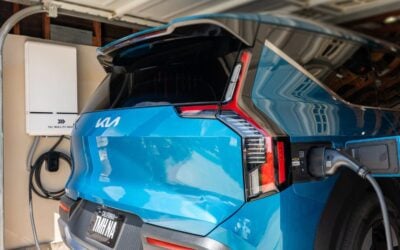
Car manufacturer Nissan has debuted its new vehicle-to-grid (V2G) chargers at its R&D facility in Cranfield, UK, six months after originally announcing them.
In May this year Nissan launched the “groundbreaking” new chargers to much fanfare at a press event dubbed ‘Nissan Futures’, where it also confirmed it would use second-life battery storage systems to help power its UK offices.
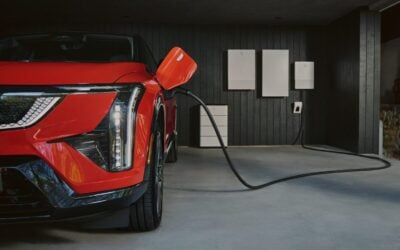
The charging units have been developed alongside energy firm Enel, eight of which have been installed at the Cranfield site and made available for all employees to use.
The chargers work with the storage components of Nissan’s fleet of electric vehicles to formulate an intelligent energy management system, enabling the automotive giant to both charge the vehicles and use their aggregated storage capacity to help stabilise electricity demand on the national grid.
Try Premium for just $1
- Full premium access for the first month at only $1
- Converts to an annual rate after 30 days unless cancelled
- Cancel anytime during the trial period
Premium Benefits
- Expert industry analysis and interviews
- Digital access to PV Tech Power journal
- Exclusive event discounts
Or get the full Premium subscription right away
Or continue reading this article for free
The wider trial will see around 100 such charging units installed at various locations around the UK, with Nissan and Enel co-managing the pilot programme.
Francisco Carranza, director of energy services at Nissan Europe, said the firm was excited to use its expertise to “help change the way people consume energy”.
“Through the integration of Nissan EVs we can help shape a society whose energy use is sustainable, efficient and affordable. It could change the rules of the game and make energy cheaper for everyone,” he added.
David Moss, vice president of vehicle design and development at Nissan Technical Centre Europe (NTCE) echoed Carranza’s sentiments, claiming the V2G installations to be a “significant moment” for the company.
“It gives us the opportunity to showcase to the world how the energy management systems Nissan is developing can work in a real-life business situation. Integrating it into our own facilities demonstrates the confidence we have in the technology and our steadfast belief that our electric vehicles can play a pivotal role in developing an ecosystem of technologies that work seamlessly together to create sustainable and efficient solutions for the future,” Moss said.
Last December, Nissan partnered with engineering firm Eaton to launch an energy storage control centre combining Eaton’s uninterruptible power supply (UPS) with second life – repurposed – Nissan Leaf batteries. Earlier this year the pair installed one of the systems at a data centre run by IT and cloud computing firm Webaxys’ in Normandy, France.