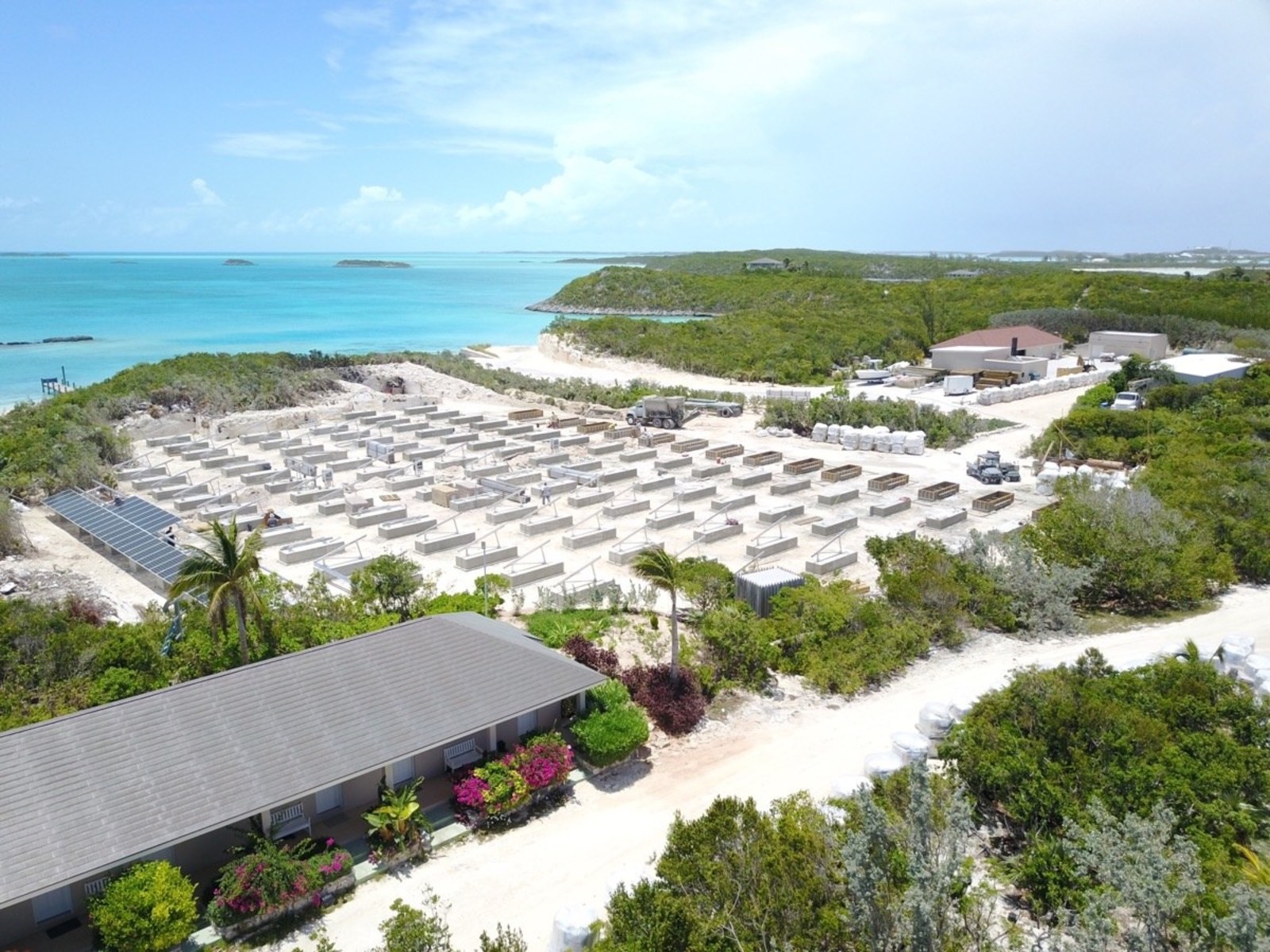
China-headquartered PV inverter manufacturer Sungrow has supplied a complete energy storage system to a commercial and industrial (C&I) solar-plus-storage project in the Bahamas.
Unlike the company’s recent five-island microgrid project in the Maldives, the Bahamas system, at an unnamed customer’s site, is thought to be grid-connected. It provides behind-the-meter services such as load shifting and peak shaving and can also operate independently of the grid.
Coupled with a ground mounted solar installation, of which capacity was not disclosed by Sungrow, the project incorporates 500kWh of lithium-ion battery energy storage coupled with Sungrow’s SC250KU energy storage inverter, which is UL-certified.
Sungrow said one of the advantages of the system design is that the inverter and energy storage units are housed separately. The company claims this helps keep installation costs down, and makes operations and maintenance (O&M) tasks easier. The system also has air-conditioned cooling and fire prevention features.
Try Premium for just $1
- Full premium access for the first month at only $1
- Converts to an annual rate after 30 days unless cancelled
- Cancel anytime during the trial period
Premium Benefits
- Expert industry analysis and interviews
- Digital access to PV Tech Power journal
- Exclusive event discounts
Or get the full Premium subscription right away
Or continue reading this article for free
Batteries are thought to come from Samsung SDI, which has a joint venture (JV) company with Sungrow for projects like this. The inverter company said the SC250KU inverter the batteries are paired with has a wide voltage range and has a built-in feature called the ‘virtual synchronous generator’, which allows the system to operate smoothly without interruption, as if stabilised by a thermal power plant.
Sungrow president, Prof Renxian Cao said that the company was targeting residential, C&I and utility customers for its inverters, with Sungrow able to offer high and low voltage systems as well as battery charge and discharge rates between 0.3C and 3C, depending on the customer’s needs, which could range from load shifting to microgrids and ancillary frequency response services.
“Our cutting-edge energy storage equipment and system solutions are applied in over 500 projects around the world by June 2017, totalling 1.3GWh,” Cao added.