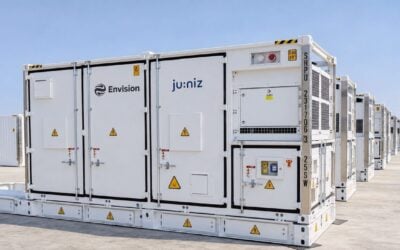
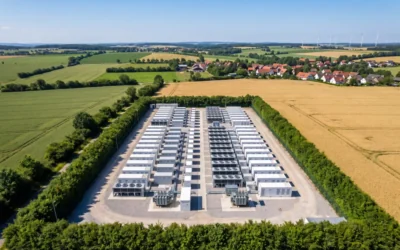
Mercedes Benz’ website floats the idea of “private energy transition” – bringing Germany’s national efforts to transform its energy sector into private households. Image: Mercedes Benz Energy.
German luxury carmaker Mercedes Benz has officially launched a dedicated energy division, focusing on its range of lithium-ion storage battery systems, following a series of related announcements including tie-ups with inverter maker SMA.
Around a year ago, Daimler-owned Mercedes said it was entering the market via a subsidiary, Accumotive. In a statement issued yesterday, the company confirmed that manufacturing of both automotive and stationary storage systems would be entrusted to Accumotive, which according to Daimler is spending around half a billion Euros on a factory.
The stationary storage systems will however carry the Mercedes Benz brand and Mercedes will install, develop and distribute them. Consumer technology website Tech Insider recently reported that a company spokesman had revealed the prices the systems were being prepared to be sold for to distributors or installers – between US$9,000 and US$10,000.
This price refers to Mercedes Benz Energy’s initial offering; a 2.5kWh device that the company says is modular and can be “stacked” for up to 20kWh of storage. There will also be larger, utility-scale options. While the figures given to Tech Insider reportedly included inverter and installation costs, the final price offered to the end customer will be determined by the retailer.
Try Premium for just $1
- Full premium access for the first month at only $1
- Converts to an annual rate after 30 days unless cancelled
- Cancel anytime during the trial period
Premium Benefits
- Expert industry analysis and interviews
- Digital access to PV Tech Power journal
- Exclusive event discounts
Or get the full Premium subscription right away
Or continue reading this article for free
The units feature prominent branding with the Mercedes logo. The systems can enable up to 65% onsite self-consumption from solar systems. Image: Mercedes Benz Energy.
Workforce expected to double in successive years
Mercedes’ statement referred to a continuous growth in demand for lithium-ion storage systems. The company said it can also lean on a diverse existing customer base and broad appeal, from large industrial operations to private households.
From an initial 50 employees, Mercedes Benz Energy plans to recruit a further 50 by the end of this year and then double that figure to 200 workers by the end of 2017. The company confirmed it will continue working with SMA and others to distribute products in Germany and said international expansion would be a “next step”.
The company appears determined to compete with prominent rivals that are already part of the renewables and clean energy industries. Tesla could be argued to have successfully invented the luxury EV before entering stationary storage with its Powerwall and Powerpack devices, with Mercedes perhaps going in the other direction with its branded storage boxes. Meanwhile Enphase, which has finally launched its much-touted AC battery in Australia and New Zealand, has also emphasised the expected benefits of the modular design of its device.
This article has been amended to clarify ownership of Mercedes Benz by Daimler.
Units in production in Germany. Image: Mercedes Benz Energy.