Global long-duration energy storage (LDES) deployment figures soared in 2025, but newer technologies risk being outcompeted by the incumbent, lithium-ion (Li-ion).
According to a new report by research firm Wood Mackenzie, more than 15GWh of long-duration energy storage was installed in 2025, a 49% increase year-over-year from just over 10GWh in 2024.
However, although Wood Mackenzie said the need for energy storage with several hours of discharge duration at full output continues to grow, global LDES funding declined 30% in 2025, while venture capital (VC) funding fell by 72%. While the increase in deployment last year was notable, it was also considerably less than the 806% jump between 2023 and 2024.
Long-duration is generally loosely defined and categorised differently in different markets, ranging from 4-hour in some to 6-hour, 8-hour or more in others. Wood Mackenzie’s LDES figures do not include lithium-ion.
Try Premium for just $1
- Full premium access for the first month at only $1
- Converts to an annual rate after 30 days unless cancelled
- Cancel anytime during the trial period
Premium Benefits
- Expert industry analysis and interviews
- Digital access to PV Tech Power journal
- Exclusive event discounts
Or get the full Premium subscription right away
Or continue reading this article for free
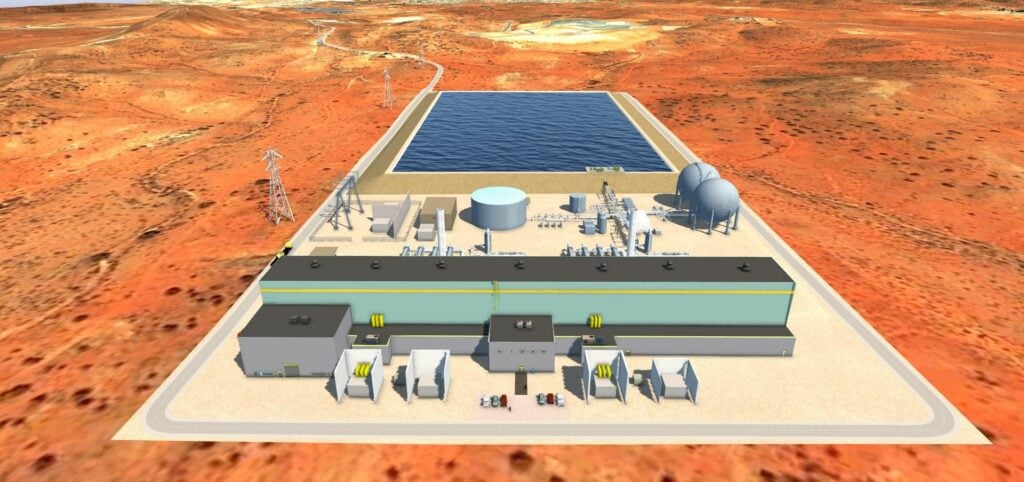
Even companies with better funding are facing significant challenges. The research firm highlighted that just three non-lithium LDES companies: Hydrostor (advanced compressed air), EOS (zinc hybrid cathode batteries) and Form Energy (iron-air batteries) each raised more than a billion dollars between 2021 and 2025.
In the report, ‘Long Duration Energy Storage Trends,’ Wood Mackenzie has modelled that, under net zero scenarios, the average duration of energy storage must go from about 2.5-hour today to closer to 20-hour globally, with countries seeking to go beyond a 50% share of renewable energy by 2030 facing the most acute need.
The solution, Wood Mackenzie said, lies in market design reforms that value longer-duration storage, such as capacity markets or targeted procurements, as seen in California, some Australian states, and the UK. LDES technologies, a loosely defined set, will struggle to compete at shorter durations, if that is all the market they are participating in values, the report said.
Governments should also seek a diversification in technologies, Energy-Storage.news heard in a recent interview with Will Broad, global director of policy at the Long Duration Energy Storage Council (LDES Council).
Speaking with the site at last month’s Energy Storage Summit 2026 alongside LDES Council policy officer Oghosa Erhahon, Broad said that the trade association advocates for governments around the world when procuring energy storage “not to think just about lithium-ion and pumped hydro, but to think over the next few decades, over the next few years, they’re going to need a variety of technologies on their system.”
Three reasons to value diversity
“There are three reasons to value diversity,” Broad said.
“The first one is duration diversity. Systems are going to need increasingly longer-duration storage, so don’t put all your investment into a technology for the here and now, when in a few years’ time you might want something of longer duration. Secondly, a lot of countries have put lots of innovation money into developing technologies and we need to deploy them in order to realise the cost reduction potential. Thirdly, is supply chain diversity. Let’s not put all our eggs into one basket. Let’s not rely on a single global supply chain.”
At the moment, cost is a big challenge. A recent LDES Council report, produced with the US Electric Power Research Institute (EPRI), found that long-duration storage costs could decline by approximately 37% by 2030, with manufacturing scale and technology advancements as drivers.
Wood Mackenzie noted that in China, which accounted for 93% of the 15GWh of global deployments in 2025 due to strong government policy support, a 4-hour lithium-ion (Li-ion) battery energy storage system (BESS) costs around US$107/kWh. Meanwhile, the lowest-cost LDES options in China, thermal energy storage (TES) and compressed air energy storage (CAES), cost US$190/kWh and US$201/kWh, respectively, on average.
Priya Shrivastava, energy storage supply chain research manager at Wood Mackenzie, said that while costs for vanadium redox flow batteries (VRFBs) are projected to fall by more than 30% by 2034, they will still be around 240% higher than lithium iron phosphate (LFP) battery projects at 4-hour durations.
Emerging LDES technologies will find it difficult to achieve the sort of dramatic cost reductions achieved in lithium-ion over the past decade, Shrivastava said.
Will Broad argued that LDES technologies can compete with lithium-ion or pumped hydro energy storage, “but must deploy in order to do so.”
“This doesn’t mean ‘don’t deploy the technology that’s cheapest right now.’ It just means ensuring that diversity is valued in your procurement mechanism, so that you don’t just get one technology coming through,” the LDES Council policy director said.
The full interview with LDES Council policy experts Will Broad and Oghosa Erhahon will be published in the coming days on Energy-Storage.news.