Cell manufacturing overcapacity and intense competition contributed to an 8% year-on-year decline in the average cost of lithium-ion battery packs, according to BloombergNEF (BNEF).
The research firm published the 2025 edition of its annual Lithium-Ion Battery Price Survey yesterday (9 December), reporting a record-low global average pack price across all market segments of US$108/kWh.
While this was less than the 20% drop recorded in last year’s survey, when the average fell from US$139/kWh in 2023 to US$115/kWh toward the end of 2024, BNEF analysts noted that the fall to 2025’s all-time low came despite price increases in battery metals, such as lithium and cobalt.
Cell prices, meanwhile, fell by 5% to US$74/kWh. Overall, battery pack prices have fallen by 93% since 2010, when the average was around US$1,474/kWh (adjusted to real 2025 dollars) according to BNEF.
Try Premium for just $1
- Full premium access for the first month at only $1
- Converts to an annual rate after 30 days unless cancelled
- Cancel anytime during the trial period
Premium Benefits
- Expert industry analysis and interviews
- Digital access to PV Tech Power journal
- Exclusive event discounts
Or get the full Premium subscription right away
Or continue reading this article for free
Those metal price increases, particularly for cobalt, will have affected the electric vehicle (EV) segments more than the stationary battery energy storage system (BESS) segment, where an almost total switchover to lithium iron phosphate (LFP) from nickel manganese cobalt (NMC) or similar sub-chemistries has eliminated the BESS market’s dependence on cobalt.
Indeed, where EV battery cost reductions in 2024 were hailed as a breakthrough that meant that, at US$97/kWh average pack prices, battery vehicles were at cost parity with internal combustion engine (ICE) vehicles in China and expected to follow elsewhere, this year BNEF reported a global average of US$99/kWh for battery EV (BEV) packs in 2025.
BNEF assessed 320 data points from across passenger EVs, e-buses, commercial EVs, two- and three-wheeler vehicles and stationary energy storage.
Stationary storage now the lowest-cost segment
Stationary energy storage, in fact, saw the most significant drop in price of any segment, with average battery pack prices found to be just US$70/kWh globally. That marked a 45% decline year-on-year and made stationary storage the lowest-priced segment for the first time ever.
This was due to growing competition in China and the country’s commensurate “massive overcapacity for battery cells specifically aimed at stationary storage applications,” the authors wrote, which was a significant driver of aggressive cost reductions.
BNEF said China currently has an estimated 557GWh annual stationary energy storage cell production capacity, which is roughly double the global demand in the sector.
The research firm’s Energy Storage Market Outlook Report for the first half of 2025, published in October, forecasted an estimated 92GW/247GWh of energy storage, excluding pumped hydro energy storage (PHES) deployments, worldwide for this year.
That said, the stationary storage industry will likely be keeping an eye out for a separate annual BNEF report, the Battery Storage System Cost Survey, which examines the entire system-level prices of turnkey BESS equipment worldwide.
Expected early in the New Year, the system cost survey last year found a 40% fall from 2023 numbers to US$165/kWh in 2024 (ESN Premium article). Both average battery pack price and turnkey system costs saw their biggest falls since 2017 between 2023-2024.
The average cost for a turnkey system in China in 2024 was just US$101/kWh (1-hour, 2-hour and 4-hour duration BESS). In the US, the average was US$236/kWh and in Europe US$275/kWh, and so it will be interesting to compare this year’s battery pack price data with system-level costs when they are published.
Chinese manufacturers intensify competition, 3% fall predicted for 2026
There continue to be significant differences among regions: China saw the largest decline in average battery pack prices (13%), followed by Europe (8%). North American pack prices fell just 4% year-on-year.
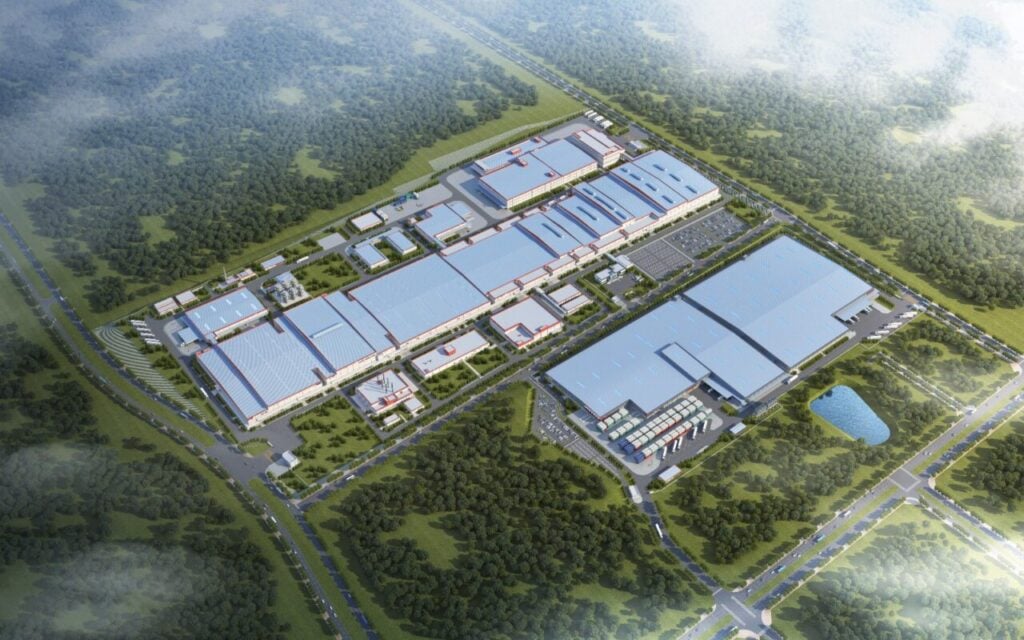
With Chinese exports to the US restricted by changes in both domestic US policy and international tariff disputes, Chinese manufacturers are shifting export volumes to Europe instead, which BNEF said intensified price competition in Europe.
The adoption of LFP, which is also becoming more common for shorter-range EVs where energy density is less important than cost, helped absorb the higher cost of metals, as did long-term contracts and other hedging strategies.
The lowest LFP cell price BNEF found was US$36/kWh and the lowest LFP pack price US$50/kWh, similar to numbers for last year and evidence, the researchers said, that low-cost products are not outliers in LFP.
After the temporary 2021-2022 pandemic-era reversal of cost declines, contracting supply deals with prices indexed to the cost of raw materials became more common, as did increased diversification of supply chains.
Although the metal price increases did not translate into higher costs for cells or packs, BNEF expects high cobalt, lithium, and nickel costs to exert pressure on manufacturer margins. While most manufacturers will be able to absorb and ride out the impacts in the near term, a persistent elevation of metal prices would likely result in short-term price rises.
For 2026, BNEF predicts a 3% decline in pack price across all segments, resulting in an average of just under US$105/kWh. Raw material price pressures are likely to persist, but the increased adoption of lower cost LFP will help drive next year’s falling price dynamics, BNEF said.
Energy-Storage.news’ publisher Solar Media will host the 11th annual Energy Storage Summit EU in London, 24-25 February 2026. The event brings together Europe’s leading investors, policymakers, developers, utilities, energy buyers and service providers all in one place. Visit the official site for more info.