
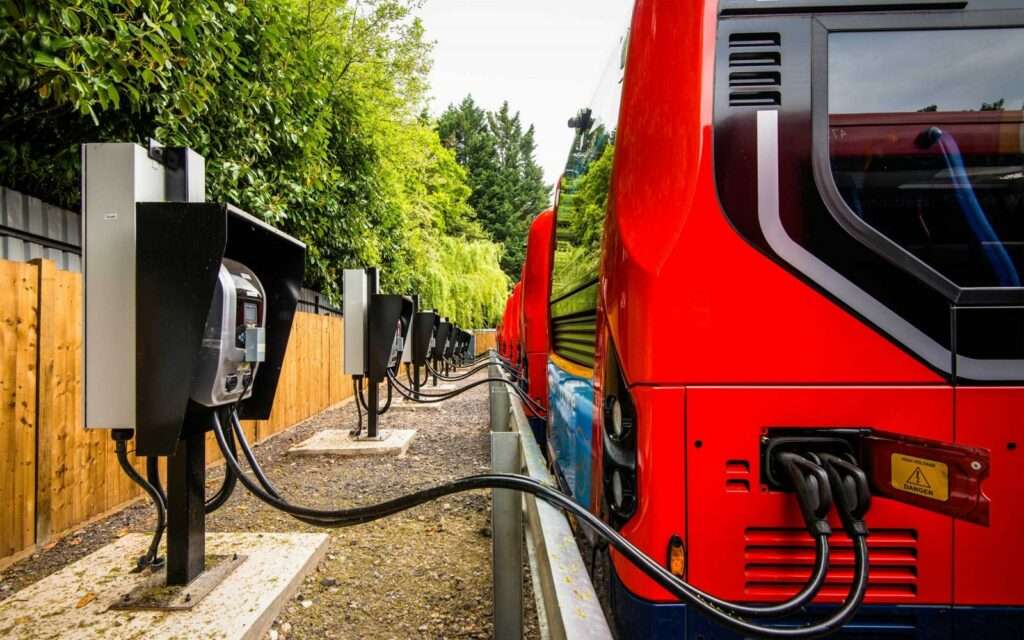
As battery energy storage systems (BESS) and electric vehicle (EV) infrastructure expand in the US and Europe, a clear contrast is becoming evident in their market growth.
While Europe maintains momentum with varied government support, the US market resembles what Laurence Copson, energy storage specialist (US markets & policy), at UK-headquartered BESS and EV solutions firm Zenobē Energy calls “more of a roller coaster,” driven by political shifts and the nation’s complex relationship with domestic oil production.
While emphasising his expertise in grid-scale storage, Copson points to a fundamental difference that his colleagues consistently observe across EV and BESS markets: policy certainty.
“In Europe, the level of policy support for the electrification of transport is considerably more certain,” he explains. “And it hasn’t been flip-flopping from central government as you have in the US.”
Try Premium for just $1
- Full premium access for the first month at only $1
- Converts to an annual rate after 30 days unless cancelled
- Cancel anytime during the trial period
Premium Benefits
- Expert industry analysis and interviews
- Digital access to PV Tech Power journal
- Exclusive event discounts
Or get the full Premium subscription right away
Or continue reading this article for free
The US saw broadening support for electrification under the Biden administration’s Inflation Reduction Act (IRA), only to face uncertainty when Trump took office. Even with further clarification about foreign entity of concern (FEOC) restrictions, developers still have to face multiple uncertainties in the market.
Europe, meanwhile, has maintained a more consistent approach to policy, overall, driven by energy security concerns and climate commitments that last beyond individual election cycles.
Grid-scale battery storage has weathered US policy volatility better than EV infrastructure. Copson notes that while the industry “feared the worst” during recent political transitions, the actual impact was limited primarily to FEOC requirements, challenges that developers have found “broadly manageable through a whole suite of tactics and strategies.”
This resilience in the BESS sector contrasts with the EV market, where US consumer adoption has declined, causing ripples in the supply chain.
From EVs to BESS
A clear example of this divergence can now be seen in American battery manufacturing plants. Several facilities that were initially built to produce batteries for EVs are now shifting towards grid-scale storage solutions.
“You have multiple battery plants, which are basically switching from those batteries going into cars, and now they’re going to go onto the grid,” Copson observes.
Earlier this month, Ultium Cells, the joint venture (JV) between vehicle manufacturer General Motors (GM) and South Korean battery manufacturer LG Energy Solution (LG ES) announced its plans to retool its EV battery plant in Spring Hill, Tennessee, to manufacture lithium iron phosphate (LFP) cells for ESS.
Other manufacturers such as Samsung SDI, and SK On have also increased local manufacturing and announced domestic supply agreements with BESS integrators. LG ES also now has around 17GWh of BESS cell production capacity online from converted EV lines in Michigan.
Although it indicates slower EV adoption than expected, it also offers a supply of domestic battery manufacturing capacity for the BESS market, which is seeing increased demand due to data centre expansion and renewable energy integration.
The oil factor
“It’s just all about oil, isn’t it?” Copson reflects. “Think of America flush with oil, sitting relatively pretty despite oil prices going everywhere, whereas in Europe, the correct analysis that is taking place and coming to the conclusion is: every drop of foreign imported oil we can cut off and move towards electrification is positive for the efficiency of the economy, the balance of payments, everything.”
This core difference in energy security perspectives influences everything from consumer choices to government strategies. European countries, which rely heavily on imported energy and are still recovering from the 2022 energy crisis, see electrification as both an economic and strategic necessity. In contrast, the US, as the leading global oil producer, does not face this immediate urgency, at least for now.
The policy uncertainty in the US hasn’t occurred in a vacuum. Copson points out that slower EV adoption reflects “a combination of policy changes and also some consumer uptake issues,” while “in Europe, where the consumer uptake is still really robust,” the market continues to expand steadily.
This difference in consumer behaviour also reflects infrastructure investment and cultural attitudes toward climate action. These factors are generally more supportive of electrification in Europe compared to the US.
Looking ahead
The repetitive cycle of US policy support disruptions creates planning difficulties for companies aiming to invest in long-term infrastructure. Copson anticipates this pattern will continue, noting that “if the Democrats get in 2029, back come the school bus electrification subsidies, etc.”
This volatile approach to policy support hampers manufacturers, developers, and utilities from committing to multi-year timelines essential for major infrastructure projects. Conversely, Europe’s more stable policy environment facilitates long-term planning and enables more effective capital deployment.