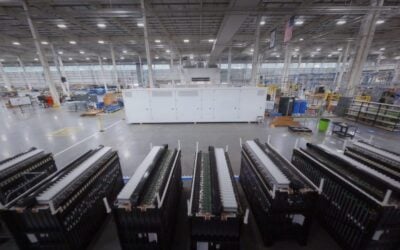
Lithium-ion OEM Hithium has unveiled a new, even larger format 1,300Ah battery cell for LDES BESS applications, alongside new related BESS products.
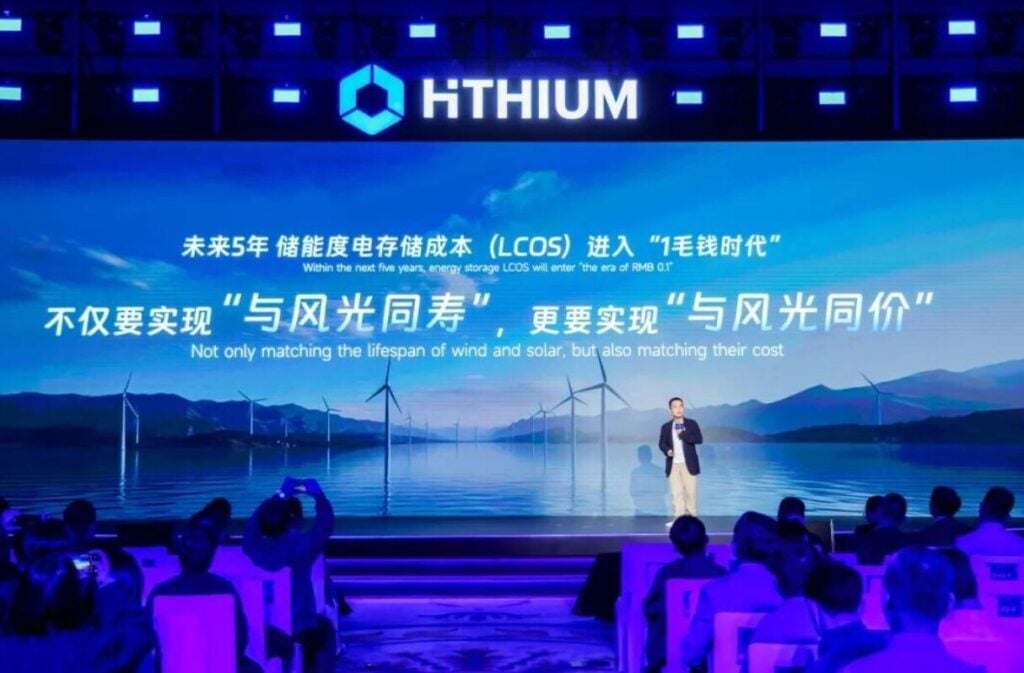
The China-headquartered firm unveiled the new battery cell and long-duration energy storage (LDES) battery energy storage system (BESS) solutions at an industry event in China last week (12 December).
The firm presented three new products:
- The Power8 8-hour BESS solution, totalling 6.9MW/55.2MWh
- A related 1,300Ah battery cell designed for 8-hour applications
- An AI data centre solution combining lithium-ion and sodium-ion battery cells, called ‘Power Solutions’
Try Premium for just $1
- Full premium access for the first month at only $1
- Converts to an annual rate after 30 days unless cancelled
- Cancel anytime during the trial period
Premium Benefits
- Expert industry analysis and interviews
- Digital access to PV Tech Power journal
- Exclusive event discounts
Or get the full Premium subscription right away
Or continue reading this article for free
The firm claimed that Power8 is the world’s first ‘8-hour-native’ LDES solution, although it most likely means for lithium-ion BESS specifically, since numerous non-battery LDES tech companies would argue their solutions have been designed around that duration for years.
Hithium’s 1,300Ah dedicated 8-hour battery cell is even larger than its 1,175Ah cell launched in August, which was already likely the largest format cell brought to the market. That cell is set to be deployed for the first time in two projects totalling 4GWh in Saudi Arabia.
The firm said the 8-hour battery cell enables deep 8-hour cycling, more than 20 years of service life, superior safety and a lower levelised cost of energy (LCOE).
Hithium also re-announced a hybrid lithium-sodium battery-based BESS solution specifically designed for AI data centre applications, first revealed at the RE+ US industry event in September. It said the combination of long-duration lithium cells with high-rate sodium-ion cells for millisecond response times is built to meet data centres’ dual need for long-term and instantaneous power support.
Hithium also claimed in its press release that it has reached the number two position in global BESS shipments, although didn’t cite the market research or analyst that had come to that figure. Our most recent related report, with data from market intelligence firm Rho Motion, didn’t put it in the top ten.
Like numerous other Chinese energy storage firms, Hithium is going through the process of listing on the Hong Kong stock exchange. It had to undergo a re-submission in Q3 2025 after its initial one lapsed amidst a lawsuit from larger competitor CATL.
Energy-Storage.news publisher Solar Media is hosting the Energy Storage Summit EU 2026 in London, UK, on 24-25 February 2026 at the InterContinental London – The O2. See the official website for more details, including agenda and speaker lists.