Electric distribution flexibility tenders could save Britain ‘billions’ versus network build-out

August 23, 2018
LinkedIn
Twitter
Reddit
Facebook
Email
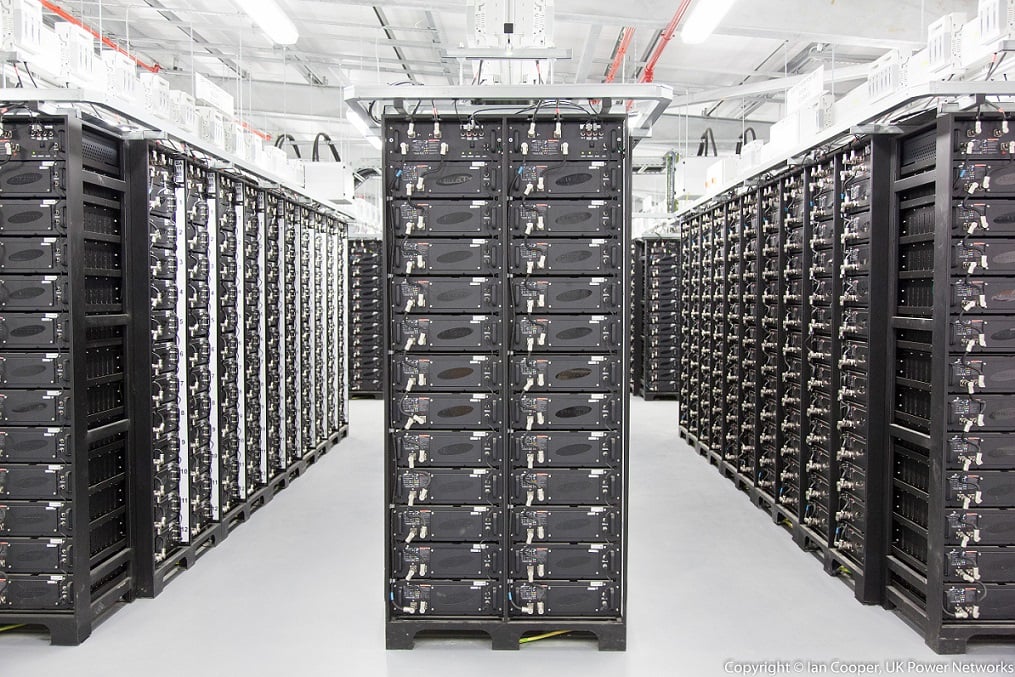
The UK’s first grid-scale battery was deployed in UK Power Network’s service area. Image: UKPN / Younicos.

One of the UK’s main distribution network operators (DNOs) has unveiled plans to revolutionise the way it procures flexibility and “supercharge” the services market.

UK Power Networks (UKPN), responsible for the delivery of power to London, the south-east and eastern England, has claimed an industry first with the publication of its new Flexibility Roadmap, a consultation document which professes to be a “major step-change” in the way networks operate.

The cornerstone of the proposals is the introduction of commercial markets for flexibility services, through which UKPN can procure flexibility from third party-owned distributed energy resources such as renewables and batteries. This flexibility can then be used to respond to planned or unplanned outages, or even free up additional capacity on distribution networks.

UKPN cited an Imperial College London study that found procuring this capacity through such means, instead of via costly new infrastructure, could save network operators billions of pounds by 2050.

This article requires Premium SubscriptionBasic (FREE) Subscription

Try Premium for just $1

  • Full premium access for the first month at only $1
  • Converts to an annual rate after 30 days unless cancelled
  • Cancel anytime during the trial period

Premium Benefits

  • Expert industry analysis and interviews
  • Digital access to PV Tech Power journal
  • Exclusive event discounts

Or get the full Premium subscription right away

Or continue reading this article for free

To read the full version of this story, visit Current ±.
13 October 2026
London, UK
Now in its second edition, the Summit provides a dedicated platform for UK & Ireland’s BESS community to share practical insights on performance, degradation, safety, market design and optimisation strategies. As storage deployment accelerates towards 2030 targets, attendees gain the tools needed to enhance returns and operate resilient, efficient assets.

Read Next

February 11, 2026
Netherlands-based iron-air long-duration energy storage (LDES) startup Ore Energy has completed a grid-connected pilot of its 100-hour iron-air LDES system at EDF Lab les Renardières in France.
Premium
February 11, 2026
Owner-operator Fidra Energy came out of virtually nowhere to be building one of Europe’s largest BESS in the UK, the 1.4GW/3.1GWh Thorpe Marsh project. We catch up with CEO Chris Elder, about its strategy and projects but also broader BESS and clean energy financing trends.
February 10, 2026
Energy infrastructure platform Revera Energy has completed an expanded US$150 million credit facility to accelerate development and construction of its battery storage, solar, and green hydrogen project pipeline across Australia and the UK.
February 9, 2026
Europe’s energy storage market has hit a turning point. What was once a scattered, early-phase market featuring pilot projects and daring developers has swiftly evolved into a dynamic, capital-intensive infrastructure sector, writes Wood Mackenzie research associate Cecilie Kristiansen.
February 6, 2026
Home battery storage and virtual power plant (VPP) specialist Lunar Energy has raised US$102 million in an oversubscribed Series D financing round led by B Capital and Prelude Ventures.