
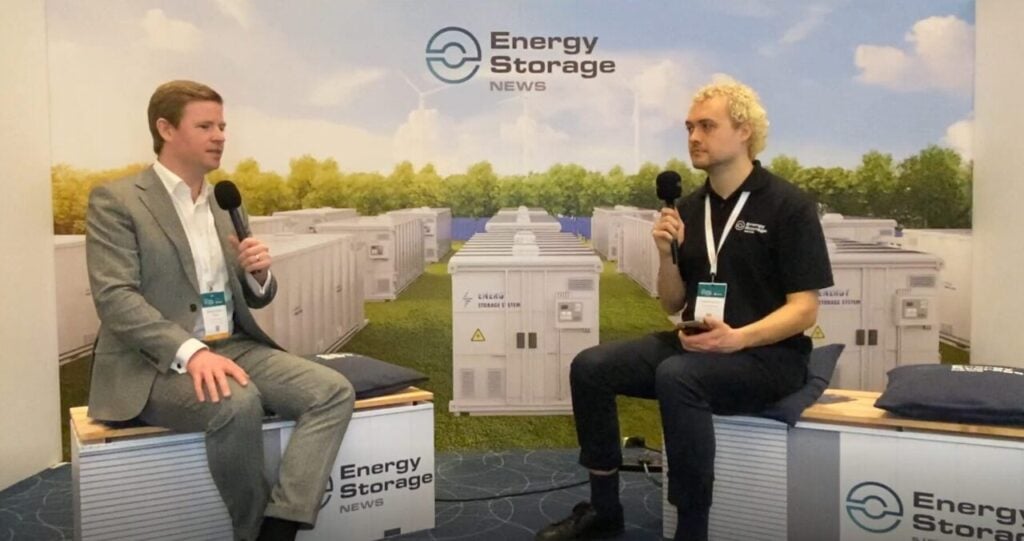
BESS fund manager Gore Street Capital’s director of asset management Daniel Sherlock-Burke recently discussed the work it is doing around capturing and making use of its huge quantities of operational data.
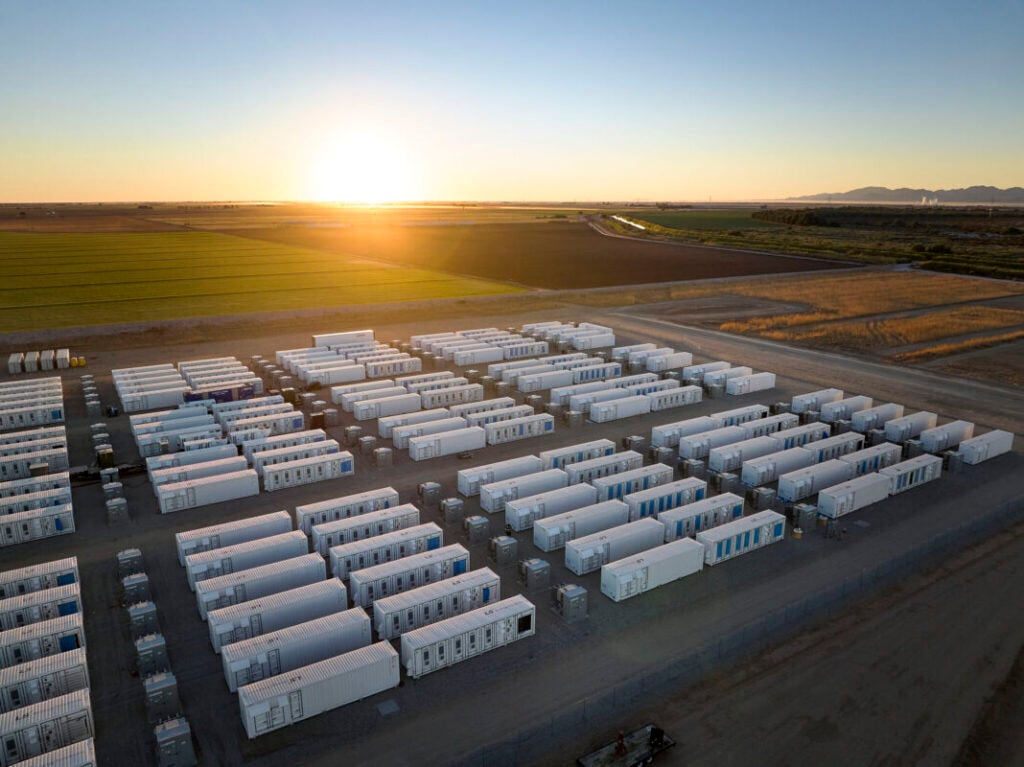
Gore Street Capital manages the UK-focused Gore Street Energy Storage Fund (GSF), which has invested primarily in Great Britain (GB) and Ireland, with a handful of smaller assets in Germany and Texas, and California, all-in-all totalling 643.1MW of operational BESS capacity as of end-2025. It was an early mover and is one of the largest owner-operators in the UK market.
With such a large operational portfolio across multiple geographies and with numerous suppliers, much of which has been online now for several years, the company is sitting on a wealth of operational data. Sherlock-Burke discussed how it is leveraging this with Energy-Storage.news at last month’s Energy Storage Summit 2026 in London.
Note that Gore Street has recently launched a private EU-focused BESS fund and is changing its GSF strategy to move to selling some operational assets. This is similar to moves by peer Harmony Energy.
Try Premium for just $1
- Full premium access for the first month at only $1
- Converts to an annual rate after 30 days unless cancelled
- Cancel anytime during the trial period
Premium Benefits
- Expert industry analysis and interviews
- Digital access to PV Tech Power journal
- Exclusive event discounts
Or get the full Premium subscription right away
Or continue reading this article for free
Integrating Accure’s analytics with its EMS
The company is close to integrating battery analytics firm Accure’s enhanced state of charge (SOC) accuracy reporting with its energy management system (EMS) provider for its largest projects in Texas and California. Better SOC measurements improve performance, safety and risk management, improving revenues and insurance terms.
“We’ll also be working with them to capture similar outputs from their battery analytics algorithms running across the assets in the fund’s GB-based portfolio, with the expectation we’ll leverage this insight to enhance State of Energy (SoE) awareness and improve trading performance through avoided imbalance charges and better-optimised trading positions,” Sherlock-Burke explained.
“We’re already generating benefits from our work with Accure in the insurance policies provided to the fund. Last year, we achieved some of the best premiums in the sector for GSF (the Gore Street Energy Storage Fund) in part due to our operational strategy and use of Accure’s analytics to improve operational safety and risk management of the fleet. This was a particularly pertinent achievement in the context of GSF’s ageing, technology-diverse fleet.”
What to do with all the data
Sherlock-Burke agreed that capturing the data in BESS is one thing, but being able to create actionable insights with it is another.
“You need to work with collaborative contractors willing to push the industry forward in the approach envisioned. Getting the marginal gains is hard until others follow and set the new norm for the industry,” he said.
Knowing the SOC of a BESS does not necessarily mean that the asset is traded better, for example, he explained. You need to adjust the on-site value for SOC at the EMS (typically just an aggregate of what’s reported at a battery rack level), which means a delta value itself based off the measured SOC on site by the EMS at the time.
“For ‘centrally dispatched’ systems (eg those in Ireland, Texas or California) you need to work with the EMS provider to adjust the SOC measurement available on site, because the system operator (SEMO, ERCOT or CAISO) will read that and dispatch the asset accordingly,” Sherlock-Burke explained.
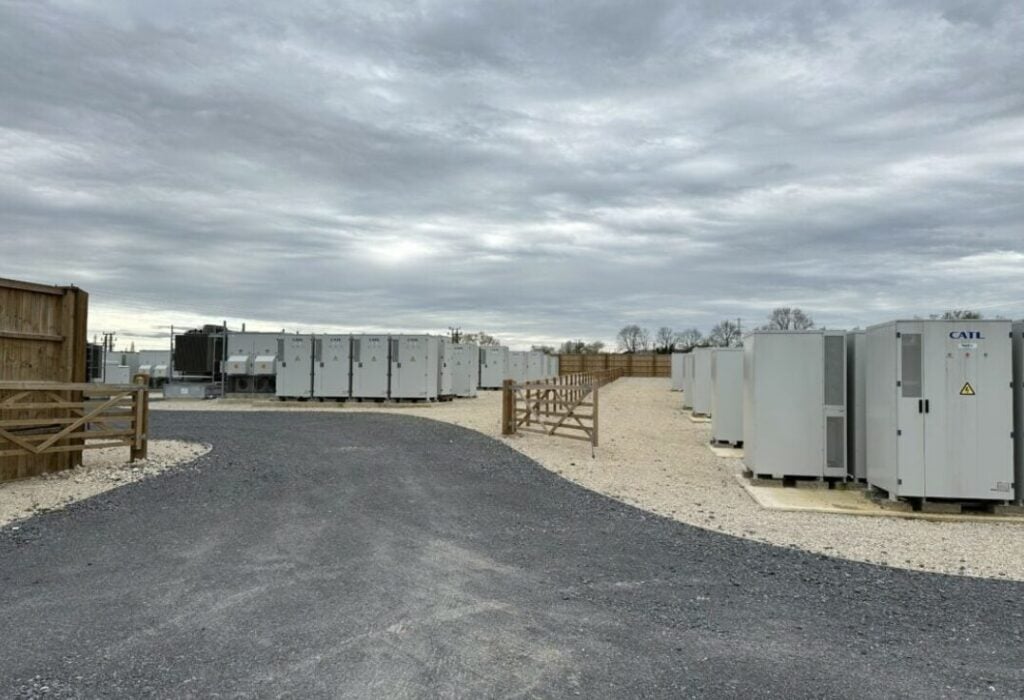
“In Great Britain, optimisers (also known as “route-to-market” (RtM) providers) have more flexibility on the positions taken at an asset level and can make the adjustments away from site—where you’d modify the measured SOC from site with an adjustment value taken via API with cloud-to-cloud services or similar—or adopt the centrally dispatched approach.”
“A lot of pressure to the approach taken in GB will ultimately depend on whether which of your EMS provider or RtM contractor is more open to working on the solution, though for the RtM there is a direct benefit through revenue sharing arrangements. At GSC we are preferring to have both options available, but with the complexity of some of our older assets in GB a centralised approach for making the data available to RtMs via our own in-house platform is what we’re shooting for.”
Standardisation of BESS data
If you have many different types of sites, creating huge amounts of data, standardising that is a challenge but is critical with a diverse portfolio, he said. A very basic example of this is that one site may report power on a kW basis and another on a MW basis.
Gore Street has been working with optimiser Arenko to capture data in a consistent manner from what Sherlock-Burke called the firm’s “trickiest” sites in the GB fleet. For newer sites, you can avoid complexity by setting requirements in the contracts.
This isn’t a small thing, he said: “Having active management of your data—in terms of how you access it and what you get—really shouldn’t be overlooked at the pre-construction stage. Getting this right can offer huge benefits to the long-term operations of the project, and correcting it if you don’t capture the right data may require costly EMS upgrades or even retrofitting of hardware to pull data from the site directly.”
“Everybody wants to get as much data as they can, but what you really need is to capture the data, standardise it and refine the dataset so it’s easy to interrogate and to do so efficiently. This can save very significant costs from a data processing perspective, also.”
What solutions are still lacking in industry
Sherlock-Burke said that solutions are often hyperfocused on BESS but that: “A lot of improvements remain poorly developed on the technical side, specifically in the realm of predictive maintenance which has been pretty well developed in the wind and solar industries.”
“We’re seeing tools become more available at a product level from PCS and other equipment suppliers, but fleet level review of a fully integrated system is quite behind.”
“There’s software entering this space and we’re building our own tools to support this, and I’m very excited about how AI will impact this side of asset optimisation. Of course, quality and consistency of data will then be an even larger differentiator for asset performance.”
Developing capabilities in-house versus using external partners
“Choosing partners that are willing to support your vision is essential if you want to stay ahead of the pack. We’ve worked with the likes of Accure and Arenko not by chance, but for their vision on how to leverage data and analytics to improve asset performance and continually push the boundaries of good practice,” he explained.
The firm has also developed its own monitoring, alerting and analytics platform to support its portfolio and these are now running at a “majority” of Gore Street’s projects. It has also worked with cloud, data & AI energy specialist consulting firm HyperCube to build on this analytics platform and integrate it with its own designed agentic AI system(s) to support asset management operational functions and beyond.
“I see these tools eventually setting us apart as an operator, and their ability to integrate with other arms of the technical team really positions us for a fully holistic operational approach that’s absolutely aligned with investors’ interests—not just those of an RtM or Asset Manager,” Sherlock-Burke added.
Warranties
We then asked Sherlock-Burke whether building up its operational experience, data and actionable insights meant it could start to look beyond performance warranties that come with BESS and typically place strict daily cycle limits on products. We’ve previouly reported on discussions in the industry around whether these limitations are really needed, in separate articles in March and August last year.
“We’re already operating 30 standalone energy storage projects on five separate energy transmission systems, with a diverse range of technology both in terms of design and equipment OEMs. Some of these projects have been operating for the best part of a decade and we have vast amounts of operational data to draw experience from,” Sherlock-Burke answered.
“We’ve done a lot of work (with the support of our excellent industry partners) to standardise this data and generate insight from it. Ultimately, we’ve seen how sites perform compared to their warranties, and have data to support our projections for those sites moving forward.”
“Logically, it stands to reason that we’ll be able to use historical site performance across a large number of sites to project typical performance at a project level, both in terms of capacity and availability guarantees, as well as in failure rates for spares and the need for extended warranties—or otherwise—moving forward.”