Compressed air energy storage (CAES) firm Corre Energy has agreed an offtake and co-investment deal with utility Eneco for a project in Germany.
The agreement will see Eneco take a 50% stake in the project in Ahaus, comprising developing capital and construction equity while also securing the entire energy storage capacity under a long-term offtake agreement. The economics of the deal are still to be finalised.
Eneco’s Germany subsidiary utility LichtBlick and Corre Energy Germany will undertake the development, financing and operating of the project together.
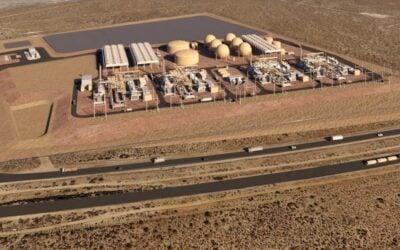
Phase one of the project will use two of the site’s four salt caverns to build CAES units with 220MW of compression capacity and 320MW of generation capacity.
Try Premium for just $1
- Full premium access for the first month at only $1
- Converts to an annual rate after 30 days unless cancelled
- Cancel anytime during the trial period
Premium Benefits
- Expert industry analysis and interviews
- Digital access to PV Tech Power journal
- Exclusive event discounts
Or get the full Premium subscription right away
Or continue reading this article for free
The announcement did not disclose the total energy storage capacity potential of the salt caverns, but CAES generally offers multi-day duration depending on the size of the cavern or storage vessel. It is one of the more commercially mature long-duration energy storage (LDES) technologies.
Construction on all four caverns is already underway, Corre said, and the first cavern is due to be handed over in 2027. The Ireland-headquartered CAES technology company said the deal with Eneco ‘significantly de-risks’ its pathway to commercial close and final investment decision (FID) for the project.
Although the project’s capacity or hours’ duration was not announced, a 320MW one that Corre is developing for Eneco in the utility’s home market of the Netherlands will have a duration of around 84 hours meaning potentially 27GWh of energy storage (although a Corre spokesperson cautioned against calculating capacity in this way at the time).
The announcement comes shortly after the UK government released its LDES consultation into helping kickstart investment in the sector and the German government released its Electricity Storage Strategy outlining how it intends to scale up its energy storage market (though is not specifically targeted at LDES).
Energy-Storage.news’ publisher Solar Media will host the 9th annual Energy Storage Summit EU in London, 20-21 February 2024. This year it is moving to a larger venue, bringing together Europe’s leading investors, policymakers, developers, utilities, energy buyers and service providers all in one place. Visit the official site for more info.