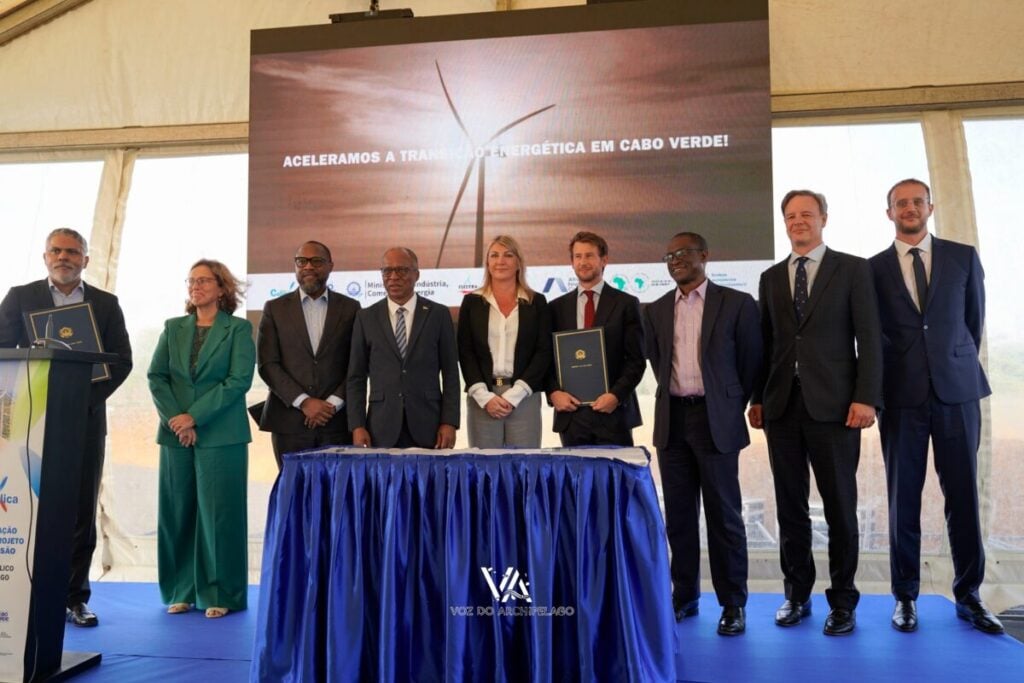
Africa Finance Corporation (AFC) and public-private-partnership (PPP) Cabeolica have inaugurated 13.5MW of wind power generation and 26MWh of battery storage in the Republic of Cabo Verde (Cape Verde).
Announced earlier this week (8 December), AFC and Cabeolica have officially opened the Cabeolica Wind Farm and Battery Energy Storage System (BESS) project, which comprises an expansion to an existing wind farm and three separate BESS installations on four of Cape Verde’s 10 islands.
Prime Minister Ulisses Correia e Silva was in attendance as AFC, which mobilises sustainable infrastructure investment in Africa, and state PPP and wind power plant operator Cabeolica added the new resources to Cape Verde’s national grid network.
The wind plant adds significant renewable energy resources to a country which, according to the International Renewable Energy Agency (IRENA), added just 5MW of solar PV and no new wind capacity in 2024.
Try Premium for just $1
- Full premium access for the first month at only $1
- Converts to an annual rate after 30 days unless cancelled
- Cancel anytime during the trial period
Premium Benefits
- Expert industry analysis and interviews
- Digital access to PV Tech Power journal
- Exclusive event discounts
Or get the full Premium subscription right away
Or continue reading this article for free
Cape Verde aims for a 50% renewable energy share by 2030. The small island state is a signatory to various international and regional commitments, including the ratification of the Paris Agreement on climate.
AFC, a majority investor in Cabeolica since 2010, provided €55million (US$64.09 million) in bridge financing for the project. The Cape Verde government operates Cabeolica in partnership with the public electricity and water company, Electra SA, and infrastructure solutions consultancy Infraco.
The PPP said the project alone increases the renewable energy penetration rate in Cape Verde from around 20% to 30%.
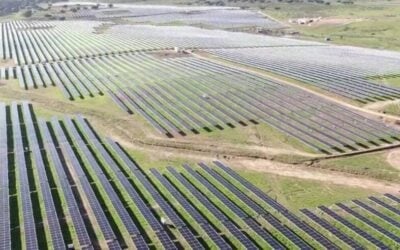
Cabeolica installed three 4.5MW wind turbines, totalling 12MW, to expand its Santiago wind farm from 9.35MW generation capacity.
It also deployed a battery storage system at Santiago and added three BESS installations at its 5.95MW São Vicente, 7.65MW Sal Island and 2.55MW Boa Vista Island wind power plants. All four wind power plants were inaugurated in 2011 or 2012.
AFC said the BESS assets provide frequency regulation ancillary services in addition to increasing renewable energy penetration, helping to reduce curtailment of variable renewable energy (VRE) generation and enhancing the islands’ energy security.
Further southeast in Sub-Saharan Africa on the mainland, the first of 46 solar-plus-storage minigrid installations was inaugurated a few days ago in Angola by the country’s Minister of Energy and Water, João Baptista Borges, Energy-Storage.news reported yesterday.