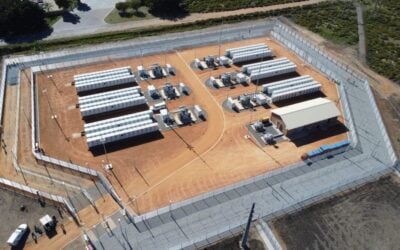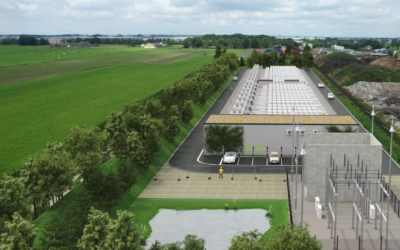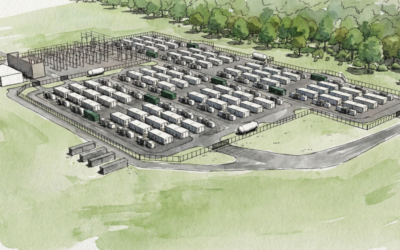
Real estate investor Montea will put €30 million (US$33 million) towards installing 56MWh of distributed battery energy storage systems (BESS) at logistics sites in Belgium and the Netherlands.
The BESS units will store energy to light, heat and cool logistics platforms as well as power electric vehicles (EVs), Montea said.
The firm is already investing €17.5 million in the BESS installations at 14 sites across Belgium, totalling 35MWh, and is planning to invest another €12.5 million at another seven locations in the Netherlands, totalling 21MWh.
Combining the BESS with EV charging will help to alleviate grid congestion. BESS can reduce the peak demand needs of large EV charging hubs, reducing the transmission & distribution (T&D) upgrades needed for such power-intensive facilities and reducing energy costs for their operators.
Try Premium for just $1
- Full premium access for the first month at only $1
- Converts to an annual rate after 30 days unless cancelled
- Cancel anytime during the trial period
Premium Benefits
- Expert industry analysis and interviews
- Digital access to PV Tech Power journal
- Exclusive event discounts
Or get the full Premium subscription right away
Or continue reading this article for free
“Electric vehicles are booming in terms of passenger transport and in a few years, the same will be
true for e-vans and trucks. Logistics centers that are equipped for this – in a sustainable and
affordable way – will have the upper hand,” said Dirk Van Buggenhout, chief sustainability officer for
Montea.
The firm said it expects an internal rate of return (IRR) for the investment of 12%, for both countries.
Belgium’s transmission system operator (TSO) Elia said in its Adequacy and Flexibility study for Belgium (2024–2034) that flexibility will be a core strategy in the coming years.
Elia is having its flexibility requirements provided by both large-scale BESS, with one of Europe’s most active markets, and distributed BESS like those from Montea as well as residential units.
In September 2022, Elia said that a virtual power plant (VPP) comprising residential BESS units would cover 15% of its grid balancing needs by the end of the year.