Two utility companies in Arizona, US, are seeking ‘firm capacity’ resources in their newest procurement rounds, which energy storage systems would be eligible to provide.
Tucson Electric Power (TEP) and UniSource Energy will look to procure 450MW of firm capacity between them when the pair launch separate ‘All-source Request for Proposals’ (ASRFP) later this month.
The solicitations are in support of the 2020 Integrated Resource Plans (IRPs) the companies issued that need to be filed with state utility regulators.
TEP’s IRP commits the company to lowering CO2 emission by 80% and supplying 70+% of its retail energy from renewable resources by 2035. It is currently at about the 30% renewable energy mark, after making 449MW of wind and solar resource additions during 2021.
Try Premium for just $1
- Full premium access for the first month at only $1
- Converts to an annual rate after 30 days unless cancelled
- Cancel anytime during the trial period
Premium Benefits
- Expert industry analysis and interviews
- Digital access to PV Tech Power journal
- Exclusive event discounts
Or get the full Premium subscription right away
Or continue reading this article for free
Serving just under 440,000 electric customers, peak energy consumption in its service area are going up dramatically with record levels recorded in both of the last two years. The company wants to meet this peak demand with higher shares of low carbon sources.
Meanwhile UniSource is targeting 50% renewables in its retail supply by 2035, as well as lowering the company’s reliance on purchasing energy from the wholesale market and instead owning and contracting generation resources from which it supplies its customers.
UniSource has about 100,000 electricity customers in two Arizona counties, as well as more than 165,000 natural gas customers in the north and south of the US southwest state.
Both companies are owned by Canadian investor-owned gas and electric utility holding company Fortis and announced the procurements last week. Their ASRFPs will launch on 19 April, seeking a combination of new solar PV and wind generation, energy storage systems and other eligible technologies like energy efficiency.
The due date for proposals is 1 July 2022 for both.
UniSource will seek up to 170MW of renewable energy from solar PV and wind and/or energy efficiency resources that could include demand response programmes.
It also wants up to 150MW of firm capacity, resources which can be called on at any time that could provide up to four hours of continuous energy every day of summer, when electricity demand peaks in Arizona.
UniSource said energy storage systems could provide this service, enabling the utility to dispatch the power as required. It could also include demand response programmes.
In a very similarly worded press release, TEP said it seeks up to 250MW of renewable energy and energy efficiency, as well as up to 300MW of firm capacity resources.
TEP has a site of its own which is ready for construction of an energy storage system (ESS) project upon it and the utility said any engineering, procurement and construction (EPC) contractors interested in delivering a project there must pay a visit to the site, hosted by TEP on 28 April.
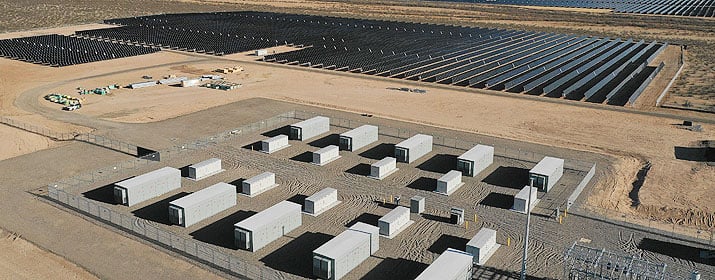
As TEP inaugurated a grid-scale solar-plus-storage system in its service area in May 2021, the Wilmot Energy Center (pictured above), the company said it anticipated that about 1,400MW of energy storage will be on its networks by 2035.
Both utilities said the resources procured must be able to enter service from 1 May 2024 and no later than 1 May 2025.