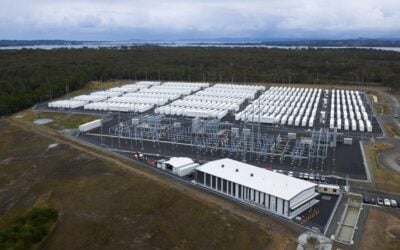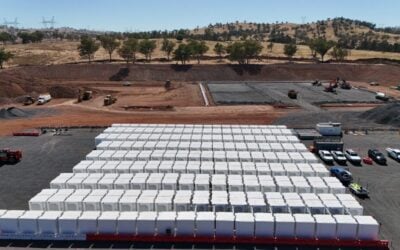
Construction has begun on two large-scale solar projects paired with battery storage in Hawaii from AES Corporation.
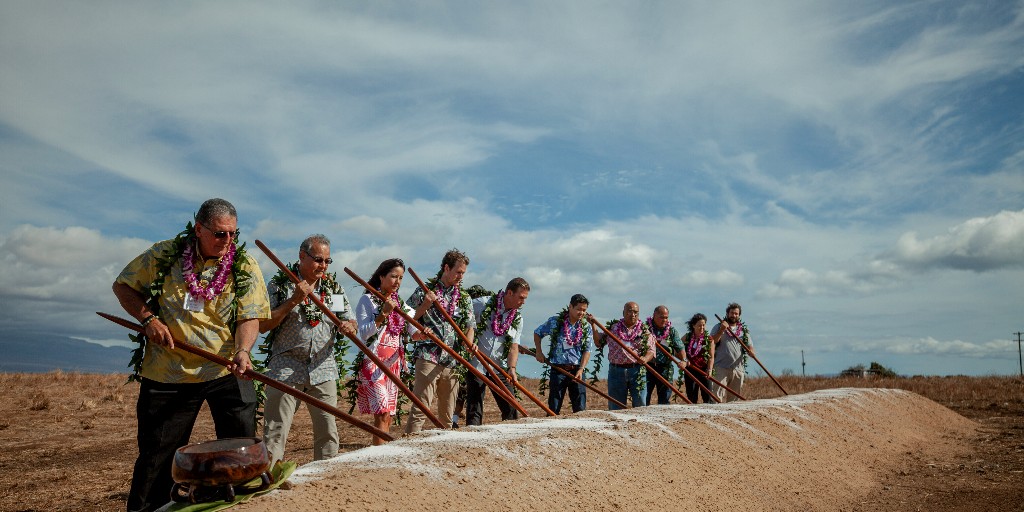
AES announced via Twitter on 4 August that ground has been broken on Kuihelani Solar + Storage, a 60MW solar PV plant with 240MWh of containerised battery energy storage system (BESS) technology. The project is on Maui, Hawaii’s second-largest island.
AES Corporation executives and representatives of its Hawaii-based subsidiary attended a ceremonial event, along with the Mayor of Maui, members of the local community and other stakeholders.
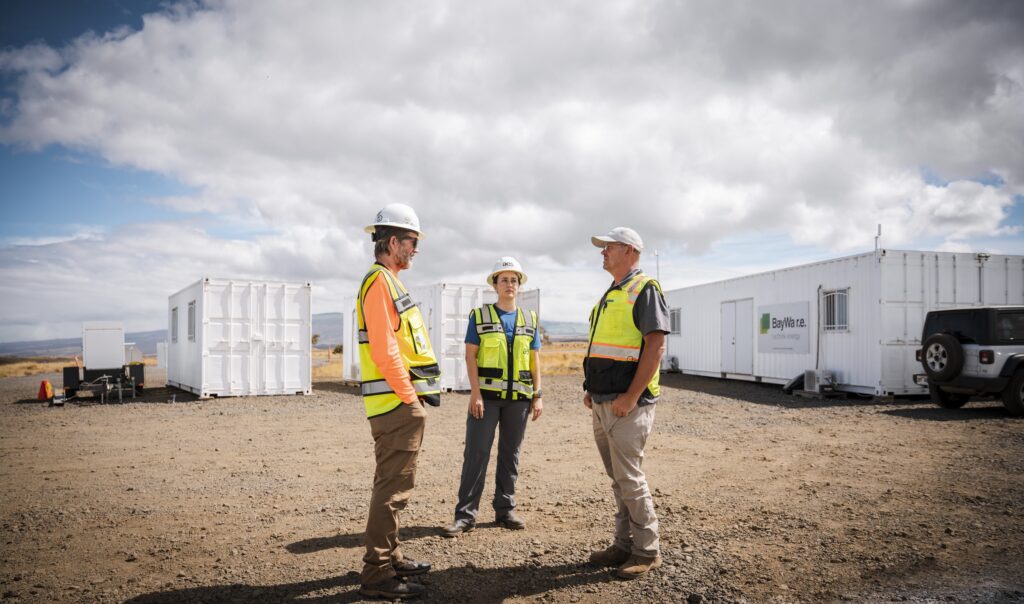
Then, yesterday German renewable energy company Baywa r.e. said it has been appointed as engineering, procurement and construction (EPC) contractor to another of AES’ Hawaii projects. Work will be done through Baywa r.e. Power Solutions, a division of the company formed through the acquisition of US solar and storage EPC company Enable Energy in 2020.
Try Premium for just $1
- Full premium access for the first month at only $1
- Converts to an annual rate after 30 days unless cancelled
- Cancel anytime during the trial period
Premium Benefits
- Expert industry analysis and interviews
- Digital access to PV Tech Power journal
- Exclusive event discounts
Or get the full Premium subscription right away
Or continue reading this article for free
Located on Hawaii Island, the Waikoloa Solar + Storage plant will include 30MWac/43MWdc of bifacial PV modules on a single-axis tracking system and a 30MW/120MWh BESS, in the state’s biggest island’s South Kohala district.
Baywa r.e. said that with permits secured and construction having already begun, “substantial completion” of the project is expected during this year. Waikoloa Solar + Storage will create around 200 construction phase jobs and inject about US$47 million economic stimulus into the local economy.
Both power plants have in place 25-year power purchase agreements (PPAs) signed with the state’s utility, Hawaiian Electric Co (HECO). HECO awarded AES the projects in 2018 before signing off on the PPAs in 2019.
According to AES’ website, both have a guaranteed commercial operation date in 2023 and will feed into the respective Hawaii Island and Maui grids.
The lithium-ion batteries will store energy generated at times of abundant solar resources and low electricity demand, for outputting to the network at peak times and when solar generation tails off. They will also perform ancillary services and other applications.
AES noted that the cost of power from both projects will be US$0.08/kWh, far lower than the cost of imported fossil fuels that the state of Hawaii is largely reliant on.
HECO has long identified solar PV paired with batteries – as well as some standalone battery storage – to be the best way to bring electricity costs down and lower carbon emissions. Indeed, Hawaii’s last remaining coal power plant is to retire imminently and the main other fuel source is diesel.
The utility said last year that it anticipates any solar projects competing in a forthcoming tender will need to include storage, while at a distributed level, HECO runs a ‘Battery Bonus’ programme which incentivises Hawaii’s many residential rooftop solar adopters to get battery storage too.
HECO announced winners of its most recent large-scale renewables tender in late 2020, which pushed through despite numerous delays and challenges posed by the COVID19 pandemic. It eventually awarded contracts for nearly 300MW of solar PV and 2,000MWh of battery storage.
However, one of the winners of the biggest tender in HECO’s history, which was the round prior to the one mentioned above, cancelled its awarded project a few months ago. European utility group ENGIE had been contracted for Puako Solar PV + Battery Storage, a 60MW PV and 240MWh BESS project in a tender round in which 16 projects totalling 460MW of solar and nearly 3GWh of batteries were successful.
ENGIE attributed its cancellation of the project to elevated grid interconnection costs, headwinds for the solar industry such as the then-ongoing trade tariff dispute for imported PV modules along with other global supply chain and production issues.