
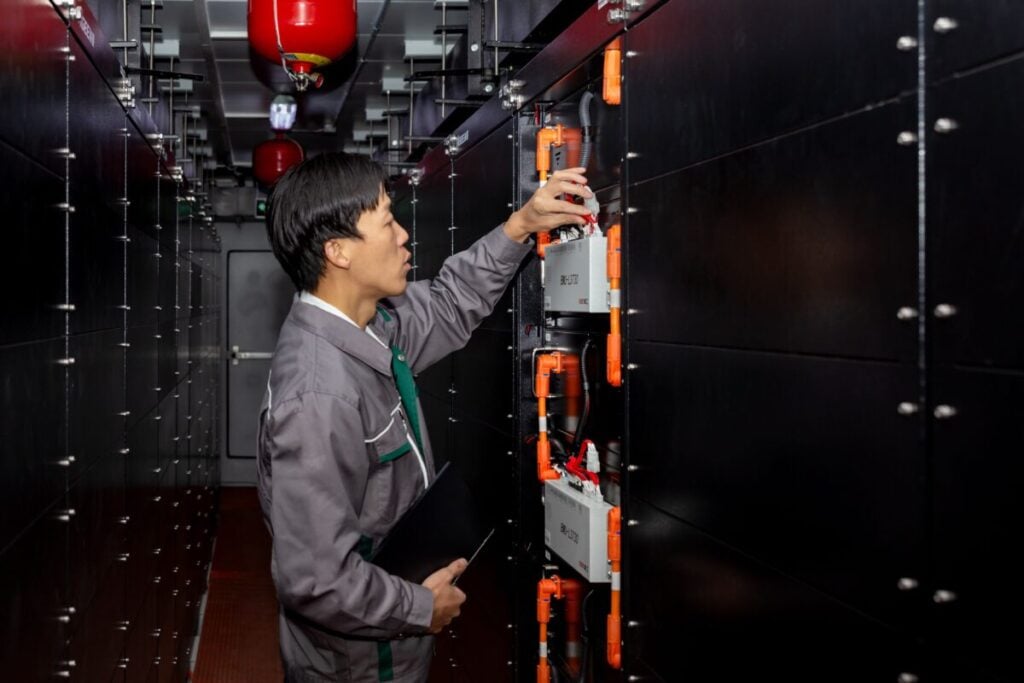
BESS safety issues become all too visible when it’s already too late, but a considered approach through the full lifecycle can mitigate these and many other risks, writes Sunny Rai from Intertek.
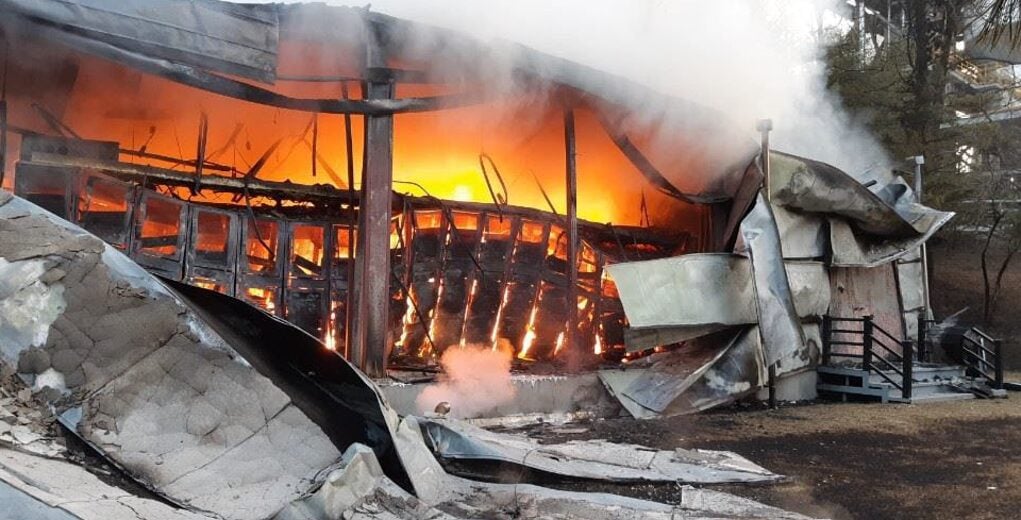
When a battery energy storage system fails, attention naturally focuses on the moment of failure. A fire event. A delayed commissioning. A system that fails to perform as expected.
Post-incident reviews tell a different story. Failures rarely originate where teams discover them. Instead, they trace back to decisions made much earlier in the system’s lifecycle — often across multiple organisations, contracts and handoffs.
This pattern does not reflect isolated technical mistakes. It reflects the complexity of energy storage integration. Problems emerge when early assumptions go unchallenged, responsibilities blur at transition points and small gaps accumulate quietly. By the time an issue surfaces in the field, the conditions that enabled it may already span months or years.
Try Premium for just $1
- Full premium access for the first month at only $1
- Converts to an annual rate after 30 days unless cancelled
- Cancel anytime during the trial period
Premium Benefits
- Expert industry analysis and interviews
- Digital access to PV Tech Power journal
- Exclusive event discounts
Or get the full Premium subscription right away
Or continue reading this article for free
When those gaps finally surface, the consequences can extend far beyond a technical repair. A single event may trigger equipment replacement, extended downtime and unplanned capital spend.
It may also carry reputational damage, environmental impacts and higher insurance scrutiny — turning what started as a small upstream deviation into a material business disruption.
Why energy storage is different
Many organisations approach energy storage with mental models borrowed from other forms of energy infrastructure, particularly solar. That approach works — up to a point.
Battery systems operate under different constraints. Unlike most electrical assets, they cannot fully de-energise. Even when idle or disconnected from the grid, they remain energised systems that demand continuous monitoring and disciplined controls.
The fault current available dwarfs that of a solar array with the same nameplate rating, requiring a more robust protection philosophy. Add in the additional complications of thermal management, fire detection and suppression, and bidirectional power flow—requirements that do not exist for solar assets—and the complexity only grows.
In solar, a well-designed system built from certified components and designed and installed by a competent EPC often performs reliably with limited ongoing intervention.
In energy storage, that logic breaks down. Complexity rises quickly. Interfaces multiply. Software, controls, thermal management and safety systems must function together under a wide range of operating conditions.
Failure carries different consequences as well. Storage incidents tend to draw more scrutiny, disrupt operations more severely and require more complex mitigation and recovery. That reality raises the bar for how rigorously teams must identify and manage risk across the lifecycle.
Certification plays a critical, yet limited, role
Certification establishes baseline safety and compliance. Codes and standards exist for a reason. They reflect lessons learned from past failures and define guardrails for system design. For any energy storage project, certification is foundational and non-negotiable.
But certification alone does not ensure real-world performance. By design, certification evaluates products against defined requirements and known scenarios. It cannot anticipate every operating condition, every integration choice or every downstream modification. Nor can it predict how a system will behave once manufacturing, installation and commissioning introduce real-world risks.
Risk also varies by maturity. First-of-a-kind systems carry a fundamentally different risk profile than designs proven at scale. Certification does not capture that distinction.
Conditions continue to change after certification concludes. Manufacturing processes evolve. Integration decisions respond to schedule and cost pressure. Systems enter environments that differ from those originally envisioned.
None of this diminishes the value of certification. Certification establishes an essential baseline for safety and compliance, defining minimum requirements that apply broadly across technologies and applications. It is not designed to account for every site condition, operating profile or integration choice a system may encounter in the field.
To manage risk beyond that baseline, project teams may apply additional validation approaches tailored to specific designs and use cases. These can include hardware-in-the-loop (HIL) validation of controls and protections, system-level factory acceptance testing of the integrated equipment, and site acceptance testing under real grid conditions.
Component manufacturing and quality assurance are where small compromises can scale into large risks
Component manufacturing introduces a new set of pressures that certification alone cannot address. Cost, schedule and volume targets shape decisions long after designs receive approval.
Quality assurance (QA) programmes often mature over time. Early production runs may proceed before controls fully stabilise. In those conditions, small deviations—a change in raw material supplier, a process shortcut, improper tool calibration—can propagate across tens of thousands or hundreds of thousands of units.
Teams with long production histories typically operate with established QA systems, refined processes and feedback loops that catch issues early. But even the most mature production lines experience quality deviations, making third-party quality oversight a must.
If undetected component-level defects pass downstream, they become harder to detect and more expensive to correct. A common rule of thumb holds that fixing a problem in the field can cost ten times more than correcting it in the factory.
System integration and factory acceptance testing
After components leave the factory, system integrators assemble them into a single functional system. This stage introduces a different class of risk—not from individual parts, but from how those parts interact.
Factory acceptance testing (FAT) plays an important role in verifying that the integrated system functions as intended before shipment. It also reveals how much risk has already accumulated during component manufacturing, design, and system assembly.
In practice, teams often treat FAT as a pass-fail milestone rather than a diagnostic process. Testing focuses on minimum requirements needed to release equipment, rather than on understanding how systems behave under stress, whether multiple units respond consistently, or how controls and protections interact across vendors.
Issues discovered during FAT frequently trace back to earlier stages. Thermal management problems, fire suppression failures or wiring defects often reflect gaps in component QA or system assembly practices. Finding them at this stage prevents worse outcomes in the field, but it still represents late intervention.
Feedback rarely travels far in the opposite direction. Unless a failure triggers significant cost or delay, lessons learned during FAT seldom improve upstream manufacturing or assembly practices for the future. Without that loop, the same issues repeat.
Installation and commissioning: where hidden risks surface
Transportation, site installation and commissioning expose assumptions that earlier stages rarely test.
Commissioning marks the first time the system operates under real-world grid conditions. Controls interact with site infrastructure. Software logic encounters operating variability. Safety systems behave differently at scale.
Ownership and responsibility often blur during this phase. Design intent, factory-built reality and operational readiness converge, yet no single party consistently carries full system accountability.
Integrators and third parties who oversaw factory testing rarely remain involved through commissioning, even though knowledge of earlier findings could shorten troubleshooting and reduce risk.
When commissioning compresses under schedule pressure, unresolved issues migrate forward. Some remain dormant. Others surface later, when corrective action carries higher cost and greater consequence, shaping long-term system availability, loss severity and, ultimately, insurability.
Ownership transfer and accountability gaps
Ownership transfer marks one of the most fragile moments in a storage project’s lifecycle. Contracts shift responsibility faster than systems reach operational clarity.
Acceptance timelines often compress this transition. Delivery inspections may occur under tight windows, with limited opportunity to investigate underlying conditions. Teams focus on whether equipment meets contractual criteria, not whether it carries unresolved risk forward.
Once ownership changes hands, incentives shift, and latent technical risk becomes balance sheet risk. Manufacturers move on to the next delivery. EPCs turn toward schedule completion. Operators inherit systems they did not design or build, along with assumptions they may not fully understand.
Ambiguity fills the gaps. Responsibility for monitoring, interim maintenance and corrective action becomes unclear. Problems that fall between scopes persist because no party feels fully accountable for resolving them.
These moments rarely generate immediate failures. They generate latent risk—conditions that remain invisible until the system enters more demanding operating states.
Operations: when early blind spots resurface
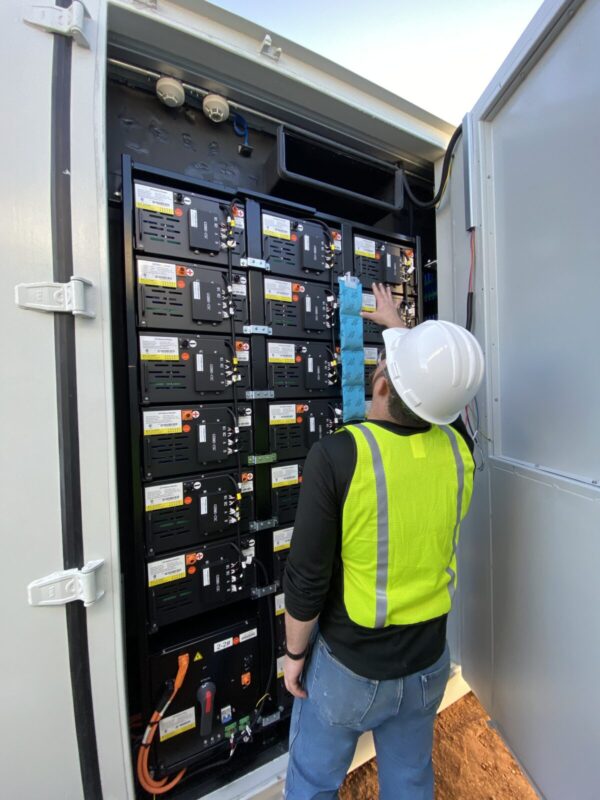
Operations expose the long-term consequences of early decisions. O&M plans typically take shape well before commissioning concludes. Teams finalise documents based on expected behaviour, not observed performance. Once approved, those plans rarely evolve, even as systems age or operating profiles change.
Monitoring platforms add visibility, but visibility alone does not prevent failure. Operators may review alerts intermittently, especially when systems appear stable. Over time, familiarity breeds confidence. Confidence reduces scrutiny.
Battery systems do not reward complacency. They remain energised assets with evolving risk profiles. Small deviations—thermal imbalance, sensor drift, control logic gaps—can persist unnoticed until conditions align in the wrong way.
When failures emerge at this stage, teams often treat them as operational surprises. In reality, operations reveal issues embedded much earlier in the lifecycle.
The common thread is handoffs, not components
Across incident reviews, a consistent pattern stands out. Individual components rarely drive failures on their own. Handoffs do.
Risk concentrates at transitions — between certification and manufacturing, manufacturing and testing, testing and commissioning, commissioning and operations. Each handoff introduces interpretation, assumption and loss of context.
Fragmented oversight magnifies the problem. When different parties manage each phase, no one sees how decisions interact over time. Early warnings go unrecognised because later teams lack visibility into upstream choices.
Organisational incentives often reinforce these blind spots. Manufacturers, integrators and owners each operate under legitimate pressures—cost, schedule, delivery milestones and performance guarantees—that can unintentionally deprioritise long-term risk visibility. Without an independent third-party perspective, those pressures may allow small risks to move forward unresolved at each handoff.
Components pass inspections. Systems meet milestones. Yet gaps persist in the spaces between. Understanding those spaces changes how teams approach safety. It shifts focus from isolated checkpoints to continuity.
What end-to-end visibility changes
End-to-end visibility changes how teams understand risk — and how early they can act on it. When the same organisation maintains continuity across certification decisions, manufacturing realities, factory test results, commissioning behaviour and operational performance, patterns emerge faster. Early signalsthat might look insignificant in isolation gain meaning when viewed in context.
That perspective shortens the distance between symptom and cause. Issues identified during commissioning can trace back to manufacturing conditions. Findings from factory testing can inform future design reviews. Lessons from operations can reshape how systems enter the field.
As a result, experience accumulates and can be applied across portfolios, technologies and regions. Most importantly, end-to-end visibility shifts the posture from reaction to anticipation. Risks no longer wait for failure to announce themselves. They surface earlier, when corrective action still carries a lower cost and fewer consequences.
Safety is an approach, not a checkpoint
Battery energy storage safety does not reside in any single milestone. It emerges—or fails—across the full lifecycle of the system. Treating any one of these stages as an endpoint creates blind spots. Treating them as a connected system creates resilience.
Third-party Nationally Recognized Testing Laboratory (NRTL) safety certification and related testing remain critical to meeting building, electrical and fire code compliance at the time and location of commissioning. However, these are often also treated as a separate process rather than a step in an overall life cycle quality and safety plan.
The most reliable projects recognise that safety demands continuity. It requires sustained attention across handoffs, disciplines and time. When teams align around that principle, failures become easier to prevent — and far less likely to surprise.
About the Author
Sunny Rai leads the Global Electrical, Connected World & Transportation Technologies businesses at Intertek, a leading quality solutions provider to electrical product industries worldwide, encompassing auditing and inspection, testing, training, advisory, quality assurance, and certification. Sunny joined Intertek in 1986 as a Project Engineer and has held various roles in engineering, sales and operational management for Semiconductor, Renewable Energy and Industrial product businesses. He holds a B.Sc. degree from University of Delhi, India and a degree in Electronic Engineering Technology, from San Francisco, California.