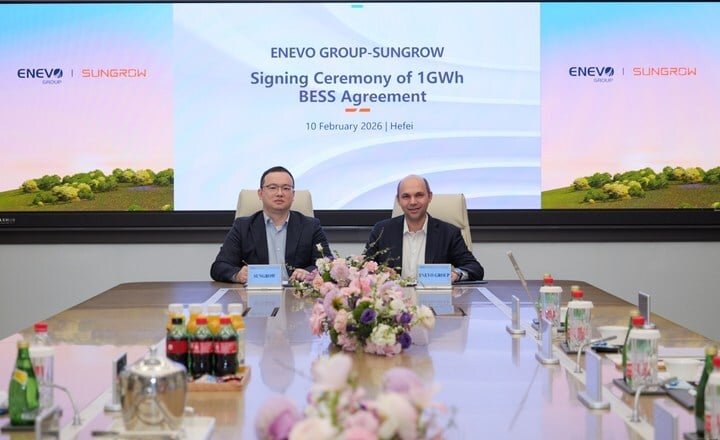
Sungrow has signed an agreement with Romanian energy solutions provider ENEVO Group to supply 1GWh of battery energy storage systems (BESS) across multiple projects in Romania.
The deal will be delivered in two phases. The first tranche comprises 440MWh of projects ordered earlier this year, scheduled for delivery before December 2026. A subsequent phase will add another 560MWh, bringing the total capacity to over 1GWh once all projects are completed.
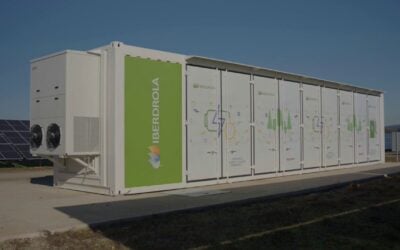
All systems will feature Sungrow’s PowerTitan 2.0 Liquid Cooled BESS, which the company positions as a benchmark solution for large-scale grid support and renewable energy integration.
The agreement extends an existing relationship between the two companies that began in the solar sector.
Try Premium for just $1
- Full premium access for the first month at only $1
- Converts to an annual rate after 30 days unless cancelled
- Cancel anytime during the trial period
Premium Benefits
- Expert industry analysis and interviews
- Digital access to PV Tech Power journal
- Exclusive event discounts
Or get the full Premium subscription right away
Or continue reading this article for free
“Great partnerships begin with a shared vision, common ambition, and a clear understanding of the market’s direction,” said Radu Brașoveanu, CTO and co-founder of ENEVO Group.
“Our collaboration with Sungrow started in the solar sector and has grown into a broader strategic partnership, now expanding into battery energy storage through this 1GWh agreement. Together we are accelerating the integration of BESS with renewable energy generation while advancing ENEVO’s ambition to become a leading EPC contractor for large-scale battery storage systems in the region.”
The Sungrow-ENEVO agreement arrives amid a surge of activity in Romania’s grid-scale storage sector.
Romania has emerged as one of the busiest BESS markets in Europe over the past 6-12 months, with major financing projects, portfolios, and partnerships announced recently by independent power producers, including Enery, Mass Group, Electrica, Eurowind Energy, and PPC Group.
Indeed, grid-scale activity in Romania has ramped up with gigawatts of announcements, led by Enery’s €460 million (US$530 million) financing for its 761MWp solar and 1GWh-plus BESS Ogrezeni project in Giurgi County, which will rank among the largest hybrid projects in Europe once operational.
Large-scale BESS deployments in Romania are benefiting from various country-specific drivers alongside the global fall in battery prices and increasing familiarity among investors with the technology.
The country’s active solar PV installations have created a pronounced duck curve effect, establishing a strong business case for solar load shifting as abundant daytime solar drives down midday electricity prices and creates a larger ramping requirement during evening peaks.
As one of the main drivers, the solar duck curve, which is becoming prominent in Europe, creates the same grid management challenges and energy storage opportunities that have driven gigawatt-scale deployments in more mature markets like California and Australia.
The regulatory environment has also evolved to support storage deployment. Renewable energy projects with storage can benefit from an accelerated grid connection date, while the Romanian government recently ended the double taxation of energy storage on the grid by exempting it from transmission tariffs and green certificates.
Both Bulgaria and Romania have both granted Recovery and Resilience funding to gigawatts of energy storage in recent months, with projects like Eurowind Energy’s 116MWh BESS at its Teiuș solar park benefiting from a €21 million grant under Romania’s portion of the EU-wide National Recovery and Resilience Plan funding programme.
Project financings in Romania are rapidly increasing. Following Beyond Enery’s financing deal in Ogrezeni, which involved seven lenders including UniCredit, Intesa Sanpaolo Group, ING Bank, and Banca Transilvania, there have been several noteworthy developments in the market.
Electrica recently signed a memorandum of understanding with the steel plant operator Liberty Galati to implement renewable energy and BESS with a capacity of up to 500MW.
Additionally, the engineering and construction firm Metlen has partnered with the Greek state-owned power company PPC Group to develop BESS projects with a capacity of up to 1.5GW/3GWh across Romania, Bulgaria and Italy.