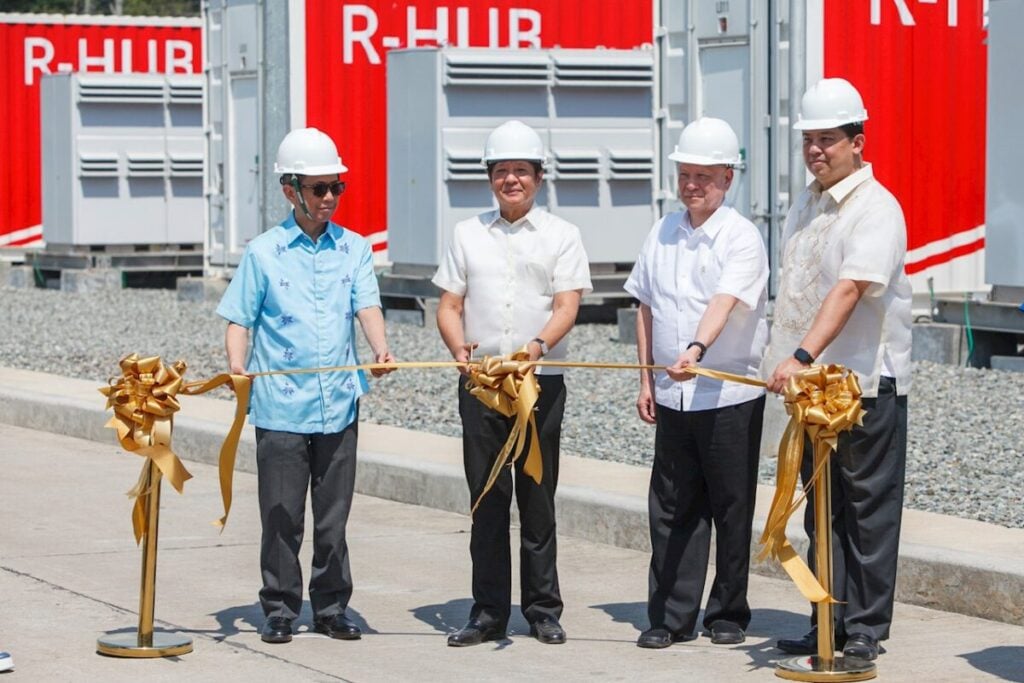
A framework for the “development, utilisation and commercialisation of energy storage systems” in the Philippines has been passed by the House of Representatives.
The bill passed on Wednesday (4 February) after its third and final reading in the lower house of the Southeast Asian country’s government, announced by the national Press and Public Affairs Bureau.
Key Takeaways
- The national policy framework will promote grid reliability and renewable energy integration across both grid-connected and off-grid areas.
- If approved by the Senate, the bill can be signed into law by President Ferdinand Marcos Jr.
- The deployment of energy storage will support the national policy goal of increasing renewables to 50% by 2040.
- The new legislation aims to stabilise power supply and optimise renewable energy utilisation for consumers, amid challenges such as supply chain dependencies.
- The Department of Energy will oversee the implementation, while the Energy Regulatory Commission will establish guidelines for market inclusion and safety standards.
House Bill 6676 passed by a landslide majority, garnering 192 affirmative votes and three against, with zero abstentions.
The introduction of the framework under House Bill 6676, aka the Energy Storage Systems Act, is much anticipated, but there will be a wait now to see how it fares in the Senate.
Try Premium for just $1
- Full premium access for the first month at only $1
- Converts to an annual rate after 30 days unless cancelled
- Cancel anytime during the trial period
Premium Benefits
- Expert industry analysis and interviews
- Digital access to PV Tech Power journal
- Exclusive event discounts
Or get the full Premium subscription right away
Or continue reading this article for free
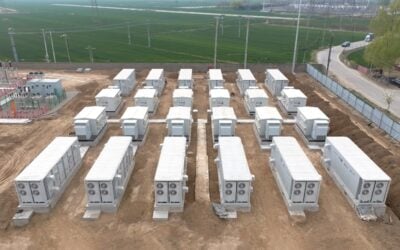
The national policy framework would cover development, commercialisation and utilisation of energy storage systems (ESS), to support grid reliability, renewable energy integration and power supply security.
It would be applicable to both grid-connected and off-grid areas, in a country where the population and electricity demand are dispersed over long distances and many populated islands, in addition to major urban centres.
If it also successfully passes the Senate, it can be signed into law by the Philippines’ president, Ferdinand Marcos Jr. The president has long been a vocal advocate for promoting energy storage technologies and their role in enabling a national policy target for 50% renewables by 2040.
At the Energy Storage Summit Asia 2025, hosted by our publisher Solar Media in the national capital Manila, Francis Saturnino Juan, chair of the Energy Regulatory Commission (ERC), said in a keynote address that there is a need for clear guidelines on aspects of market framework, including ownership models, grid connection agreements and safety and cybersecurity standards.
Saturnino Juan said that the outcomes of those rules “will define the playing field for the next decade.”
“We need regulations that recognise the unique, multifaceted value of ESS. We need frameworks that enable fair market access or storage,” the ERC chair said at the event in October.
Speaking with Energy-Storage.news at that event in an exclusive interview, Maria Theresa ‘Tetchi’ Capellan, president and CEO of solar developer SunAsia and founder of the Philippine Solar & Storage Energy Alliance (PSSEA) trade group, discussed the urgent need for the addition of energy storage to the energy mix, through clearer market rules for developers and grid operators.
However, “the market design is so open,” Capellan said, and while “there are a lot of opportunities,” with various entities focusing on transmission, generation and distribution-level energy storage.
“So many applications, so many markets that we have to ask what revenue stacking could you do, and where is it most optimised, so that you can get as much revenue to benefit your bottom line?”
Energy Storage Systems Act ‘prepares Philippines for greater RE integration while ensuring consumer affordability and reliability’
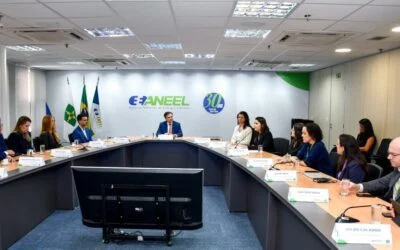
If the bill is implemented, the Department of Energy (DOE) would serve as the lead implementing agency, with the ERC formulating the regulatory framework for licensing, pricing and cost recovery of energy storage facilities. It would also include incentives for integrated renewable energy power plants with energy storage.
On the same day, the House of Representatives also passed a bill to protect the rights, safety and livelihood of electricity line workers.
The Philippines has already taken a leading position among Southeast Asian countries for energy storage deployment under existing market structures and support programmes.
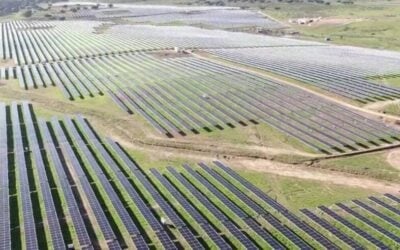
Last September, President Marcos Jr. attended the inauguration of the country’s first ‘solar baseload’ power plant. Citicore Renewable Energy’s Citicore Solar (CS) Batangas 1 project combines 197MWp of solar PV with a 320MWh battery energy storage system (BESS) in the municipality of Batangas.
Marcos Jr. has also attended events in 2024 to celebrate the groundbreaking of Meralco Terra Solar project in Gapan City, dubbed the world’s largest solar-plus-storage project at the time, featuring 3.5GWp of solar and 4.5GWh of BESS capacity and the start of construction of the Philippines’ first lithium iron phosphate (LFP) battery gigafactory, StB Giga Factory in the Clark Special Economic Zone in Tarlac.
The DOE’s fourth Green Energy Auction (GEA), launched in June, was the first to extend eligibility to Integrated Renewable Energy and Energy Storage Systems (IRESS). It awarded contracts to 1.19GW of IRESS project bids.
Prior to that, major power companies in the country, such as Aboitiz Power and San Miguel Global Power had already been deploying hundreds of megawatts of BESS at their own thermal power plant or hydroelectric sites, helping increase the efficiency of the generation assets, particularly for delivering ancillary services to the grid.
House of Representatives Committee on Energy chair, Jose Alvarez, said yesterday that the new legislative measure “puts in place a clear policy direction for developing and commercialising energy storage systems, which are essential to stabilising our power supply and maximising the use of renewable energy.”
“With this bill, we are preparing the power sector for greater renewable energy (RE) integration in the energy mix while ensuring reliability and affordability for consumers,” Alvarez, who is also Representative for Palawan’s 2nd Congressional District, said.
Yesterday, our colleagues at PV Tech reported PSSEA has warned that recent diplomatic tensions with China could disrupt clean energy industries. Like many other countries, the Philippines is largely dependent on China for its solar PV and battery supply chains.
The text of House Bill 6676, the Energy Storage Systems Act, as published in December, can be found here (PDF).