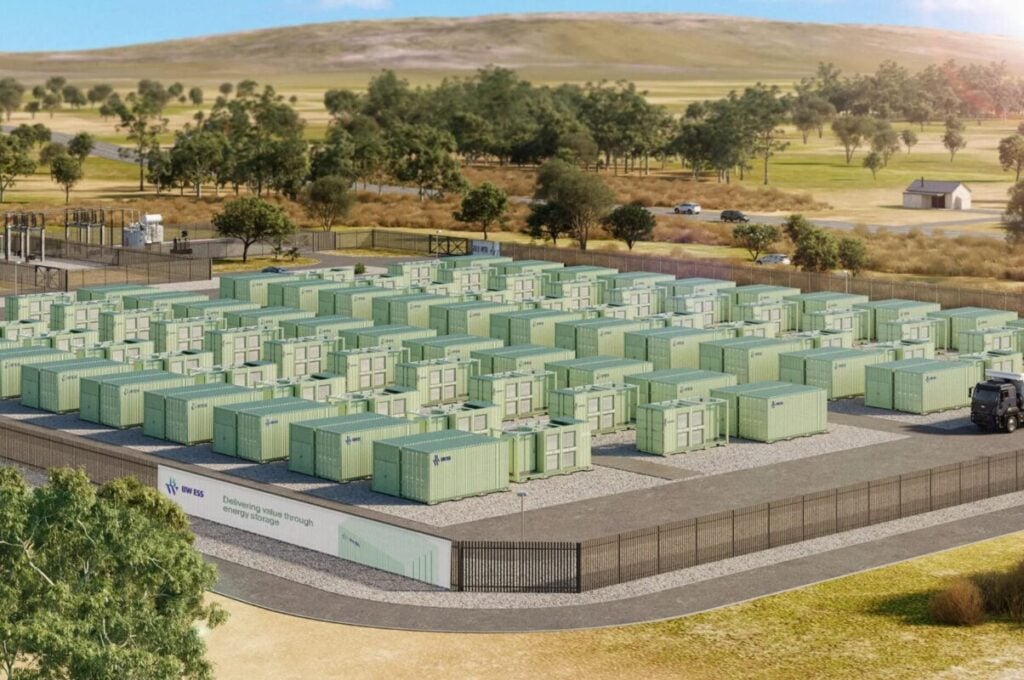
Energy storage owner-operator BW ESS has submitted an application under Australia’s Environment Protection and Biodiversity Conservation (EPBC) Act for a 1,600MWh battery energy storage system (BESS) in New South Wales (NSW).
The proposed facility at McCullys Gap would deliver a 400MW/1,600MWh battery storage system with 4-hours of duration. The EPBC Act submission was submitted by Muswellbrook Pro Unit Holdings, which serves as the trustee for the Muswellbrook Pro Unit Trust.
The project site spans two properties on Sandy Creek Road, located adjacent to the existing Muswellbrook 330kV substation, enabling direct connection to NSW’s high-voltage transmission network.
Construction is scheduled to commence in 2027, subject to regulatory approvals, with an 18-month build timeline. The facility would operate remotely around the clock for a minimum 30-year operational period, providing grid stabilisation services and peak demand response capabilities to support NSW’s electricity network reliability.
Try Premium for just $1
- Full premium access for the first month at only $1
- Converts to an annual rate after 30 days unless cancelled
- Cancel anytime during the trial period
Premium Benefits
- Expert industry analysis and interviews
- Digital access to PV Tech Power journal
- Exclusive event discounts
Or get the full Premium subscription right away
Or continue reading this article for free
BW ESS is a global developer, owner, and operator of large-scale battery storage systems and part of the BW Group, a global maritime infrastructure company.
The organisation, founded in 2021, has operational portfolios in the UK and Sweden via partnerships with local developers Penso Power and Ingrid Capacity, as well as development pipelines in Australia, Germany, Italy and Spain.
The project becomes another battery storage project that is seeking federal environmental approval. In early January, 1.2GWh of battery storage was submitted for EPBC Act approval across Australia, from developers Tonic Group, Avenis Energy and utility AGL.
As part of this, AGL submitted a BESS project near the existing Ausgrid Muswellbrook Substation, sized at 150MW/300MWh. The project operates under State Significant Development consent SSD 29704663 and would occupy approximately 4.874 hectares across multiple land parcels.
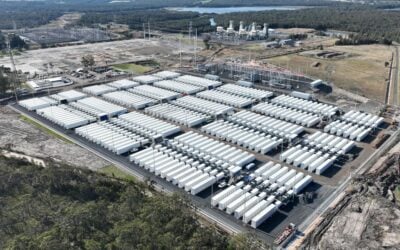
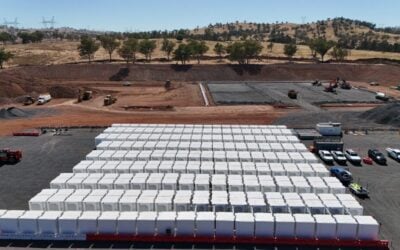
BW ESS’s Muswellbrook BESS would feature battery containers housing lithium-ion cells, battery management systems, fire suppression equipment and thermal management infrastructure.
Supporting infrastructure includes power conversion systems, medium- and low-voltage cabling, underground cable networks, and dedicated stormwater management facilities, including detention basins.
A project substation would house transformers, switch rooms, and control facilities, connected to the existing Muswellbrook substation via a new overhead 330kV transmission line.
The connection would require enabling works at the existing substation to facilitate integration with the high-voltage network.
Construction activities would encompass site preparation, equipment installation, transmission infrastructure development, and ancillary works, including access road upgrades and security systems. Up to five road intersection upgrades may be required to accommodate construction traffic, though these would not form part of the operational footprint.
Decommissioning plans include removal of above-ground infrastructure over an 18-month period, with the project designed for component replacement and maintenance throughout its operational life.
The application indicates that the facility may be constructed in multiple stages, enabling phased development based on market conditions and grid requirements.
Environmental consultation
The EPBC Act referral process addresses potential impacts on matters of national environmental significance, with the Department of Climate Change, Energy, the Environment and Water (DCCEEW) highlighting specific considerations, including Hunter Valley Delma habitat requirements and bat species protection.
Consultation with the department in December 2025 focused on maintaining conservative development footprints and potential additional surveys for the Hunter Valley Delma in non-native vegetation areas.
The project team has already engaged with 13 Registered Aboriginal Parties through the Aboriginal cultural heritage consultation process, currently progressing through stages two and three of the assessment requirements.
Community engagement has included information sessions at Muswellbrook RSL Club, with 17 participants raising concerns about construction timing, traffic impacts, workforce accommodation, and fire safety systems.
The application said that the project team has committed to addressing these themes through the Environmental Impact Statement process.
The Muswellbrook application comes as Australia’s energy storage sector navigates an evolving regulatory landscape. The federal government’s EPBC Act overhaul promises streamlined approvals as industry voices mixed support for proposed changes to environmental assessment processes.
Recent approvals demonstrate the sector’s momentum, with OX2 receiving approval for a 270MWh solar-plus-storage site, subject to conditions, in Queensland. Western Australia has also seen increased activity, with a third utility-scale battery storage project proposed for Collie.
The Energy Storage Summit Australia 2026 will be returning to Sydney on 18-19 March. It features keynote speeches and panel discussions on topics such as the Capacity Investment Scheme, long-duration energy storage, and BESS revenue streams. ESN Premium subscribers receive an exclusive discount on ticket prices.
To secure your tickets and learn more about the event, please visit the official website.