
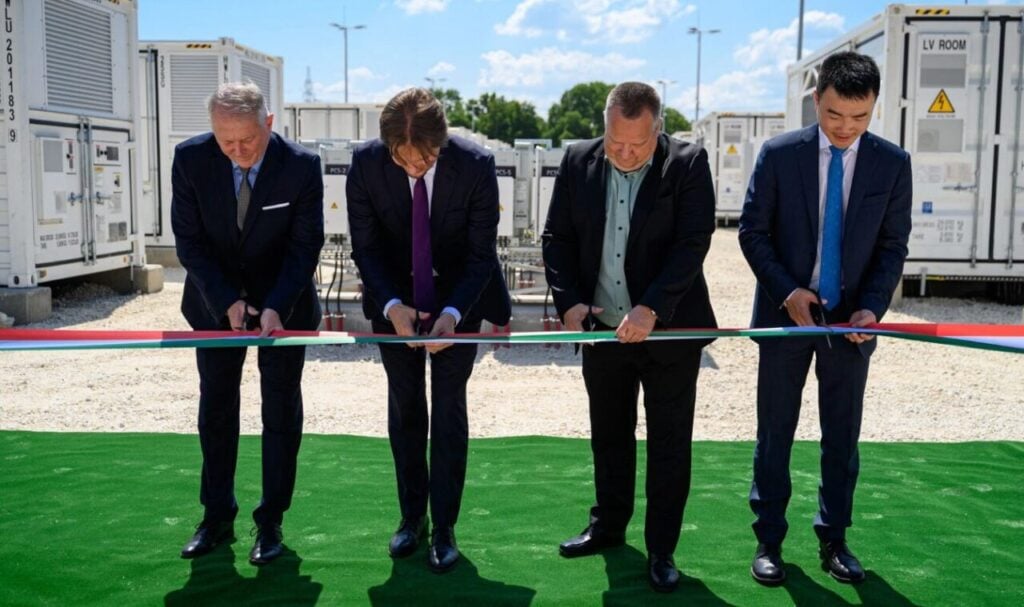
Hungary is entering a new phase of its energy transition, opening up new opportunities for energy storage investment. But bankability is still a challenge, so equity investment is needed, writes lawyer Daniel Orosz.
Hungary is entering a new phase of its energy transition. The country’s energy subsidy regime is moving away from traditional feed-in tariff-driven renewable deployment toward a flexibility-focused electricity market, creating a compelling entry point for investors in battery energy storage systems (BESS) and hybrid renewable assets. The process may be accelerating by the establishment of the new Hungarian government.
The combination of potential regulatory changes in the Hungarian subsidy regime related to variable energy projects and the rising renewable capacities positions Hungary as one of the most attractive early-stage storage markets in the Central and Eastern Europe (CEE) region.
However, equity investors are in a better position as bankability of BESS projects is still an issue due to lack of established business model.
Try Premium for just $1
- Full premium access for the first month at only $1
- Converts to an annual rate after 30 days unless cancelled
- Cancel anytime during the trial period
Premium Benefits
- Expert industry analysis and interviews
- Digital access to PV Tech Power journal
- Exclusive event discounts
Or get the full Premium subscription right away
Or continue reading this article for free
Potential changes in the Hungarian feed-in tariff regime
Hungary’s renewable energy subsidy framework is entering a period of structural transition. The feed-in tariff regime (KÁT) requires changes due to pressure from the corporate side financing the subsidy and due to grid balancing issues.
Policy direction increasingly favours the premium system (METÁR), auctions, and market integration.
Essentially, Hungary is transitioning from subsidy-driven renewable deployment toward flexibility-driven system optimisation, where value increasingly shifts from standalone generation to balancing capacities and system services.
Increasing need for balancing capacities in Hungary – good investment opportunity
Hungary lacks operational electricity storage assets. BESS projects are rapidly emerging as a cornerstone of Hungary’s power system modernisation beside the development of combined cycle gas turbine (CCGT) capacities.
The first utility-scale hybrid solar-plus-storage projects are already materialising. As weather-dependent renewable energy capacity heavily increases, flexibility of the network becomes more valuable than standalone variable energy generation capacity.
The plan is to change the current subsidy scheme and support co-located projects. Further regulatory changes may also include that the transmission system operator (TSO) will have the possibility to limit or switch off generation of variable energy capacities.
The regulatory changes in the pipeline may also establish a good investment opportunity to acquire stand-alone FiT projects as their revenue and profitability are expected to decrease. That means investors may be able to buy such projects cheap and then – by establishing a co-located BESS to such projects – increase the value of the joint assets sharply.
Hungary’s storage market is underdeveloped, the competition is still limited and there is a strong potential for ancillary services pricing.
Co-located projects may require only amendment of the grid connection permit and the BESS project can benefit from the existing grid connection of the already operating PV project.
Revenue Potential
Hungarian BESS projects are expected to be monetised through multiple channels:
- frequency containment (FCR) and balancing services (aFRR and mFRR)
- peak-shaving and congestion management
- renewable co-location optimisation
- wholesale market arbitrage
- future capacity or flexibility markets
Taxation – transaction structuring
Hungary has a special extra-profit tax regime to which energy producers and traders are subject. Therefore, BESS projects require special structuring in order to optimize their taxation, meaning classic profit-sharing arrangement should be avoided and the combination of usage and availability fees are preferred.
Our energy, infrastructure and tax team regularly advises international investors entering the Hungarian market and would be pleased to discuss potential project structures and regulatory considerations.
About the author
Dr. Daniel Orosz is an energy and M&A lawyer at law firm Kapolyi, a mid-size law firm in Budapest, Hungary advising international investors on renewable and energy storage projects locally and in the CEE Region. Previously he worked at BakerMckenzie, Budapest office as local partner leading the M&A corporate and energy department.
Energy-Storage.news’ publisher Solar Media will hold the Energy Storage Summit Central Eastern Europe (CEE) 2026 on 6-7 October in Warsaw, Poland.
